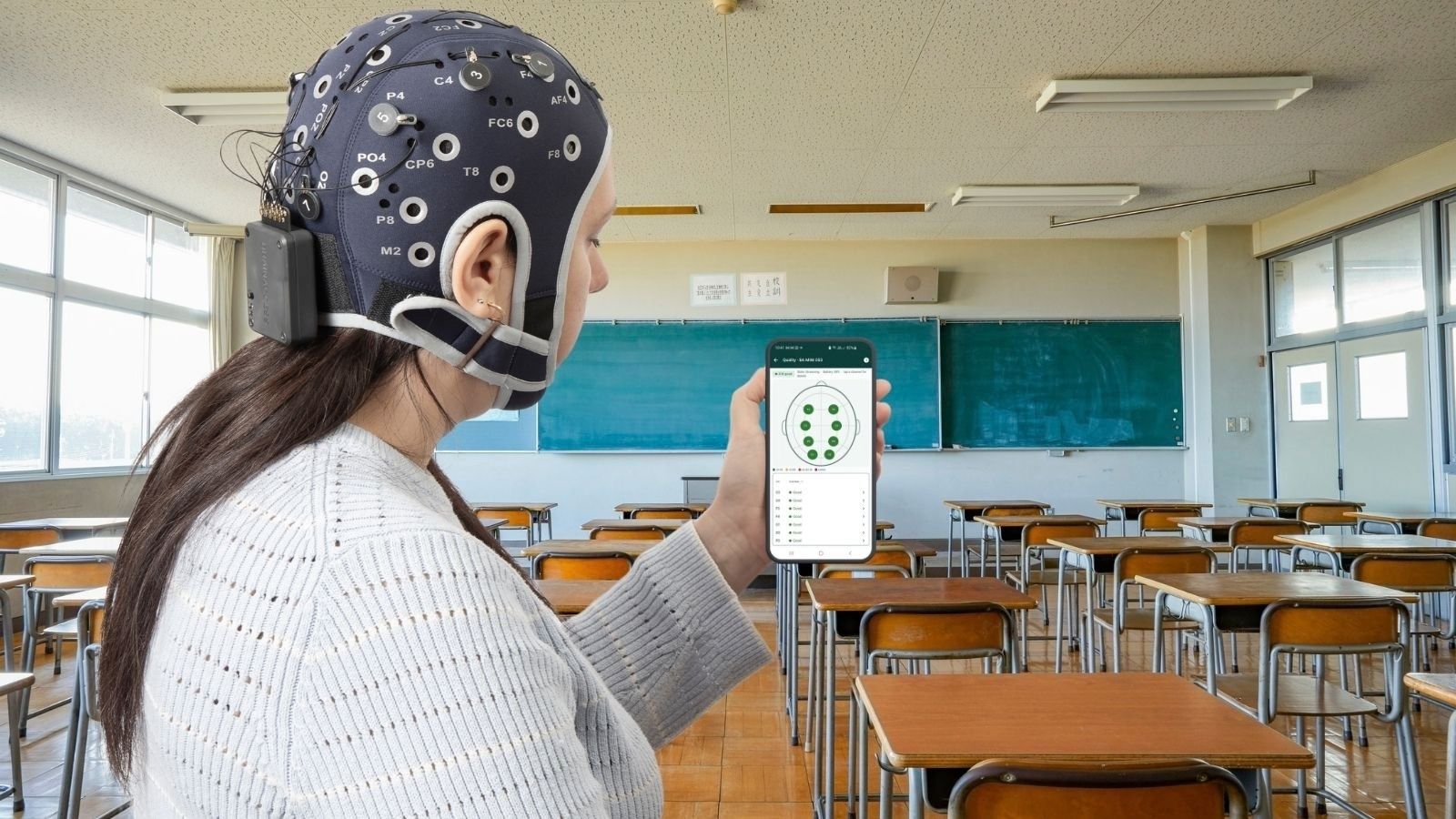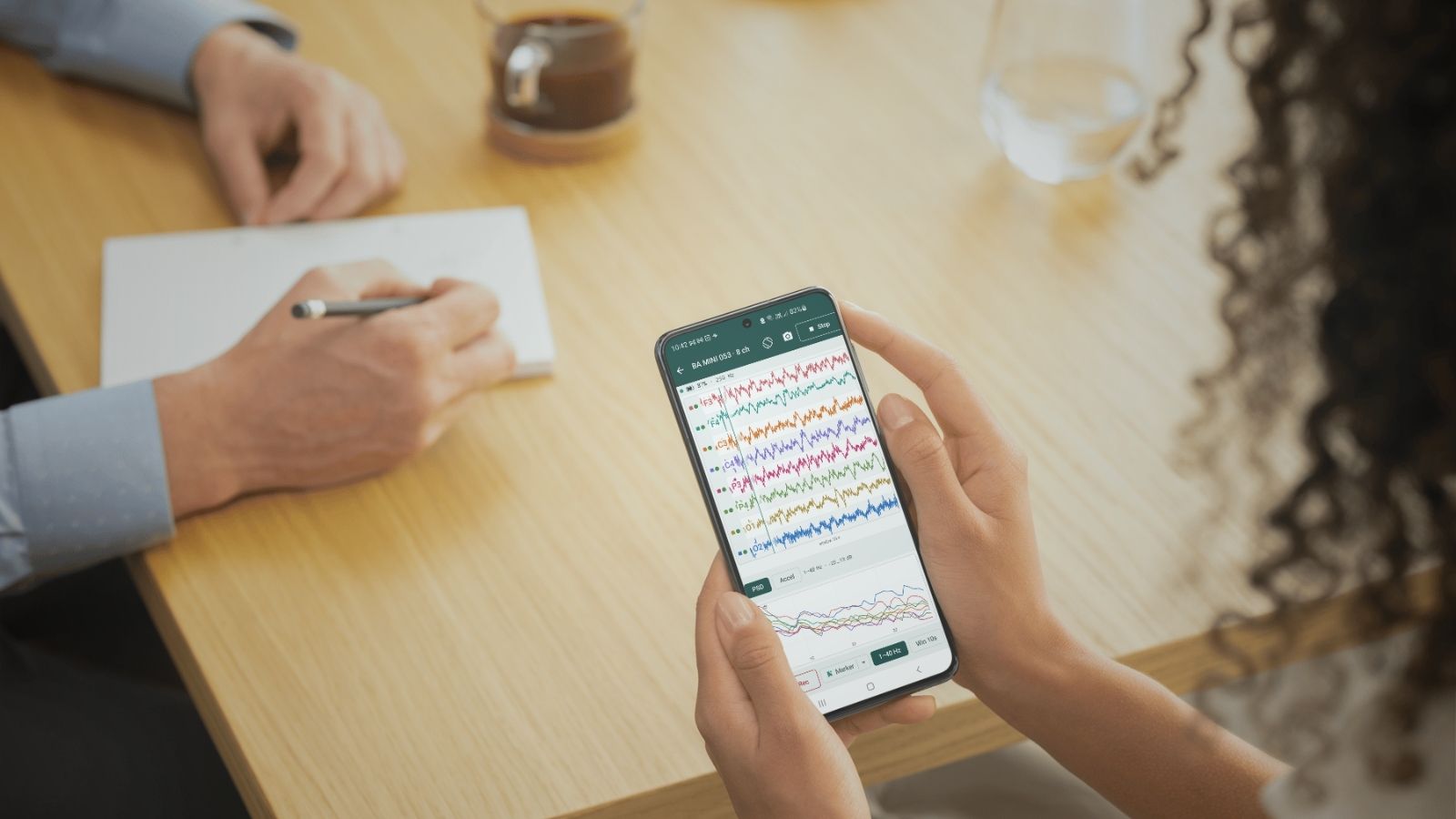

For millions of people living with Type 1 diabetes (T1D), dangerous blood sugar swings can strike without warning, especially during sleep. But what if your brain could sound the alarm before a crisis hits? A new pilot study from the University of Žilina using BrainAccess MINI kit explores whether monitoring brain activity with a portable EEG device could predict life-threatening hypoglycemic and hyperglycemic events.
The Hidden Danger of Diabetes
Beyond daily insulin management, people with T1D face two critical risks that can emerge without warning. Hypoglycemia, or low blood sugar, can cause confusion, seizures, and loss of consciousness. In extreme cases, it can lead to “dead-in-bed syndrome”, a potentially fatal condition that strikes during sleep when symptoms go unnoticed. On the opposite end, hyperglycemia, or high blood sugar, can progress to diabetic ketoacidosis, increase the risk of heart disease, and impair cognitive function over time.
The challenge with current monitoring methods is that traditional finger-prick tests provide only snapshots of blood glucose levels, and even continuous glucose monitors can’t predict dangerous events before they occur. This is where brain activity monitoring enters the picture.
Your Brain Knows First
Research shows that your brain responds to glucose fluctuations before you feel symptoms. Studies have found distinct EEG patterns during both high and low blood sugar episodes that reveal what’s happening in the body before conscious awareness kicks in.
During hypoglycemic episodes, brain waves slow down, particularly in frontal regions. Theta band activity increases while alpha band activity decreases. These changes can occur even when patients don’t feel any symptoms, making them especially valuable for detection. The slowing of brain activity appears to be a general phenomenon observed in adults and children alike, regardless of whether hypoglycemia is medication-induced or occurs naturally.
During hyperglycemia, the brain shows a different pattern. Alpha and beta band power increases, with changes most noticeable in the parietal and occipital brain regions. What researchers have discovered is that the relationship between glucose levels and brain activity is not linear; the brain doesn’t simply respond more strongly as glucose levels rise or fall. Instead, there are specific thresholds and patterns that correspond to different glycemic states.
The Pilot Experiment with BrainAccess MINI
Researchers tested whether the portable BrainAccess MINI EEG device could detect these brain patterns in real-world conditions. Two T1D patients were monitored continuously while their EEG data was synchronized with CGM readings using Lab Streaming Layer technology.
Key Findings
The preliminary results are promising. The team identified distinct patterns in specific brain regions and frequency bands that correlated with different glycemic states. The most significant indicators emerged from the Delta and Beta bands in electrodes F4, C4, and P4. As blood glucose increased from hypoglycemia to hyperglycemia, Delta band power increased while Beta band power decreased. Interestingly, other frequency bands remained relatively stable throughout these transitions.
The data suggests it’s feasible to classify glucose states—hypoglycemia, euglycemia, and hyperglycemia—based on brain activity patterns alone. This finding opens the door to developing predictive algorithms that could warn patients of dangerous glucose levels before traditional symptoms appear.
What This Means for Diabetes Management
If validated in larger studies, this non-invasive approach could revolutionize diabetes care. The most immediate application would be an early warning system that could predict dangerous events 15-30 minutes before they occur, giving patients crucial time to take corrective action. This would be especially valuable for nighttime protection, where the system could alert sleeping patients or caregivers to nocturnal hypoglycemia that might otherwise go unnoticed.
Unlike traditional monitoring methods, this approach requires no finger pricks and is completely non-invasive.
The Road Ahead
The researchers emphasize this is just the beginning. The next steps involve developing AI algorithms specifically optimized for low-power, battery-operated devices that can run continuously without frequent charging. The study will also need to expand to include more participants to validate the findings across a broader population.
Beyond EEG alone, future research will explore combining brain activity monitoring with other biosignals such as heart rate and ECG data to improve accuracy. The research team is also working to fine-tune the optimal time windows for analysis, determining exactly how much data is needed to make reliable predictions without sacrificing response time.
The ultimate goal is a wearable device that silently monitors your brain activity and alerts you before a diabetes crisis develops, giving you precious time to take action and potentially preventing serious complications.
Bottom Line
While still in early stages, this research demonstrates that your brain’s electrical activity holds valuable clues about your blood sugar levels and has the potential to be incorporated in diabetes management toolkits improving their predictive power.
At BrainAcess, we are excited to see our MINI device being used in this type of research, and can’t wait to see what comes next.
Reference
Kubascik, M., Chochul, M., Tupy, A., & Karpis, O. (2025). Non-invasive methods for diabetes critical events prediction. IFAC-PapersOnLine, 59(35), 144-149. https://doi.org/10.1016/j.ifacol.2025.12.466