
From restoring movement in paralyzed patients to enabling hands-free interaction with digital devices, Brain-Computer Interface (BCI) technology is rapidly evolving. But not all BCIs are created equal. The field is broadly divided into invasive and non-invasive systems, each with distinct advantages, challenges, and future trajectories.
Below, a quick recap of each, listing applications, advantages, limitations, ethical and privacy considerations, and future directions.
Invasive BCIs
Invasive BCIs require surgical implantation of electrodes directly into or onto the brain. These systems record neural activity with exceptional spatial and temporal precision because they target specific neural populations.
Companies and research groups working with this technologies utilize in-vivo microelectrode arrays, such as the Utah Array, to demonstrate high-resolution control of robotic limbs, computer cursors, and even speech synthesis in clinical populations.
Applications
Because of the invasiness of the procedure, main applications remain mostly limited to clinical domain. Some examples:
Restoring movement in spinal cord injury
Communication for locked-in patients
Advanced prosthetic control
Experimental memory or vision restoration
Advantages
The procedure allows to measure high signal quality at a single-neuron resolution, providing optimal spatial resolution. Thanks to this, the technology promises to precisely decode motor intentions, making it suitable for motor-impaired patients.
Limitations
Invasive BCIs are currently best suited for severe medical conditions where the potential benefit outweighs surgical risks. The limitations of the method are embedded in its invasive nature. To implant the electrode array a neurosurgical operation is required, with all its potential risks. This also implies higher costs for patients and specific regulatory barriers. Moreover, doctors have expressed concerns about biocompatibility in the long term. It is unclear how the body will respond to the electrodes placement in the long-run and how the array may deteriorate over time requiring replacement and additional surgeries.
Non-invasive BCIs
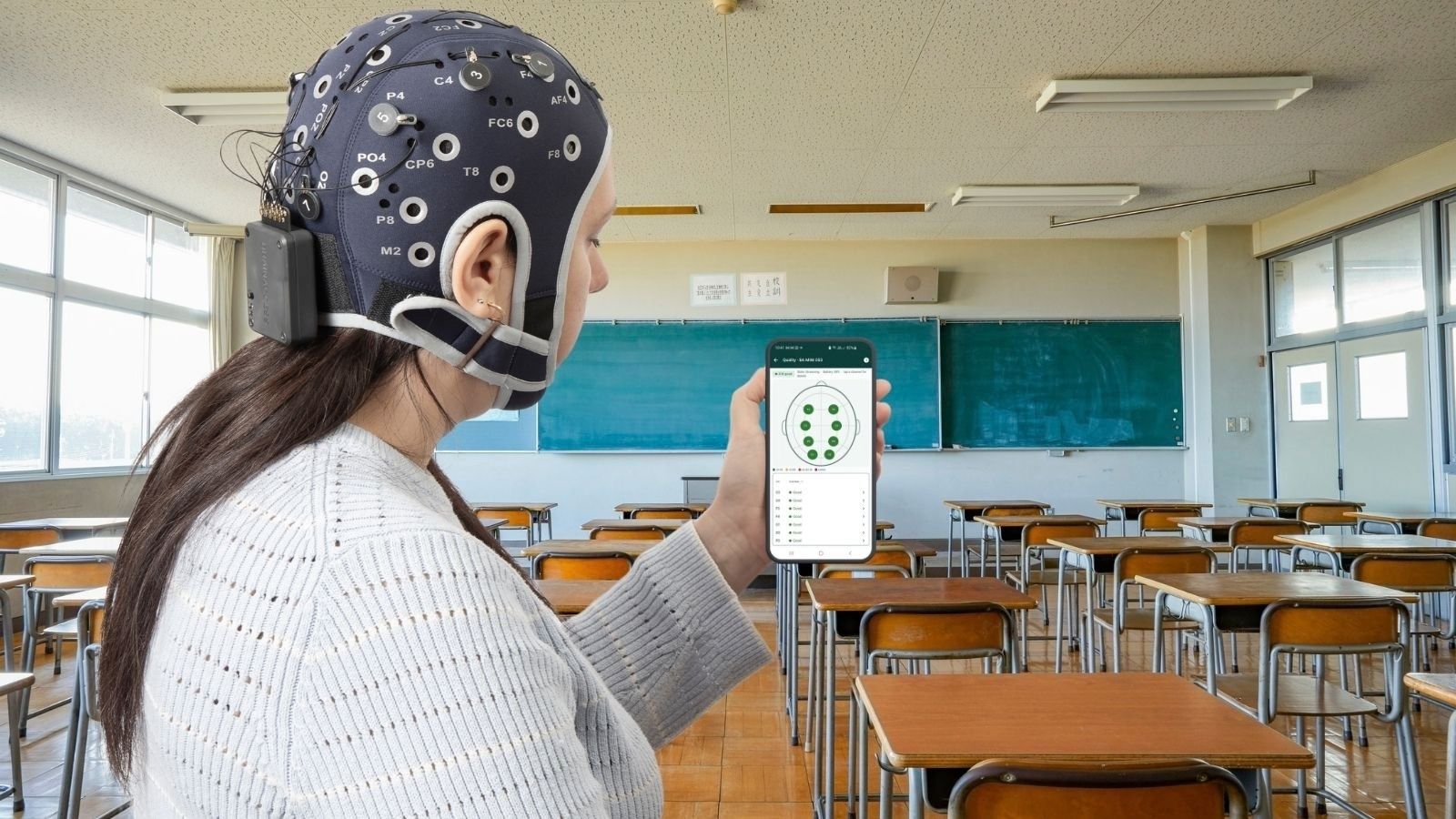
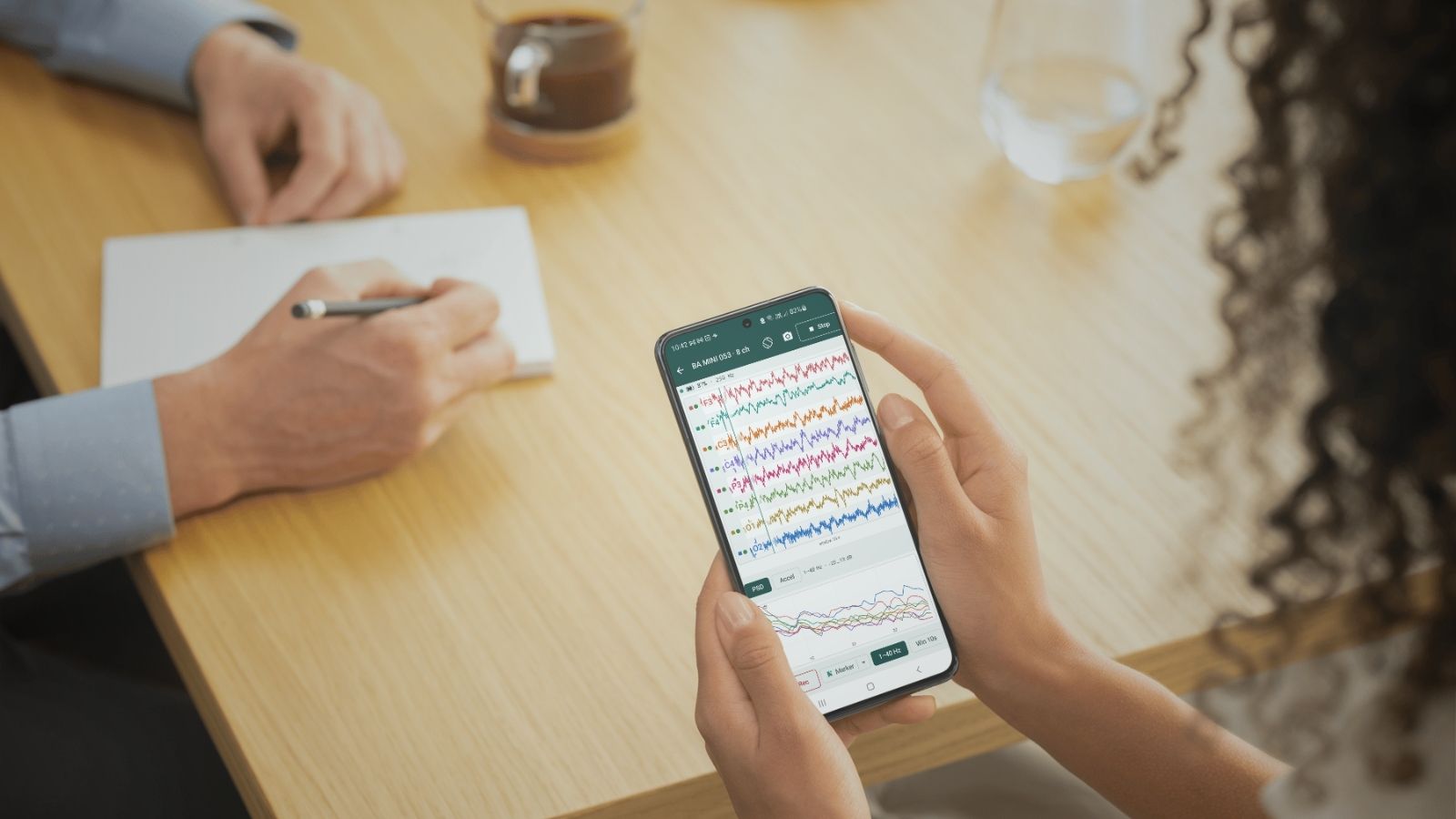
Non-invasive BCIs measure brain activity from outside the skull, typically using surface EEG, like BrainAccess devices. These systems are safe, portable, and increasingly affordable.
They are widely used in neuroscience research, neurofeedback, gaming, education, and mental state monitoring. This technology is risk-free and suitable even for newborns, babies, infants, and teens.
Applications
As said before, main applications involve scientific research in neuroscience, neuromarketing, neuroeconomics and related fields. Many neuroscientific studies used EEG to measure visual and auditory perception, cognition, emotion regulation, language processing, and social interactions.
Companies, healthcare providers, and end-users can also entrain this technology for
Neurofeedback for attention and stress
Cognitive workload monitoring
Gaming and VR control
Passive BCIs (adaptive interfaces based on mental state)
Advantages
Compared to intracranial BCI, surface EEG is safe and non-invasive. No surgery is required and thanks to the lower costs, accessibility is broader. The systems are scalable, as they can be customize for number of channels and sampling rate. Thanks to improvement in wireless communication, they are now portable, wearable devices that can be used outside the lab and do not require medical supervision. Non-invasive systems are driving the democratization of BCI technology, making brain sensing available beyond clinical environments.
Limitations
The main disadvantage compared to invasive BCI is the lower spatial resolution This is because surface EEG captures brain activity at the scalp level; to reach the electrode, electricity generated by the neurons has to travel through bones, tissues, skin, hairs resulting in dispersion, weaker signal, and difficulty to locate the brain source.
Moreover, surface EEG displays higher susceptibility to noise and artifacts, making it a more complex signal to disentangle from artfacts.
Implications
Importantly, the difference between invasive and non-invasive BCIs is not just technical, it’s ethical, societal, and philosophical.
Ethical concerns of invasive BCI comprise defining criteria to establish who qualifies for the implantation and how to handle accessibility of the procedure, to avoid further inequalities in treatments.
Other issues to mention are data privacy (Who owns the neural data?) and enhancement (Should BCIs only restore lost function, or enhance healthy individuals?).
As BCIs move from labs to everyday life, governance and regulation will be as important for the public and the users as the engineering breakthroughs.
Future Directions
As the technology advance, it remains clear that invasive and non-invasive BCIs have different use cases and target audience. The future of BCIs should not be considered a competition between invasive and non-invasive systems but a convergence.
Invasive BCIs will likely continue transforming clinical neuroscience, with specific applications in medical settings, improving patients’ quality of life, while non-invasive systems will continue to be engaged in research, shape consumer technology, and human-AI interaction.