EEG is one of the most powerful tools we have for reading brain activity in real time. But raw EEG signals are messy, full of noise from muscle movements, eye blinks, heartbeats, and motion. Cleaning that noise without discarding genuine neural information is one of the central challenges of brain-computer interface design. Meet ATAR, a tunable wavelet algorithm that is changing EEG artifact removal especially for compact, few-channel devices.
Written by Martina Berto.
THE PROBLEM
Artifacts: the uninvited guests in your EEG data
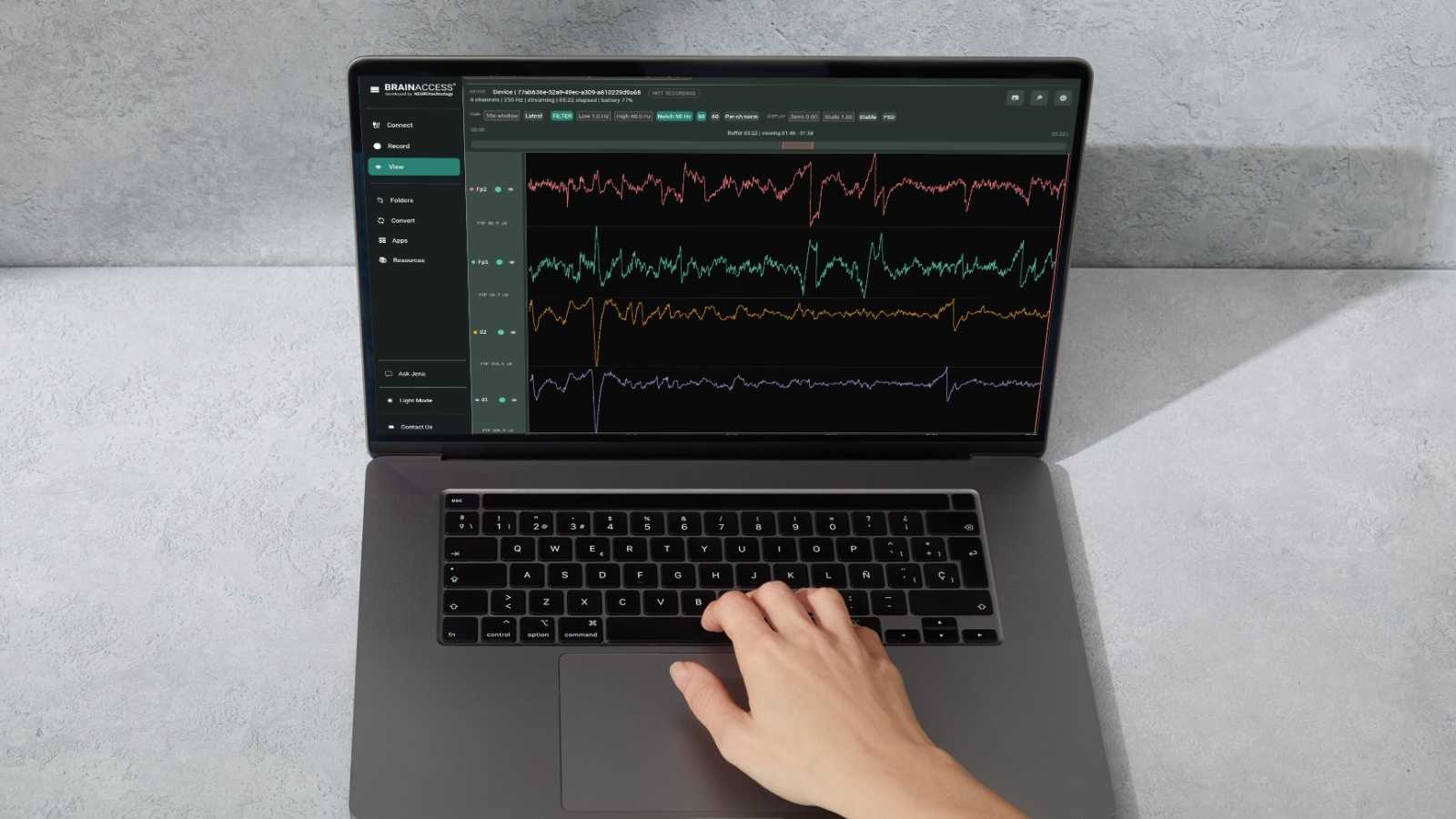
When you record EEG, you’re capturing electrical signals on the order of microvolts from the scalp. The problem? The human body is an electrical system too and everything from blinking to swallowing produces signals that swamp the neural data you’re actually after.
The main offenders fall into a few familiar categories:
The standard answer: ICA
For decades, the go-to approach has been Independent Component Analysis (ICA). The idea is elegant: decompose your multichannel EEG into statistically independent sources, identify which components look like artifacts, remove them, and reconstruct. When it works, it works well and it is easy to implement thanks to open sources toolboxes like MNE-python and EEGLAB.
But ICA comes with a significant structural limitation: it needs many channels to function reliably. Mathematically, ICA needs at least as many channels as there are sources to separate. For a lab-grade 64- or 128-channel cap, that’s fine. But for compact consumer-grade devices — the kind increasingly used in research, wellness, and real-world BCI applications — it falls flat.
The channel problem
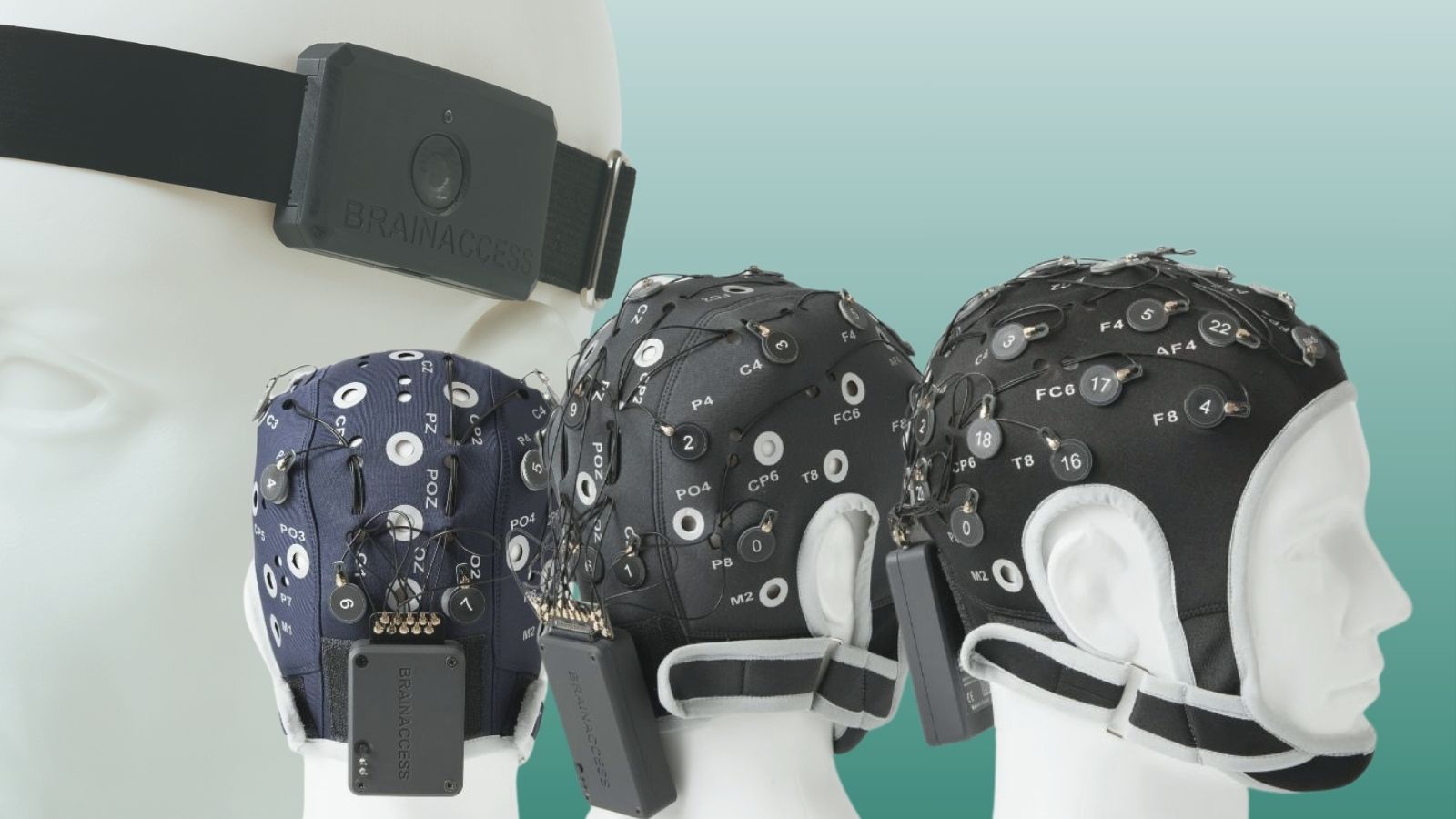
Devices like compact EEG headsets, 4–8 channel research rigs, or wearable monitors often provide too few channels for ICA to properly separate artifactual components from neural signals. Using ICA on low-density recordings risks removing genuine brain activity along with the noise — defeating the purpose entirely.
What’s needed is an approach that works on a single channel and that lets you control exactly how aggressively it cleans the signal.
THE METHOD
Meet ATAR: Automatic and Tunable Artifact Removal
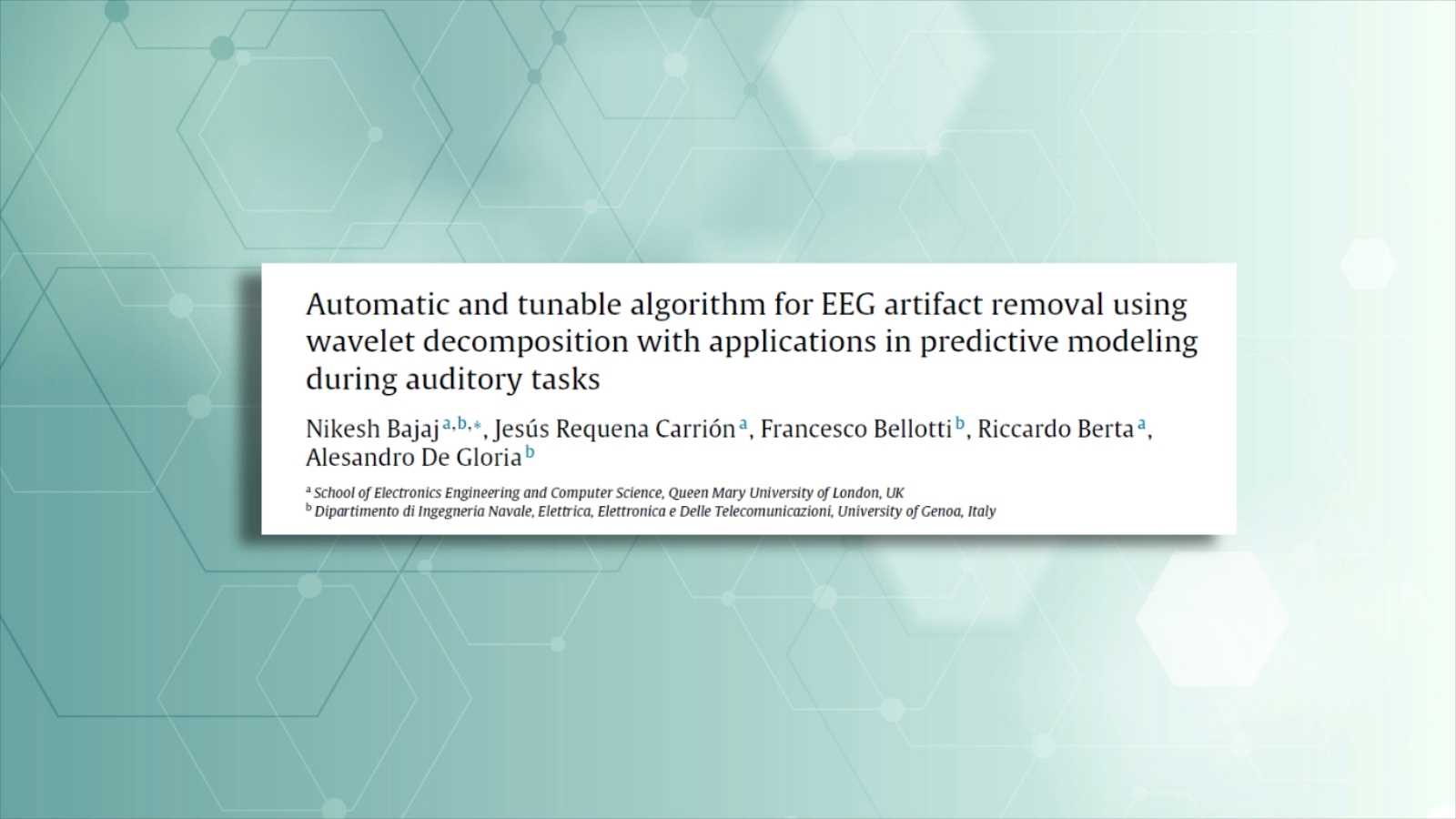
ATAR (Automatic and Tunable Artifact Removal) is a wavelet-based algorithm developed by Bajaj et al. and published in Biomedical Signal Processing and Control. Its core insight is simple but powerful: artifacts in EEG tend to be temporally localized — they show up as brief, high-amplitude events — and wavelets are exceptionally well-suited for finding and modifying exactly those kinds of structures.
How it works
1️⃣
Highpass filter
The raw EEG is filtered above 1 Hz to remove DC drift, then windowed into short overlapping segments.
2️⃣
Wavelet Packet Decomposition (WPD)
Each segment is decomposed into a multi-level wavelet basis. This gives a rich time-frequency representation where artifacts concentrate into high-magnitude coefficients.
3️⃣
Threshold selection via IQR
Rather than a fixed global threshold, ATAR estimates a threshold based on the Interquartile Range (IQR) of the wavelet coefficients — a measure robust to the very outliers it’s trying to suppress.
4️⃣
Wavelet filtering
Coefficients above the threshold are modified according to one of three operating modes (see below). Clean neural coefficients, assumed to be normally distributed with lower variance, are left intact.
5️⃣
Signal reconstruction
The filtered coefficients are transformed back via Inverse WPD, and overlapping windows are combined to produce the final cleaned signal.
Three modes, one tunable knob
One of ATAR’s defining features is that it doesn’t impose a single binary decision (“artifact or not”). Instead, it offers three modes that represent a spectrum from gentle to aggressive:
The threshold itself is controlled by two tunable parameters: β (the attenuation constant, which sets how sharply the threshold curve decays) and IPR (Interpercentile Range, which adjusts the reference range from which the threshold is derived). Crucially, these parameters are intuitive and have a predictable effect — increasing aggressiveness — that can be matched to the demands of your specific use case.
ICA
- Needs many channels to work reliably
- Typically requires manual component selection
- Can inadvertently remove genuine neural activity
- FastICA can introduce new artifacts (higher kurtosis)
- Does not work per-channel independently
✦ ATAR
- Works on a single EEG channel
- Fully automatic — no manual selection needed
- Tunable: control how aggressively artifacts are removed
- Outperforms ICA on predictive modeling tasks
- Handles artifacts isolated to individual channels
The paper’s results are telling. In testing on a 14-channel EEG dataset from an auditory attention study, ATAR’s Elimination mode (with β = 0.6, IPR = 70) achieved 79.6% accuracy on a listening/writing/resting classification task — compared to 75.2% for Extended-InfoMax ICA and just 70.4% for the uncleaned baseline. Across all four predictive tasks in the study, ATAR consistently outperformed ICA-based methods.
WHAT’S NEXT
Introducing the Preprocessing SDK
In our next major release, we’re shipping a dedicated preprocessing SDK that brings research-grade signal cleaning to every developer building on our platform. ATAR will be one of the core methods available — and it’s ready to use right out of the box.
Whether you’re building a real-time BCI application or running offline analysis on collected data, the SDK will let you drop ATAR into your pipeline with a few lines of code — and tune it to match your device, your task, and your tolerance for information loss vs. artifact suppression.
The SDK supports both online processing — cleaning EEG frame by frame as it arrives from your headset — and offline processing — running ATAR over full recordings for research and analysis workflows. The same method, the same parameters, the same behavior: predictable and reproducible across both use cases.
Your turn
Had you heard of ATAR before? Are you currently dealing with artifact removal in your EEG pipeline — and how are you handling it? We’d love to know if you’ll give it a try when the SDK ships.
Reference
Bajaj, N., Carrión, J. R., Bellotti, F., Berta, R., & De Gloria, A. (2020). Automatic and tunable algorithm for EEG artifact removal using wavelet decomposition with applications in predictive modeling during auditory tasks. Biomedical Signal Processing and Control, 55, 101624.

Martina Berto, PhD
Research Engineer & Neuroscientist @ Neurotechnology.

Martina Berto, PhD
Research Engineer & Neuroscientist @ Neurotechnology.