
We’re thrilled to announce that BrainAccess is a proud sponsor of Brainhack Warsaw 2026 — one of Poland’s most exciting neuroscience community events.
WHAT IS BRAINHACK WARSAW?
The Hackathon
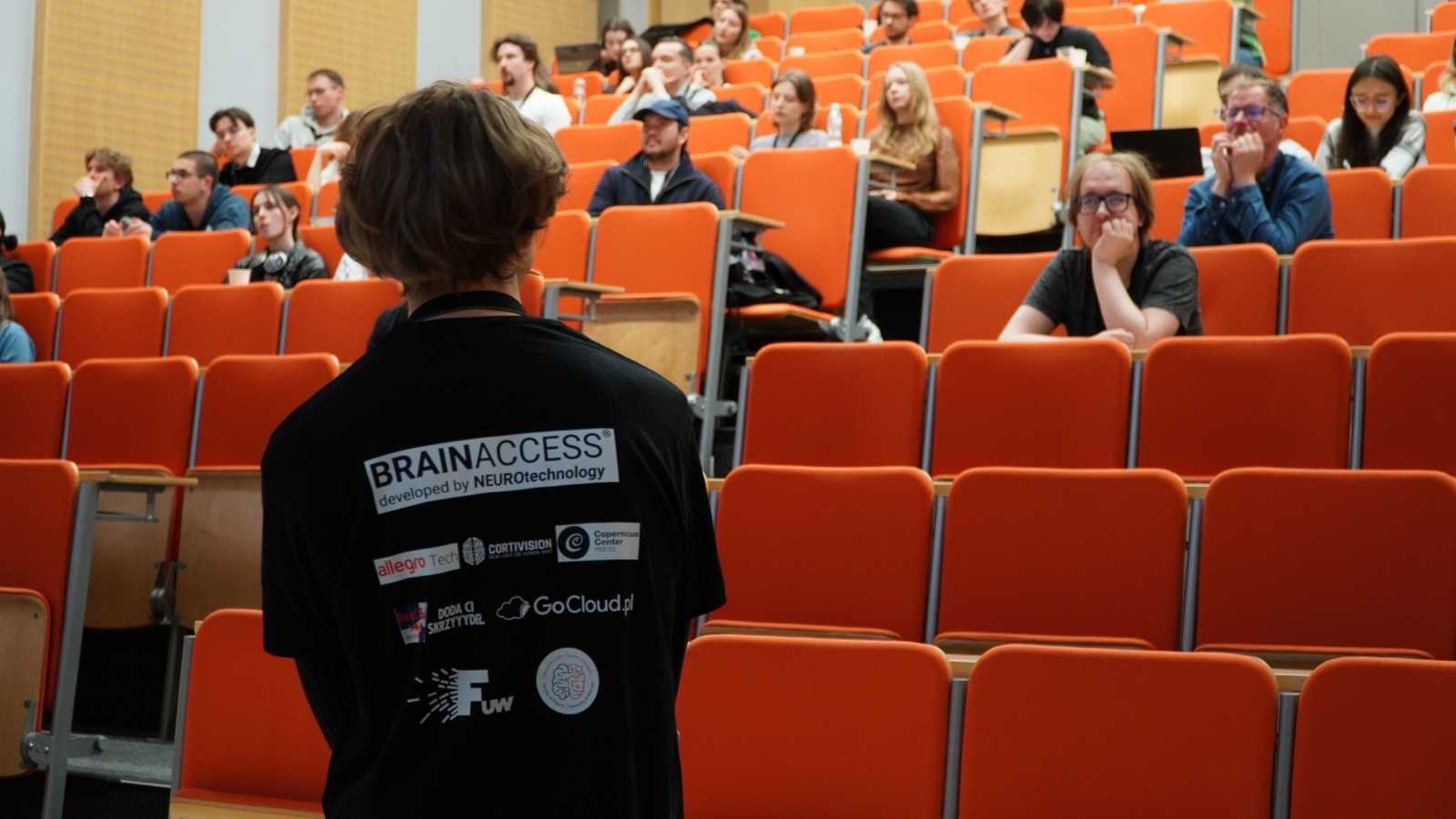
Brainhack Warsaw is a three-day collaborative hackathon hosted by the Neuroinformatics Student Association at the Faculty of Physics, University of Warsaw. Now in its 8th edition, it has grown into one of the flagship events of the global Brainhack community, a movement dedicated to open science, reproducible research, and the free exchange of ideas across disciplines.
This year, participants gathered in mid-April. The event included students, PhD candidates, and early-career researchers coming from backgrounds as diverse as biology, psychology, computer science, physics, and design.
What unites them is a shared curiosity about the brain and a willingness to roll up their sleeves and build something real. In three days, they form interdisciplinary teams, define a project, and prototype it from scratch. The goal is producing tools and analyses that go on to fuel genuine research.
WHAT ARE PARTICIPANTS WORKING ON?
30 Projects, Endless Directions
One of the things that makes Brainhack Warsaw special is the sheer breadth of what participants tackle. This year’s 30 projects span a remarkable range of approaches and questions.
On the neurotechnology side, teams worked on
- Classifying cognitive load from mobile fNIRS signals during physical activity
- Decoding empathy from EEG using multivariate pattern analysis
- Exploring what brainrot — the effect of high-speed viral content — actually does to neural physiology in measurable terms
- Measuring EEG aesthetics perception, asking whether a machine can learn to judge beauty the way a human brain does.
Beyond EEG and fNIRS, projects reached into:
- Connectomics
- Computational modelling of parent–child brain synchrony
- Bayesian pipelines for cerebrospinal fluid dynamics
- Genomic risk profiling for psychiatric disorders
- NLP-based psychological construct mapping
- Privacy-preserving data pipelines for humanoid robot training.
This interdisciplinary richness is precisely what Brainhack is designed to foster. When a physicist sits next to a psychologist sits next to a software engineer, and they’re all trying to solve the same problem, interesting things happen.
WHY DOES BRAINACCESS SPONSOR BRAINHACK?
BrainAccess Mission
Our mission at BrainAccess is to make high-quality EEG accessible to researchers, developers, and innovators who shouldn’t have to fight expensive, cumbersome hardware just to pursue a good idea.
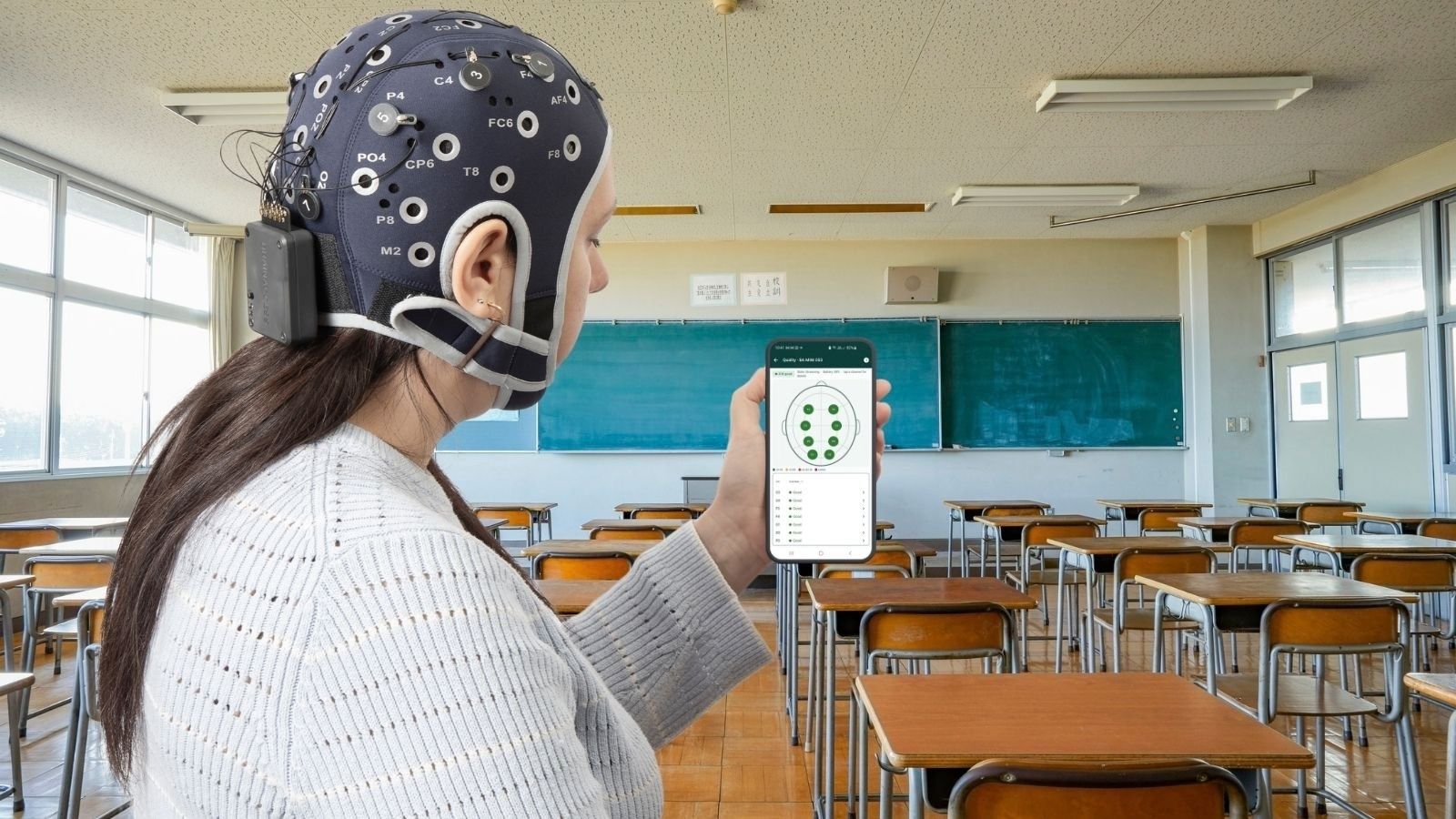
Compact, wearable EEG headsets like our HALO, MINI, MIDI, and MAXI are built for exactly the kind of exploratory, hands-on work that events like Brainhack enable.
Supporting Brainhack Warsaw is a natural extension of that philosophy. The students and researchers in that room are building the pipelines, the models, the open-source tools, and the intuitions that will shape the field. We want to be part of that journey from the very beginning.
We’re grateful to the Neuroinformatics Student Association for organising such a vibrant and well-run event, and we’re looking forward to seeing where this year’s projects go next.
Get Involved
If you’re a researcher, developer, or institution interested in exploring what’s possible with compact EEG, we’d love to hear from you. Discover our hardware and software solutions at brainaccess.ai, or reach out to our team directly — we’re always happy to talk neurotechnology.