
Can lying on a vibrating table listening to carefully crafted audio actually change your brain? A team of Portuguese engineers built a system to find out and the results are surprisingly measurable.
Sound therapy is one of those ideas that sits awkwardly between ancient wisdom and modern science. Cultures across history have used chanting, singing bowls, and rhythmic drumming for healing. But “healing sounds” can sound a lot like pseudoscience to a skeptical ear. A research team at the Instituto Superior de Engenharia de Lisboa (ISEL) in Portugal decided to stop debating and start measuring.
Their project, SonikB3D, combined a custom-built vibrating massage table, immersive 3D audio, and a suite of physiological sensors — including our BrainAccess HALO EEG headset — to ask a simple question: does sound actually relax you, and can we prove it?
THE SETUP
Sounds You Can Feel
The SonikB3D platform is, at its core, a high-tech therapeutic bed. The team built a modular wooden platform divided into five sections, several of which contain vibroacoustic transducers: devices that convert audio signals directly into physical vibrations (Figure 1). When you lie on it and music plays, you don’t just hear the sound; you feel it moving through your body.
This approach is called vibroacoustic therapy and there’s a logic to it: the body has mechanoreceptors (vibration-sensitive cells) throughout the skin and tissue. Stimulating them alongside the auditory system creates a fuller, more immersive sensory experience that may engage the nervous system more deeply than sound alone.
The audio side was equally considered. Participants were exposed to three conditions:
1.
Slightly different tones played to each ear, creating an illusory “beat” that can nudge brain wave activity toward target frequencies
2.
3D spatial audio
Natural soundscapes in 3 dimensions, played either through headphones or through a dedicated Immersive Sound Room
3.
Binaural beats and 3D spatial audio were presented together, layered for maximum effect.

WHERE EEG COMES IN
Measuring Relaxation
Here’s where it gets interesting, and where BrainAccess HALO enters the picture.
Relaxation is notoriously hard to measure. You can ask someone how relaxed they feel, but self-reports are subjective and easily biased. What the ISEL team wanted was objective, physiological evidence, the kind that doesn’t depend on whether a participant is trying to please the researchers.
They used three complementary measurement systems:
- PPG and EDA (heart rate and skin conductance) were captured via the EmotiphAI wearable, a compact device worn on the arm that communicates via Bluetooth.
- EEG was recorded using the BrainAccess HALO.
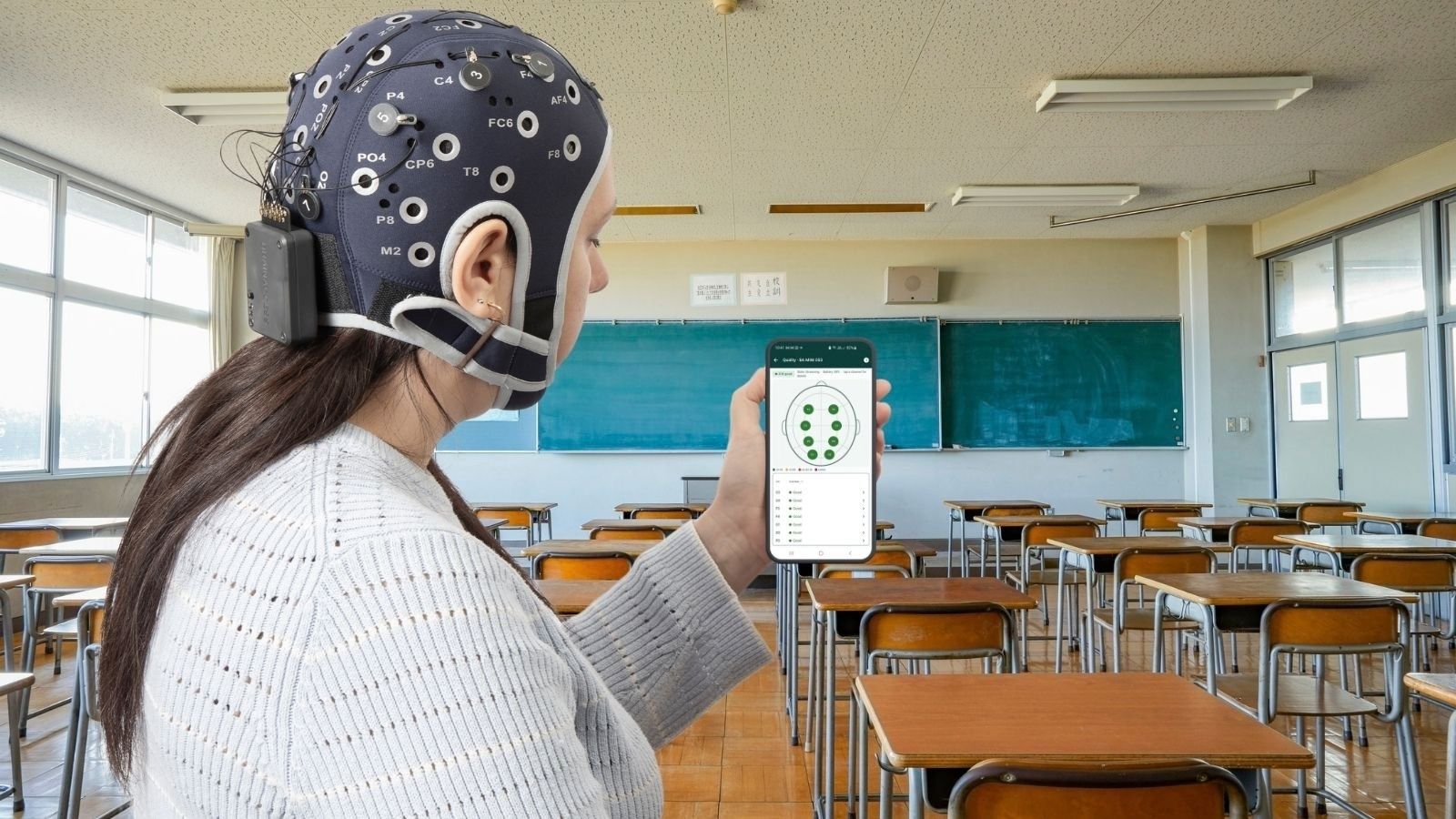
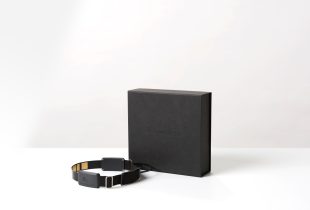
The HALO was a natural fit for this kind of research. It’s wireless, lightweight, and designed for real-world use rather than a sterile clinical lab. Participants could lie comfortably on the SonikB3D platform without being tethered to a rack of equipment. The headset captures signals across multiple electrode channels with high temporal resolution, making it possible to track changes in specific brain wave bands, exactly what the team needed.
The target EEG frequencies were in the
- theta (4–8 Hz) and
- alpha (8–13 Hz) ranges.
These brain wave patterns are associated with deep relaxation, light meditation, and that pleasantly drifty state just before sleep.
WHAT THEY WERE LOOKING FOR
Combining different physiological data
The team defined “relaxation” not as a feeling, but as a physiological signature made up of several converging indicators:
| Signal | Relaxed State Shows… |
|---|---|
| HRV (Heart Rate Variability) | Higher RMSSD and SDNN scores; lower LF/HF ratio (more parasympathetic activity) |
| EDA (Skin Conductance) | Fewer and smaller stress response peaks |
| EEG (Brain Waves) | More alpha and theta power; less beta activity |
Think of HRV, EDA, and EEG as three independent measures. If all three show that the nervous system has shifted toward calm, you have strong evidence that something real happened.
THE RESULTS
What the Brain Data Showed
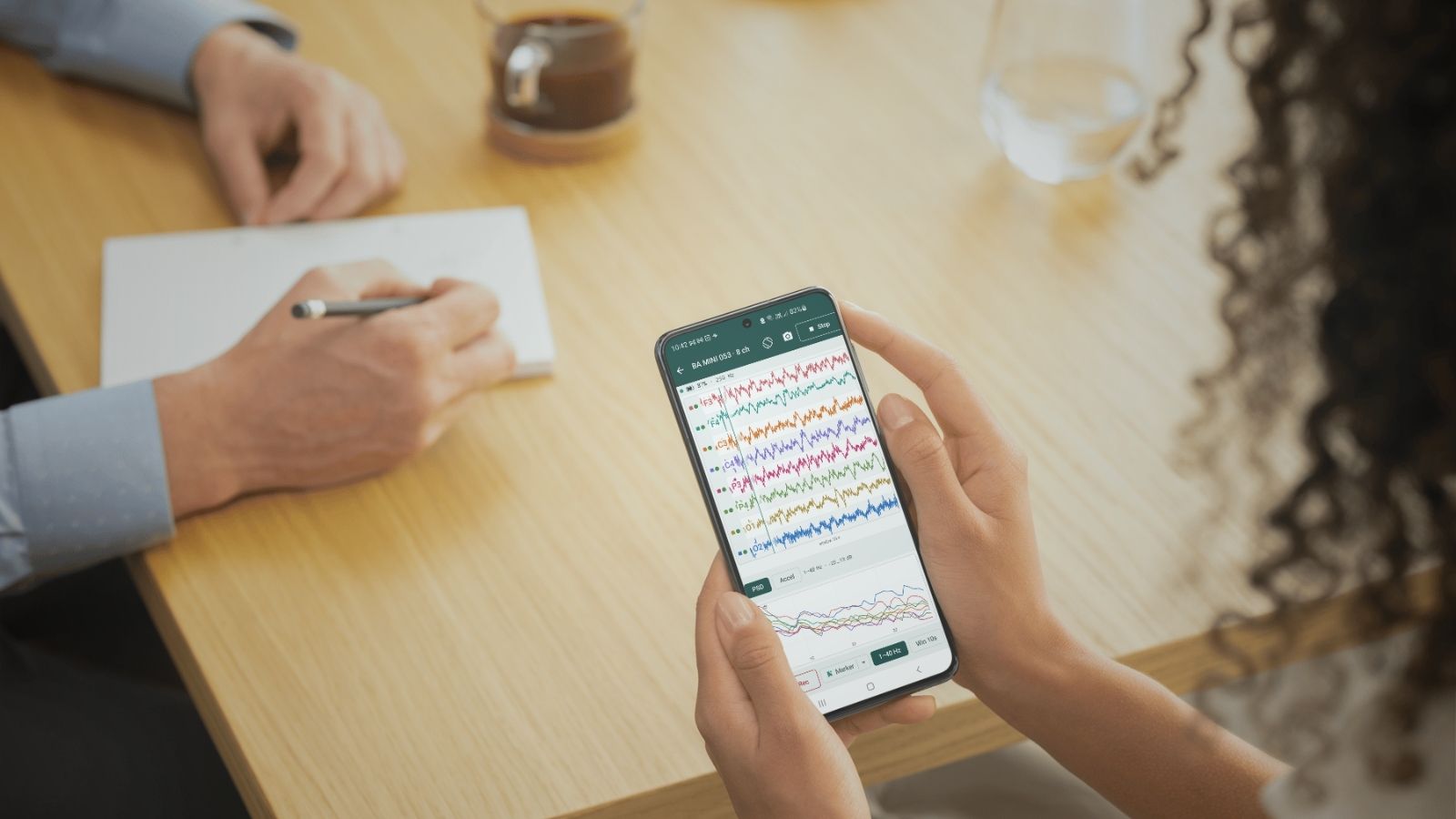
The BrainAccess HALO gave the team a window into cortical activity across the full spectrum of brain wave frequencies — delta, theta, alpha, beta, and gamma — throughout each session.
In relaxed states, you’d expect to see alpha power rise (particularly over the back of the head) and beta activity fall. Beta waves are associated with active thinking, alertness, and mental effort; they tend to quiet down when the mind lets go.
The team tracked the alpha/beta ratio as a headline indicator of calm. In the example participant shown in their results, this ratio trended upward over the course of the session: a brain gradually settling into a more restful mode.
Crucially, this happened in parallel with the PPG and EDA changes. The heart rate variability shifted toward parasympathetic dominance (the “rest and digest” mode), and skin conductance responses became less frequent. Three independent systems, pointing in the same direction.
Why This Matters
- It’s demystifying an ancient practice. Sound therapy has been dismissed for years as fringe wellness pseudoscience. What this work demonstrates is that at least some of its claimed effects are real, physiologically detectable phenomena. You can measure them, graph them, and replicate them.
- The technology is now accessible enough to study it properly. Historically, EEG research required a hospital or a dedicated neurophysiology lab. The BrainAccess HALO — wireless, easy to fit, comfortable enough for a 30-minute session on a massage table — is part of a broader shift that’s bringing research-grade brain monitoring into applied, real-world contexts.
- The multimodal approach is the key insight. No single sensor tells the full story. EEG shows you the brain; PPG shows you the heart; EDA shows you the sweat glands. When all three shift in the same direction, you have a compelling case that something meaningful is happening across the entire nervous system.
- The potential applications are broad. The ISEL team envisions future use in anxiety treatment, chronic pain management, sleep disorders, post-traumatic stress, and occupational wellness. With AI-driven personalization, systems like SonikB3D could theoretically adjust the audio in real time based on a person’s live physiological state — nudging the brain toward calm as needed.
Conclusion
The full paper, “SONIKB3D: 3D Sound and Vibration Approach for Monitoring Physiological Parameters in Music Therapy” [1], was presented at the 3rd Symposium of Acoustics and Vibrations (ITECONS, Portugal) by J. Paulo and colleagues at ISEL.
In the article, the researchers are honest about where things stand. The study involved around 20 participants in an exploratory format. Enough to demonstrate that the setup works and that the signals are meaningful, but not yet enough for definitive clinical conclusions. This study represent a proof of concept: sound therapy isn’t magic, it can be measurable medicine.
This type of real-world application is exactly why we design our wireless, portable, and comfortable headband. We are excited to see BrainAccess HALO being one of the tools making this kind of research and demonstration possible.
We can’t wait to see future developments!
Shop BrainAccess HALO
Follow BrainAccess on Linkedin to stay updated on our products and upcoming releases!
Reference
[1] Paulo, J., Lourenço, A., Silva, V., Fernandes, A., Pires, J., Sebastião, T., … & Mengucci, M. SONIKB3D-3D SOUND AND VIBRATION APPROACH FOR MONITORING PHYSIOLOGICAL PARAMETERS IN MUSIC THERAPY.