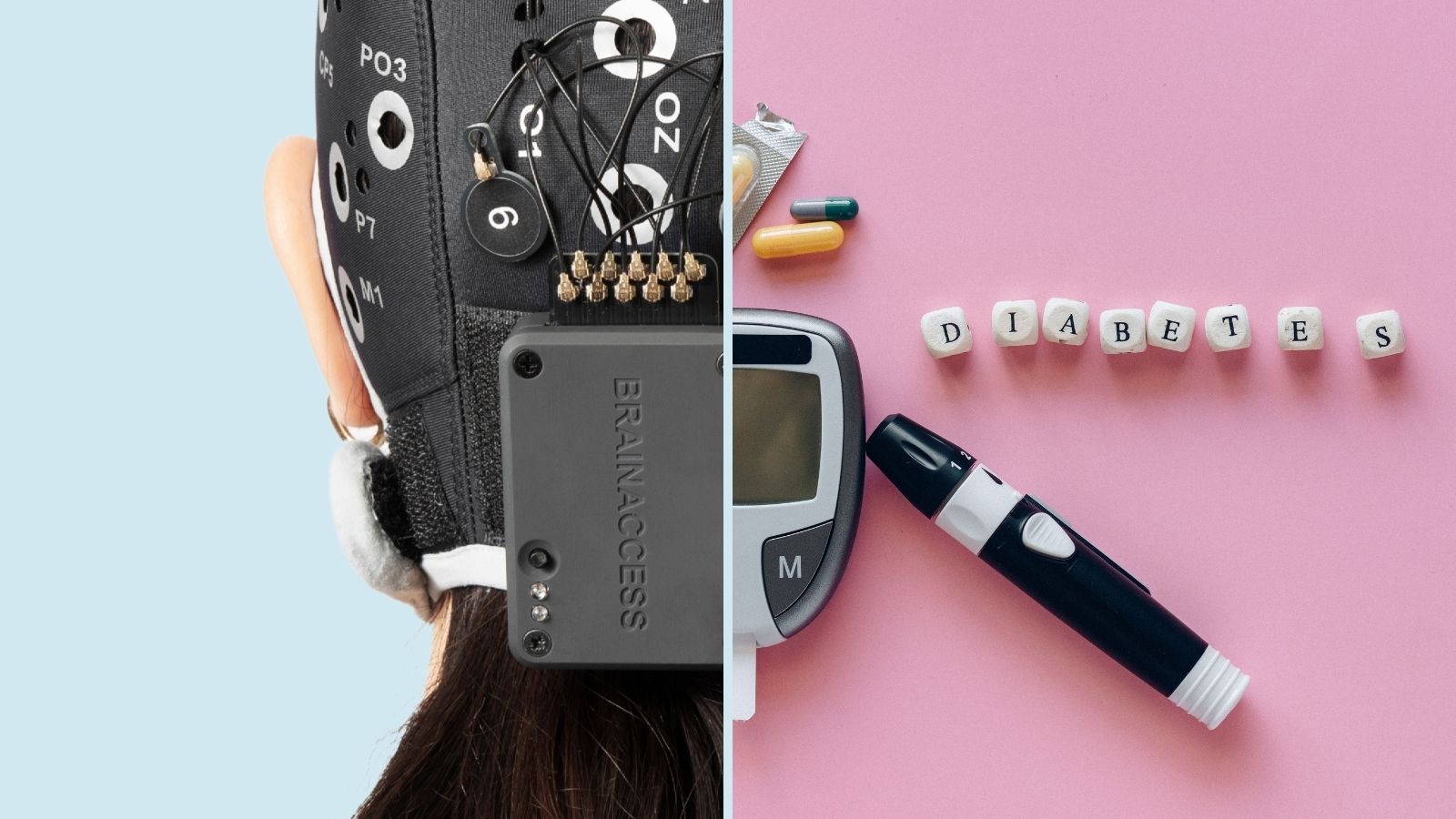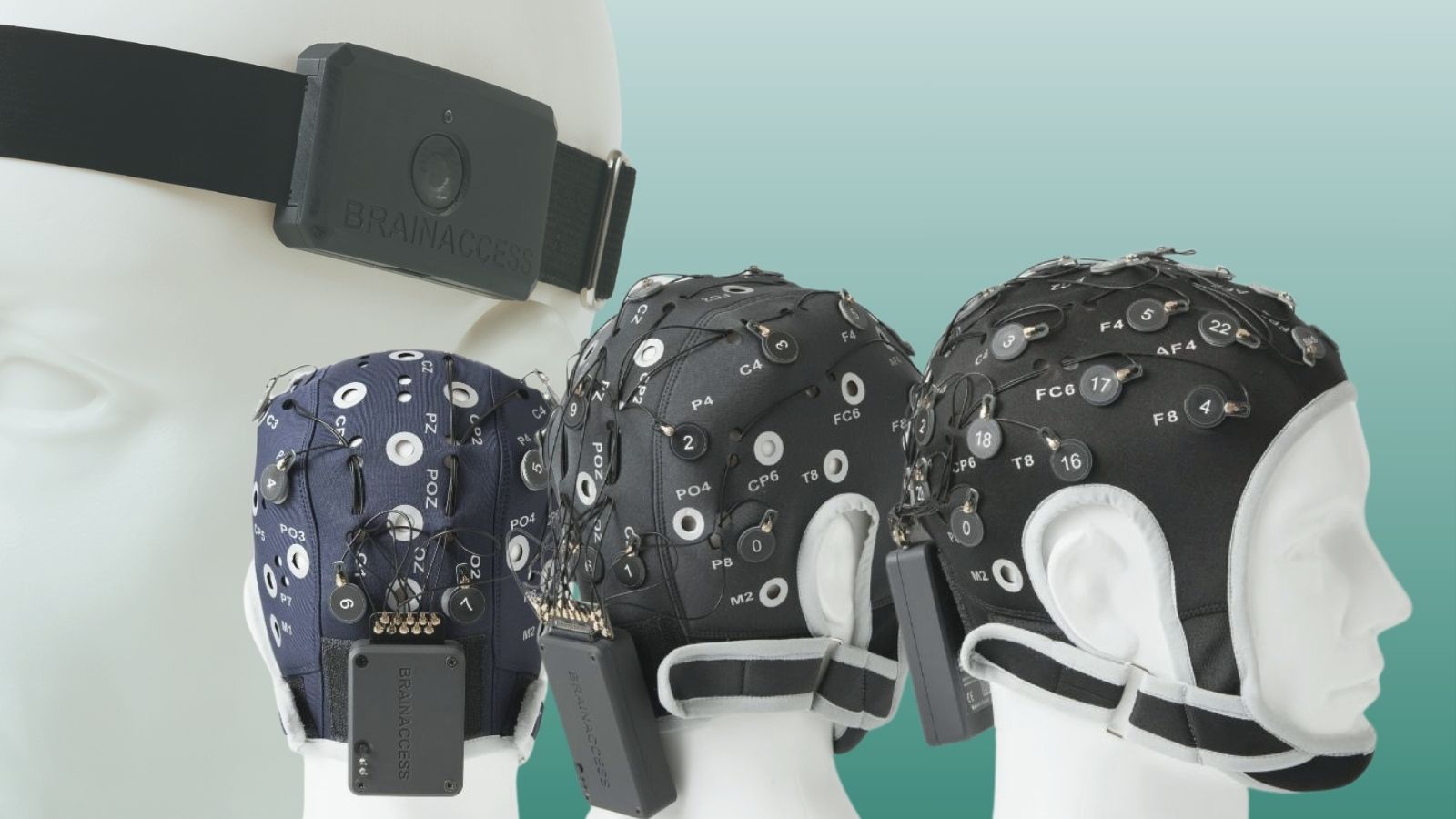

Advances in technology have made it possible to observe the human brain in ways that were previously inaccessible. A couple of years ago Neurotechnology, a developer of high-precision algorithms and software based on deep neural networks and other AI-related technologies, introduced the BrainAccess standard EEG Kit solution, designed for brain-computer interface applications. The company, passionate about the potential for BrainAccess’s AI EEG future, develops devices that can be used to measure brain activity and is constantly improving its software that enables studying the brain’s response to various stimuli or even making choices on a computer.
Osvaldas Putkis, head of the Engineering Department of “Neurotechnology”, talks about the brain-computer interface technology, as well as what opportunities it will provide for people and businesses.
Brain-computer interface technology: A rapidly evolving field
“During the last decade, brain activity scanning technologies have developed extremely rapidly. More and more scientific and business representatives are interested in non-invasive brain research and are considering how to apply it in everyday life. We are talking about a number of areas from neurorehabilitation to meditation, from the treatment of sleep disorders to help in learning and absorbing new information,” says Osvaldas Putkis.
According to the engineer, non-invasive brain monitoring is carried out by several different methods, but the most popular among them is electroencephalography (EEG). This method allows us to measure the electrical signals associated with neurons’ activity that make up the human brain and is cheaper and more convenient than the alternatives. External electrodes are placed on a person’s head, and the electrical potential is measured by electroencephalograph. The first EEG study of the human brain was carried out in 1924, and in almost 100 years this technology has improved to the point where it is possible to record EEG data in a home environment.
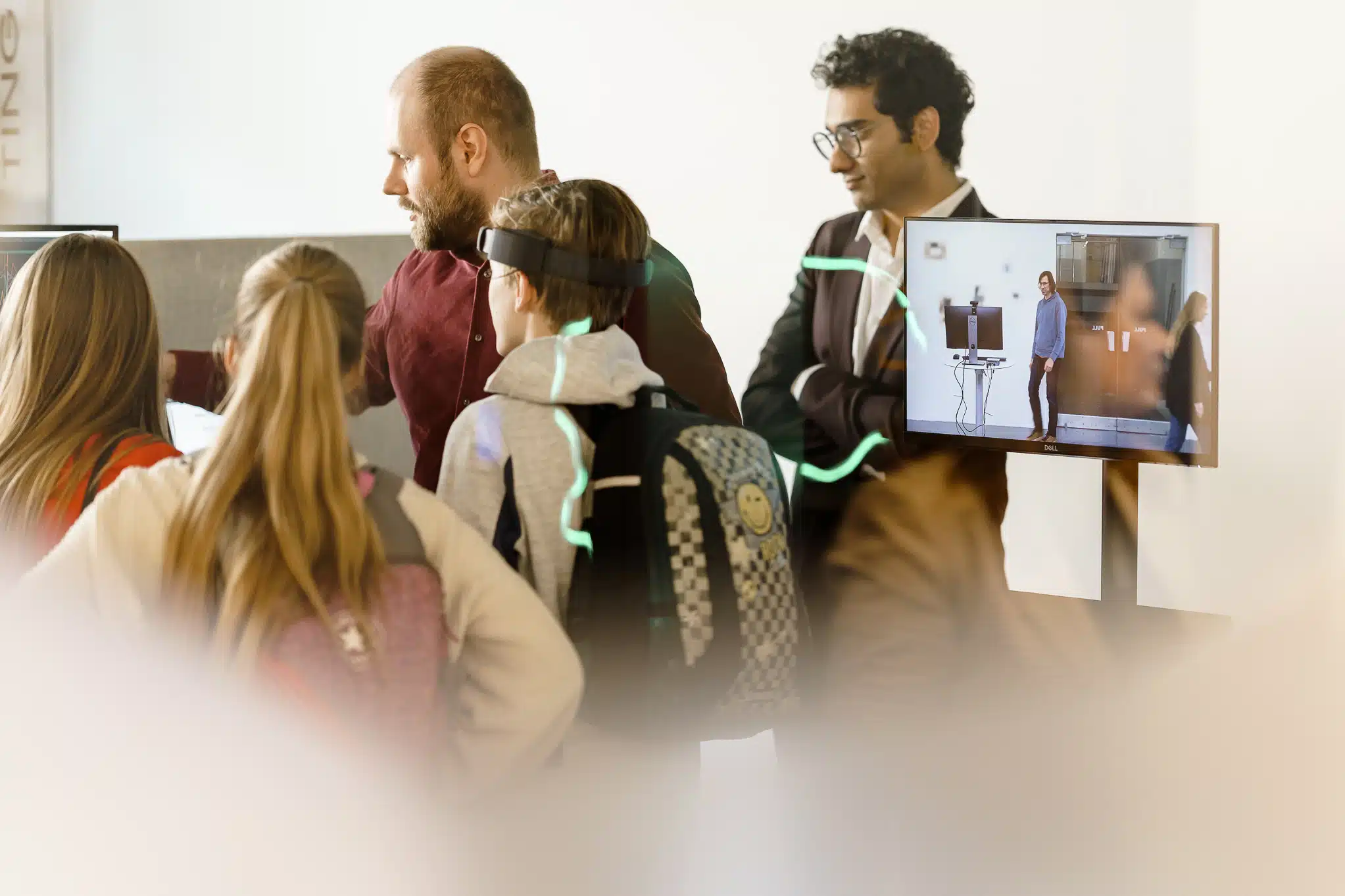
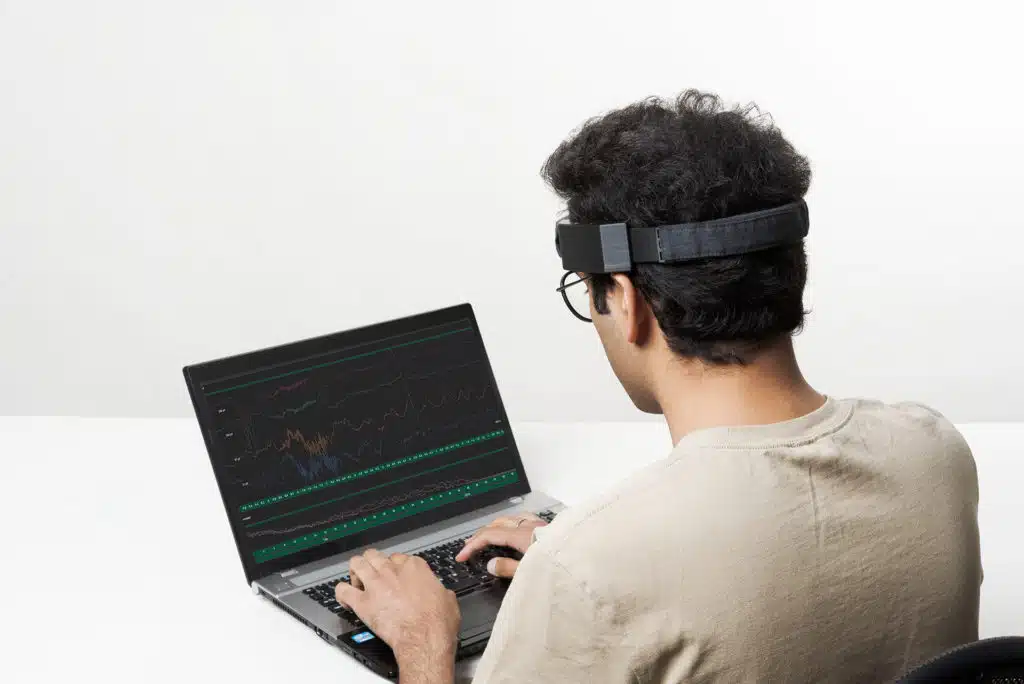
“Previously, brain research required going to a hospital or research center, connecting a bunch of wires and connectors to a person’s head, and the equipment itself took up a lot of space and was very sensitive to ambient electromagnetic noise. Today, brain activity can be read by wearing a flexible headgear that looks like a swimming cap or a headband, and sensors are no bigger than a coin. Such a device is significantly more mobile and its use extends beyond the laboratory,” says O. Putkis.
Neurotechnology, which has been developing BrainAccess technology in Lithuania for a few years, is using dry contact electrodes that are convenient and do not require gel application, for improving electrical contact. Wireless portable EEG scanning devices are being developed together with EEG software solutions.
How brain-computer interface technology is changing the world
Global projections show that EEG devices will continue to gain popularity and be used for the diagnosis of various disorders, as well as for the continuous monitoring and treatment of diseases such as epilepsy. The use of EEG feedback opens up possibilities for effective neurorehabilitation after trauma or heart attacks. It is worth noting that EEG technologies can be applied even in forensics, i.e. used as a ‘lie detector’ to determine if a person is concealing information.
“Until now, businesses have looked at brain research cautiously because the equipment was expensive, complicated, and quite inconvenient to use for those without a neuroscience background. Today, the interest in brain research and its possible applications in business keeps increasing,” says O. Putkis.
Another field in which the expert sees the promising and wide application of the brain-computer interface is the research of human physical activity, emotional state, and sleep. “Current smartphones and smartwatches are already monitoring some of the biosignals and physical activity, but EEG technology can record brain signals and provide deeper insights into its state and potentially offer a person what he is most missing at that moment,” says O. Putkis. For example, such a device can estimate the stress or calmness levels of a person, determine sleep stages, when it is calm, awake, or in a sleep phase, and in the future, it is likely that more and more EEG data will be collected during typical human activities. Thus, EEG data will make it possible to create effective meditation programs, improve the learning process or treat sleep disorders.
How artificial intelligence is powering the future of brain-computer interface technology
“Great future possibilities are also associated with artificial intelligence, which will help process huge amounts of information and help develop BCI algorithms that are less susceptible to environmental noise and other variations,” says O. Putkis.
Neurotechnology engineer tells us that the P300 brain wave allows us to recognize a person’s reaction to a stimulus. Such a signal is generated by the brain when a person is shown an object that is of interest to him or different from others. This response can be used to enable a human to type on a computer without using a keyboard. Also, potentially, this technology could determine whether a person is concealing some information or not, so it could be applied in forensics.
Brain-computer interface technology is likely to change the way we learn as well. According to the engineer, one of the most popular trends in the world is the orientation towards creating personal learning plans, determining cognitive abilities, and neurofeedback.
“Recent years have seen significant development in the field of EEG, advancing technology makes adoption easier, and we are likely to see more and more services and products based on EEG technology on the market soon,” says O. Putkis.
As well as a standard kit, we also have an extended EEG cap kit, plus the innovative HALO headband. Take a moment to discover each carefully designed product, demonstrating this genius technology.