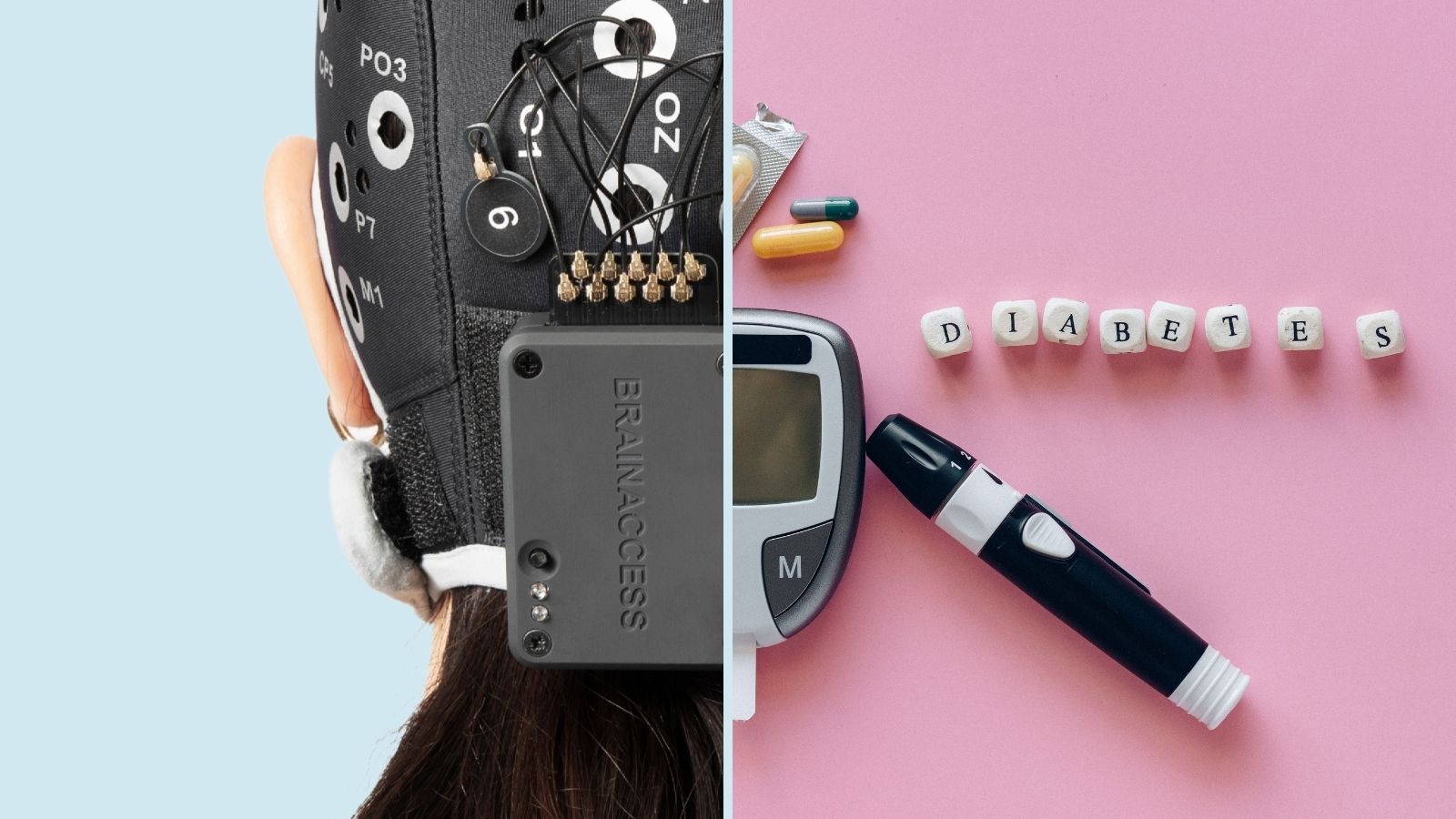

Back in February, we shared a promising conference paper showing that the BrainAccess MINI could pick up brain-activity patterns linked to dangerous blood-sugar swings in people with Type 1 diabetes. That work has now gone through full peer review and is published in Frontiers in Human Neuroscience. The refined results are even stronger, correctly flagging hypoglycemia with over 96% accuracy in a controlled pilot setting. We’re breaking down what’s new, what it means, and what the study can’t tell us yet.
A quick throwback
In February, we wrote about an early pilot study out of the University of Žilina, exploring whether a portable EEG device could detect the brain-activity signatures of hypoglycemia and hyperglycemia in people with Type 1 diabetes (T1D). That version of the work was a conference paper, and the results were encouraging enough to make us genuinely excited about where it might go.
Now it has gone further: the same research team has taken that idea, refined it, and published a peer-reviewed proof-of-concept study in Frontiers in Human Neuroscience.
We’re excited to give it a recap here, because it’s exactly the kind of small device, meaningful science story we love to share.
What they did
The goal was simple: can we tell, just from someone’s brainwaves, whether their blood sugar has dropped to a dangerous low?
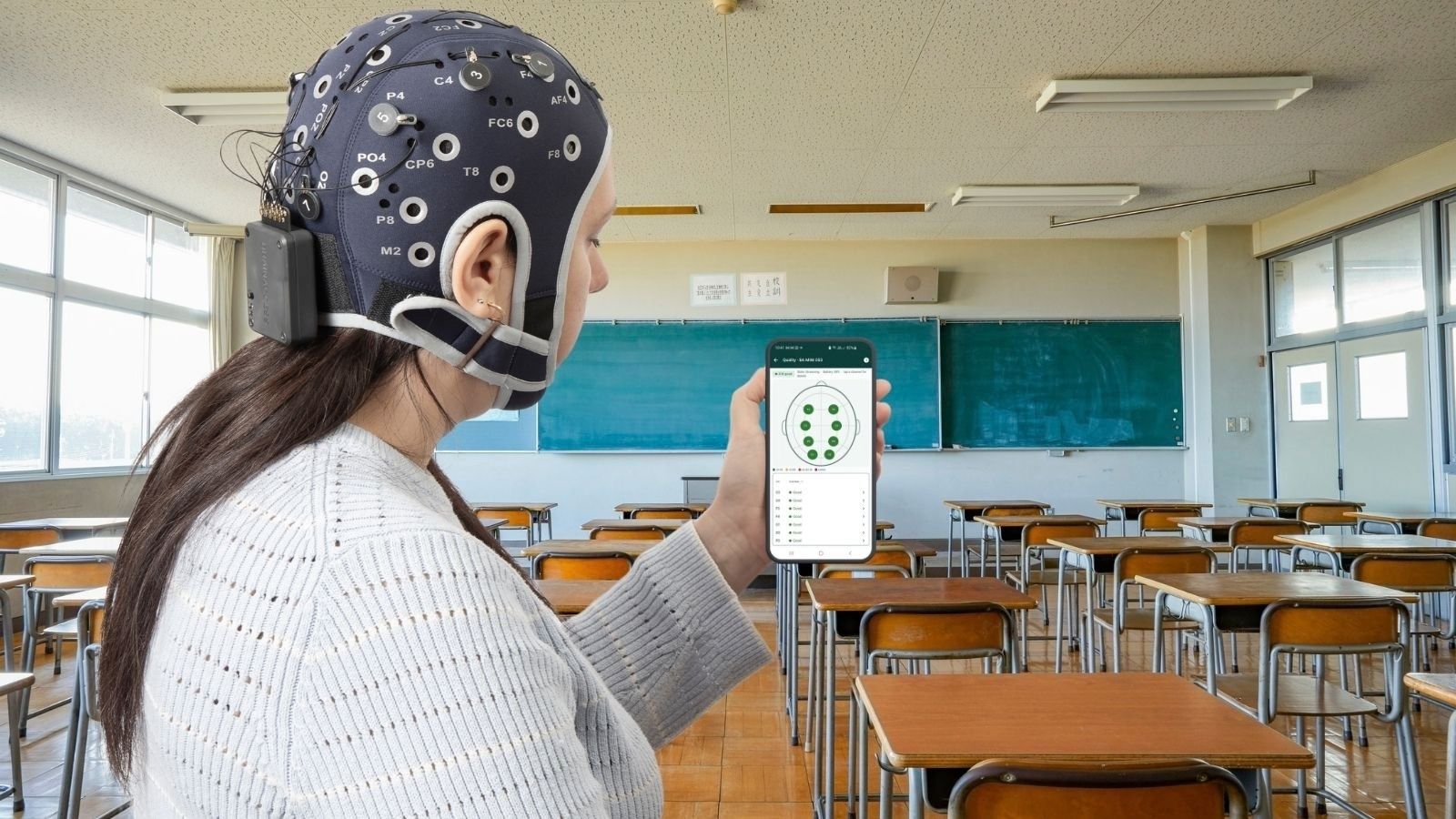
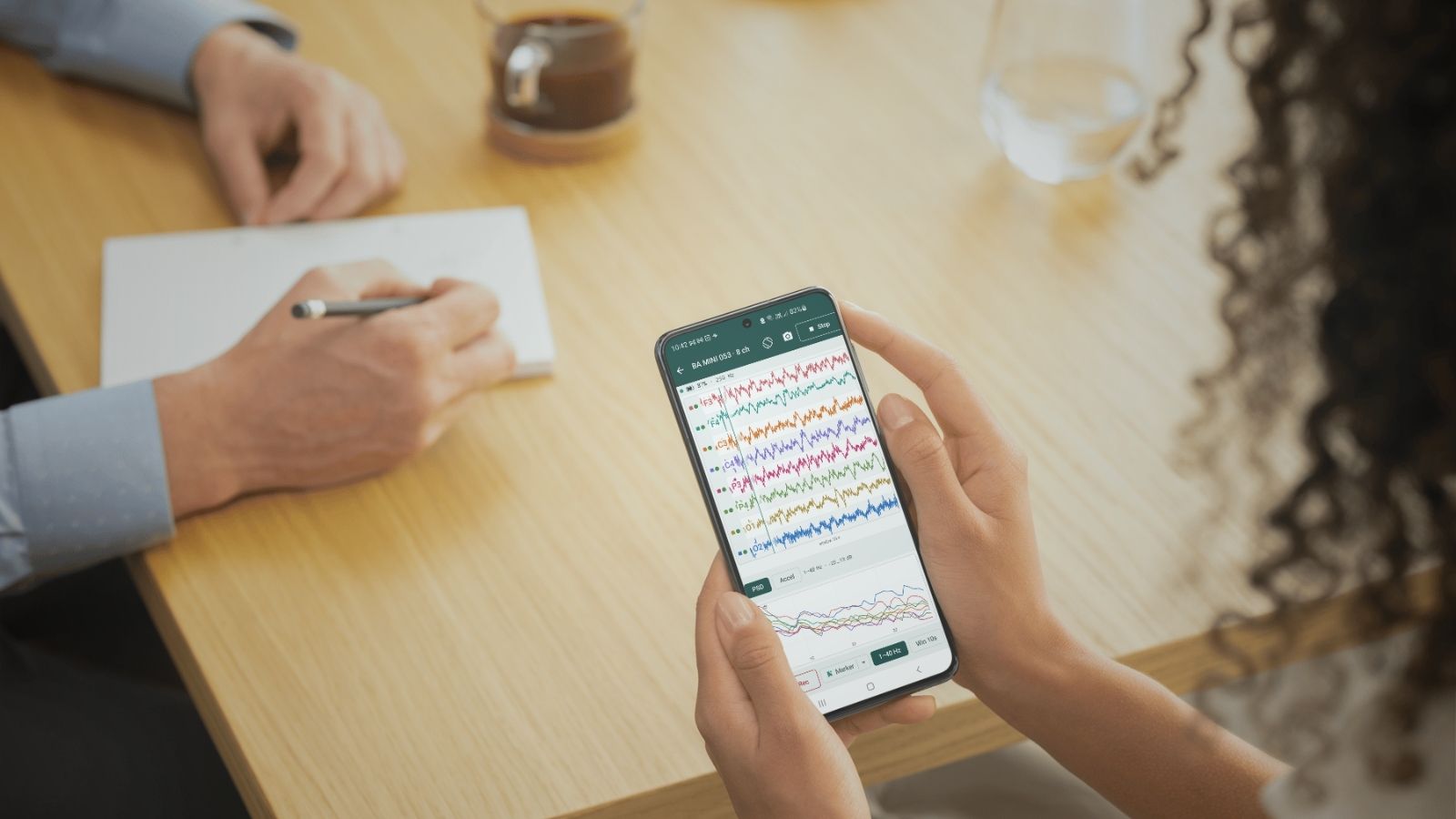
Two participants with Type 1 diabetes(T1D) wore our BrainAccess MINI (8 dry electrodes, fully portable) while their brain activity was recorded and synchronized in real time with a continuous glucose monitor (CGM), using the Lab Streaming Layer (LSL) framework to keep everything perfectly aligned.
Five healthy volunteers were also recorded under the same conditions, purely to give the researchers a baseline of “normal” brain activity to compare against.
Rather than trying to separate three glucose states (too low, normal, too high), the team found that “too high” and “normal” looked almost identical in the EEG data, so they simplified the problem into the question that matters most clinically: is this hypoglycemia, or is it not?
They then tested dozens of ways of slicing the EEG recordings into short segments (from 5 seconds up to 45 seconds) and fed the resulting brain-wave features into lightweight, classical machine-learning models — the kind that could realistically run on a small, battery-powered wearable someday, rather than heavy deep-learning models that need far more data and power.
The study in a nutshell:

The best-performing setup — 6-second windows, a simple classifier called Quadratic Discriminant Analysis (QDA) — correctly classified hypoglycemia versus non-hypoglycemia with 96.2% accuracy. Across the board, shorter windows worked noticeably better than longer ones, and the clearest fingerprints of low blood sugar showed up as a specific shift in delta and beta brain-wave activity, especially over the frontal, central, and parietal regions of the scalp.
As a nice bonus, comparing the T1D participants to the healthy volunteers showed a consistent pattern too: people with T1D tended to have relatively more slow-wave (delta) activity and less alpha/beta activity than healthy controls — a small but physiologically sensible clue that glucose regulation and brain-wave activity are connected.
Why this is exciting and why we’re staying grounded
At BrainAccess, it’s genuinely rewarding to see the MINI being used for something this meaningful: a lightweight, non-invasive tool being tested as an early-warning companion for a condition where minutes of advance notice can prevent a medical emergency, especially during sleep, when hypoglycemia is hardest to catch.
That said, the authors themselves are refreshingly upfront about the limits here, and so are we:
- This is a two-person study. The headline numbers reflect within-subject performance for those two participants, not a population-level benchmark. They can’t yet be generalized.
- No cross-subject validation was possible with a cohort this small, which is a standard step needed before any clinical claims can be made.
- The system still misses some hypoglycemic events, classifying them as normal, the kind of error that matters most in a real-world safety tool, and something the authors flag directly.
- This is a proof-of-concept, not a diagnostic device. The next steps the researchers outline include a larger cohort (15–20+ participants), proper cross-subject testing, and eventually combining EEG with other signals like heart rate.
Discover BrainAccess MINI Kit
Explore our 8-channel fully portable MINI device. Software, cap, and electrodes are included in the kit.

Looking ahead
This study is a good reminder of what proof-of-concept research is for: not to deliver a finished product, but to show that a signal is there worth chasing. This pilot study adds real, peer-reviewed evidence that portable EEG can pick up something meaningful about glycemic state.
We’re glad to see the MINI playing a part in this type of foundation studies, and we’ll be keeping an eye on where this research goes next as the cohort grows and the models get put to a tougher test.
Reference
Kubaščík M, Aggarwal S, Karpiš O, Tupý A, Šarafín P and Chochul M (2026). EEG-based hypoglycemia detection in Type 1 Diabetes: Proof-of-concept study. Frontiers in Human Neuroscience, 20:1852403. https://doi.org/10.3389/fnhum.2026.1852403