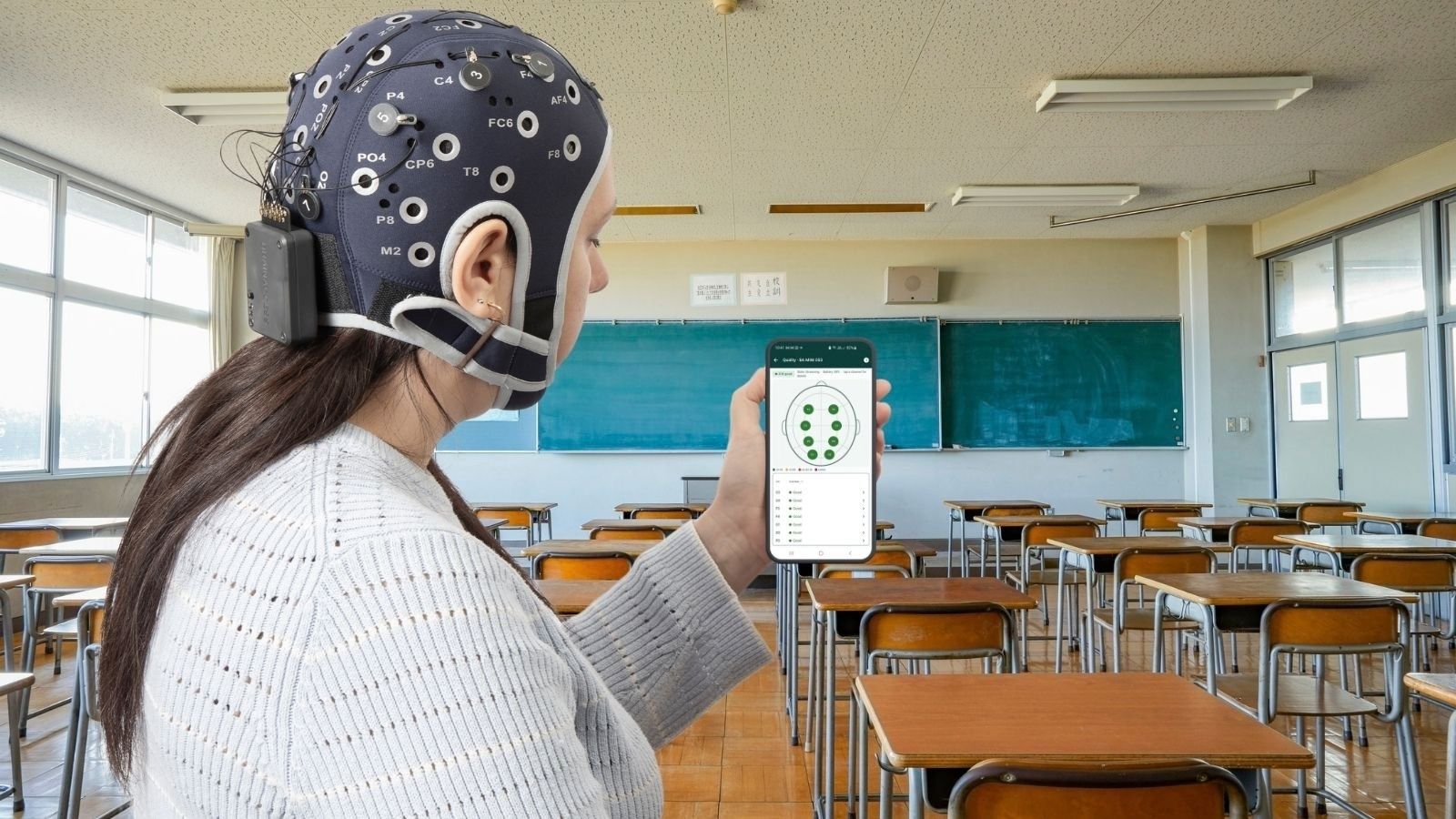
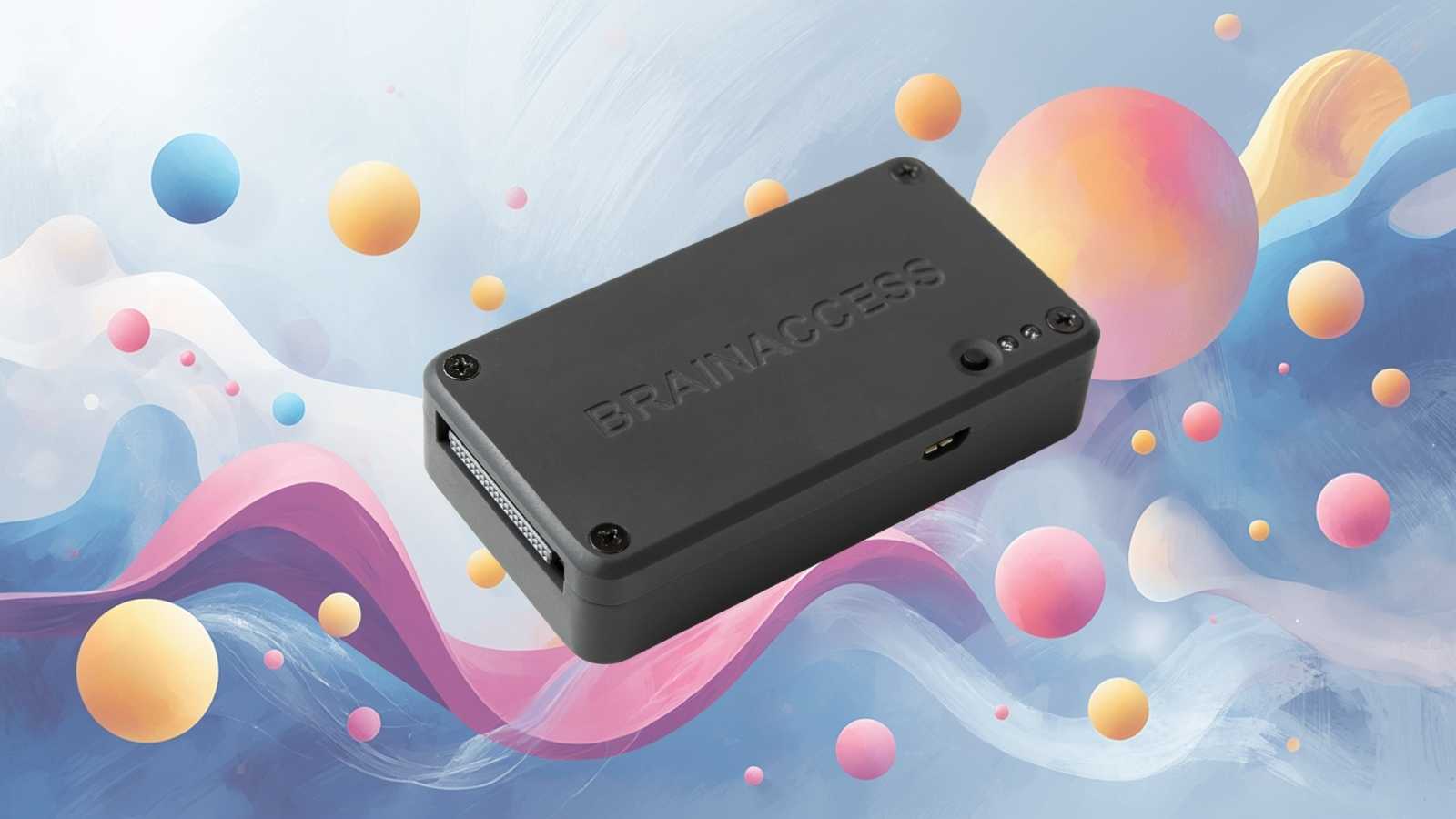

A team from Romania’s Informatics Association for the Future built a personalized, AR-powered attention trainer for adolescents with BrainAccess MIDI, our 16-channel headset at its core.
The Challenge
Researchers Mihai-Robert Beu, Tudor Durduman-Burtescu, and David Gheorghică Istrate wanted to tackle a familiar problem: declining attention spans in teenagers. Their goal was to go beyond generic focus apps and build a system that could detect when a student’s attention drifted — then intervene in real time.
The key question: could EEG-driven neurofeedback, delivered inside an augmented reality environment, meaningfully improve concentration? And could personalizing the AI to each student’s personality type make it even more effective?
How They Used BrainAccess MIDI
The team fitted 16 adolescents (ages 12–17) with the BrainAccess MIDI kit, sampling EEG signals at 250 Hz during cognitive tasks.
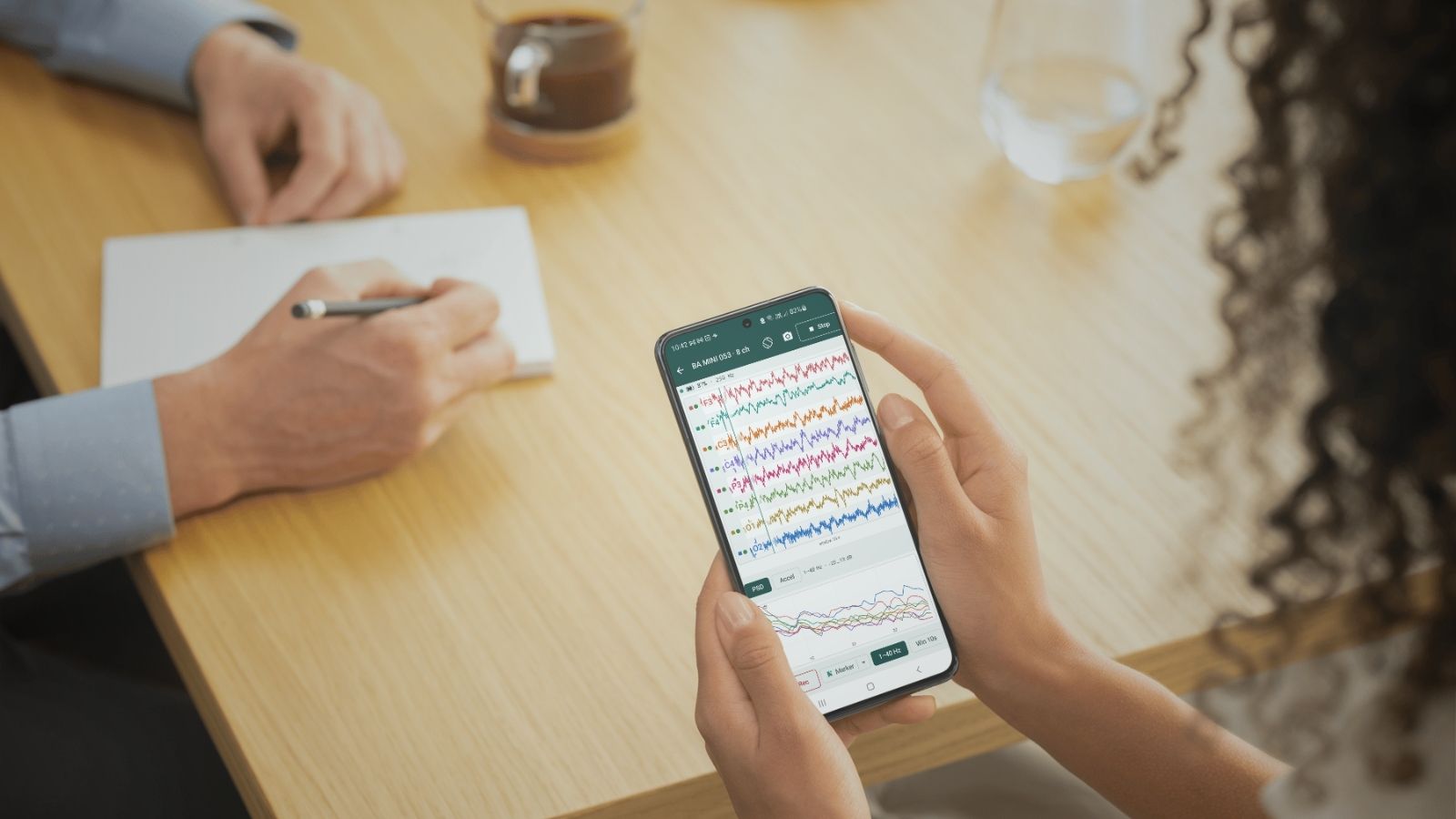
The headset’s data stream was fed directly into a Unity-based AR application via the BrainAccess SDK, enabling closed-loop neurofeedback in real time.
Participants completed memory, reasoning, and language tasks while wearing the headset. The system monitored their brainwave activity — specifically the ratio of high-beta and SMR frequencies to theta waves — to calculate a live “Concentration Index.” When that index dropped, the AR environment would respond: shifting colors, playing calming audio, or having an AI coach prompt the student to refocus.
To capture both focused and distracted states, participants also watched educational videos while deliberately attending to distractions, giving the system labeled examples of both effective and ineffective attention.
The Results
+57%
concentration compared to VR environment
87%
classification accuracy (LightGBM model)
+10%
accuracy gain from personality-tailored models
The AR environment significantly outperformed a standard VR setup, and the personality-adaptive classifiers — trained on MBTI profiles — added a meaningful edge over one-size-fits-all models. Data augmentation via a custom GAN expanded the training set by 40%, helping the system generalize despite a small participant pool.
“AR-BCI systems could evolve into practical tools for fostering attention and learning in both classrooms and therapy centers.”
— Beu, Durduman-Burtescu & Gheorghică Istrate, Applied Medical Informatics, 2025
Why It Matters
This study is a strong example of what becomes possible when a reliable, research-grade EEG headset is paired with modern machine learning and immersive environments. The BrainAccess MIDI’s multi-channel resolution and SDK integration made it straightforward to build a real-time, closed-loop system, something that would be far harder with lower-fidelity hardware.
The use case spans education, cognitive therapy, and attention research. As the authors note, the same framework could extend to ADHD support, classroom analytics, or remote focus training. Anywhere sustained attention is both critical and hard to measure.
Building something similar? The BrainAccess MIDI is designed for exactly this kind of work — real-time EEG capture, clean SDK integration, and the channel count serious research demands.