BrainAccess Features
Discover the full potential of BrainAccess, a versatile EEG platform designed for comfort, reliability, and innovation.
From ergonomic headwear and dry electrode options to wireless Bluetooth® 4.2 connectivity and long-lasting batteries, every detail is crafted for seamless brain data acquisition.
Enjoy real-time synchronization through Lab Streaming Layer (LSL), leverage our free Software Suite with PC and Mobile apps, or take full control via SDKs and APIs in C, Python, and Kotlin.
Effortlessly export data to open-source tools, perform hyperscanning across multiple users, and soon, enhance your research with cloud-based AI analysis and insights.
Comfortable headwear. Different configurations.
BrainAccess offers a range of comfortable, ergonomic EEG headwear designed to meet diverse research and development needs.
From simple brain-computer interface (BCI) applications to advanced multi-channel neuroscience studies.
Two headwear options to suit different use cases, both engineered for long-term comfort, stable fit, and high-quality signal acquisition, ensuring reliable results without compromising wearability. Whether you need a lightweight headband for portable applications or a multi-channel cap for advanced EEG research, BrainAccess offers comfortable, versatile headgear to match every experimental and development need.
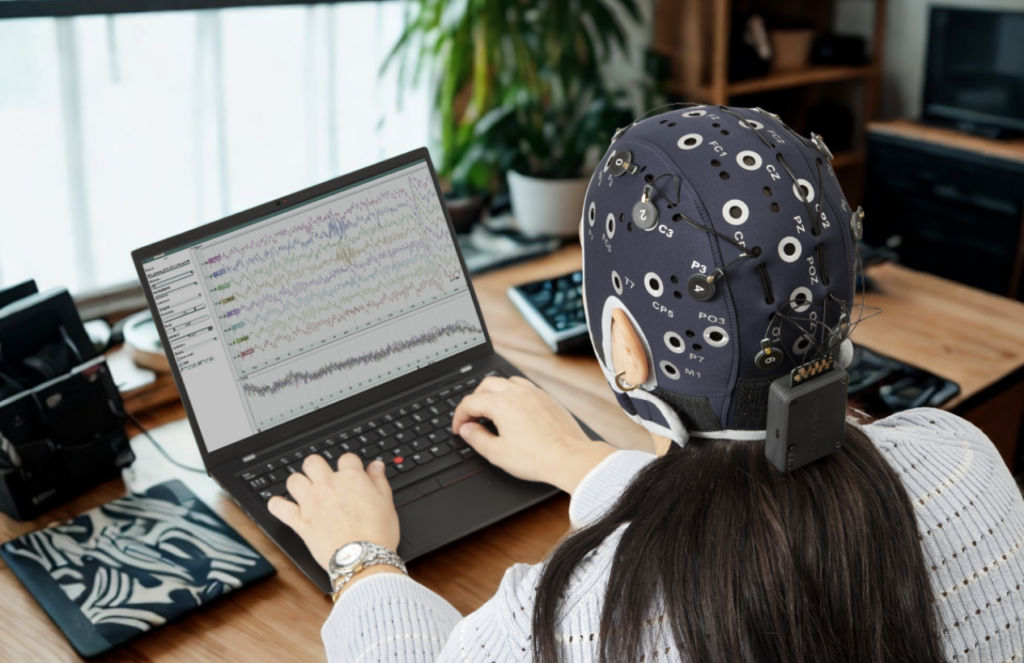
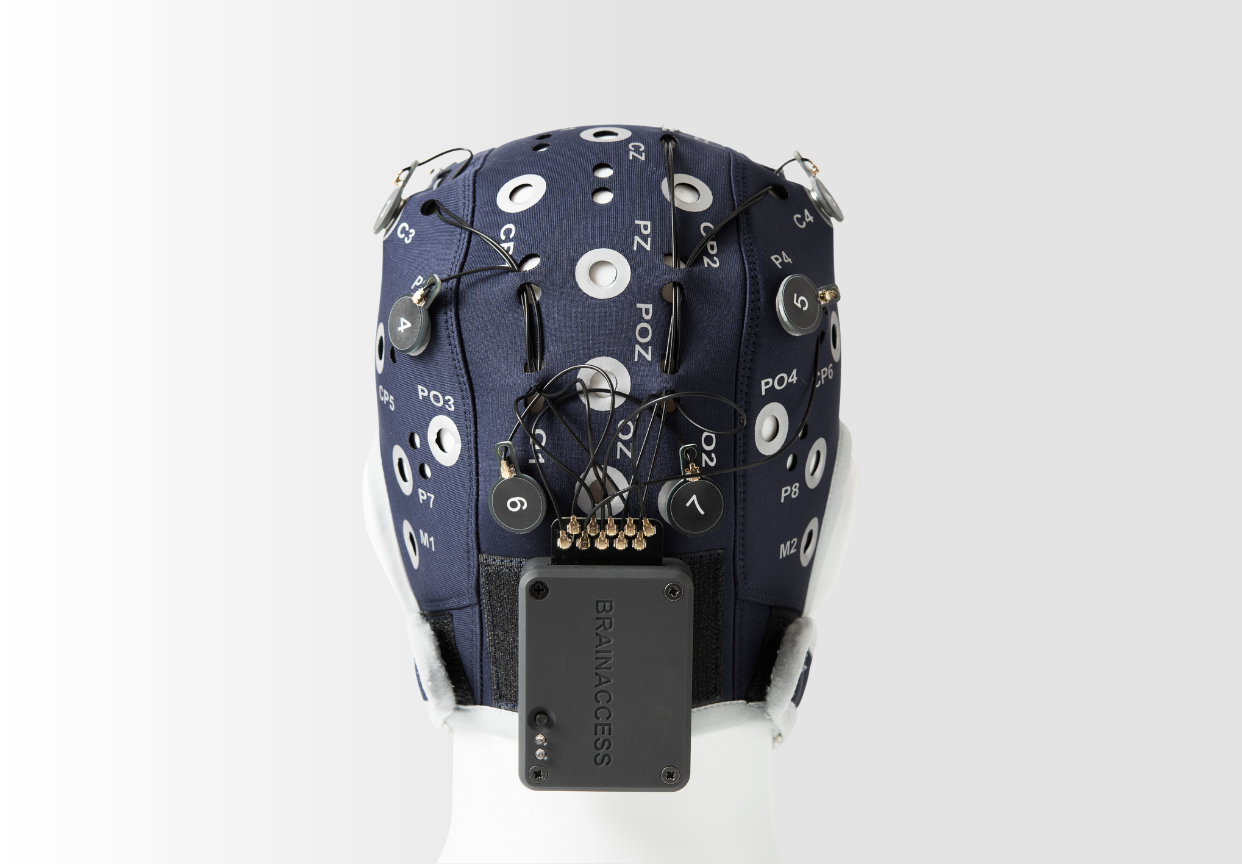
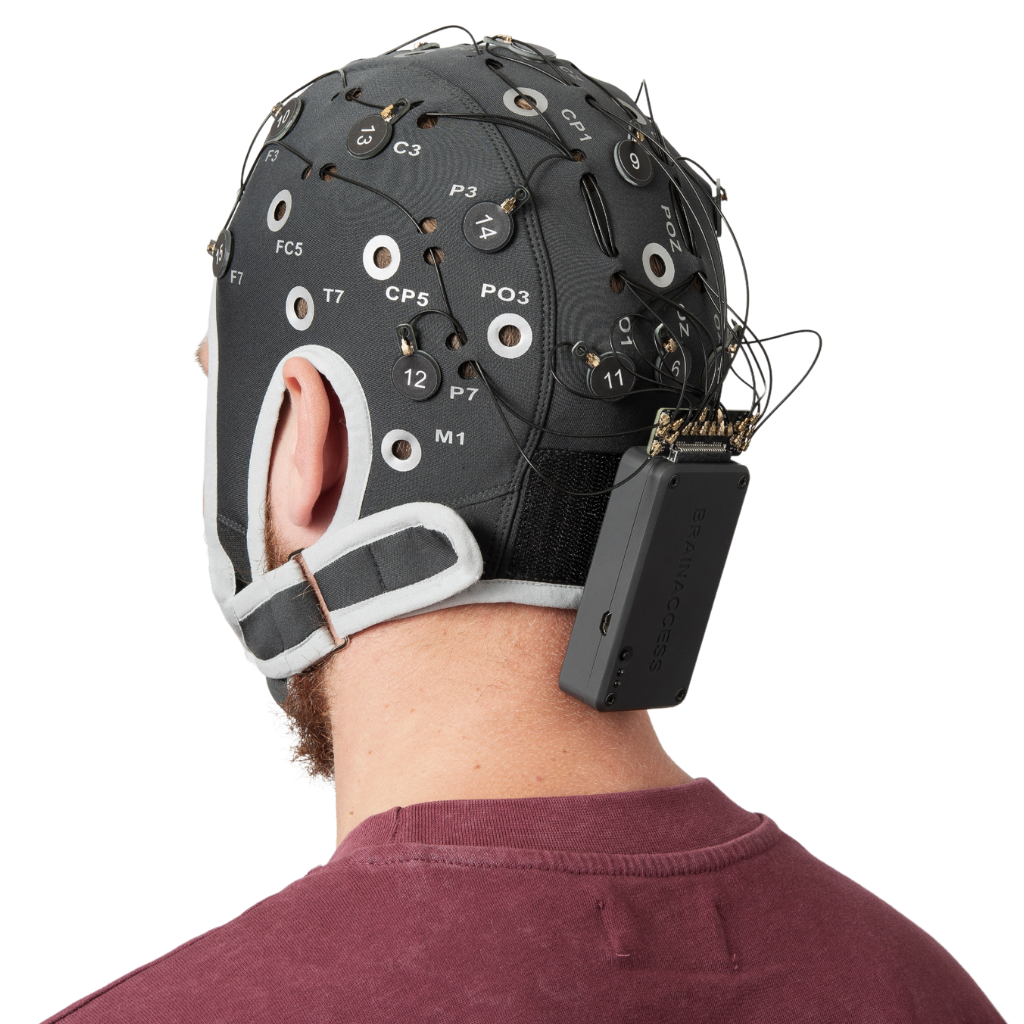
BrainAccess EEG CAP
The BrainAccess EEG Cap combines flexibility, stability, and precision through its soft neoprene construction, which adapts naturally to the shape of the head while maintaining consistent electrode contact. The material’s elasticity allows for a snug yet pressure-free fit, reducing discomfort even during long sessions. Its breathable and moisture-resistant texture prevents heat build-up and skin irritation, making it suitable for extended recordings in various environments.
The cap’s mechanical design ensures secure placement without sacrificing comfort. It features an adjustable buckle system and dual Velcro straps that distribute tension evenly, allowing users to fine-tune tightness for an optimal fit. A reinforced elastic chin band stretches naturally with jaw and facial movements, preventing electrode displacement while preserving user comfort.
Compatible devices
BrainAccess MINI
8 channels
BrainAccess MAXI
16 channels
BrainAccess MAXI
32 channels
Three sizes
S
M
L
Two colors
Admiral Blue
Cool Gray
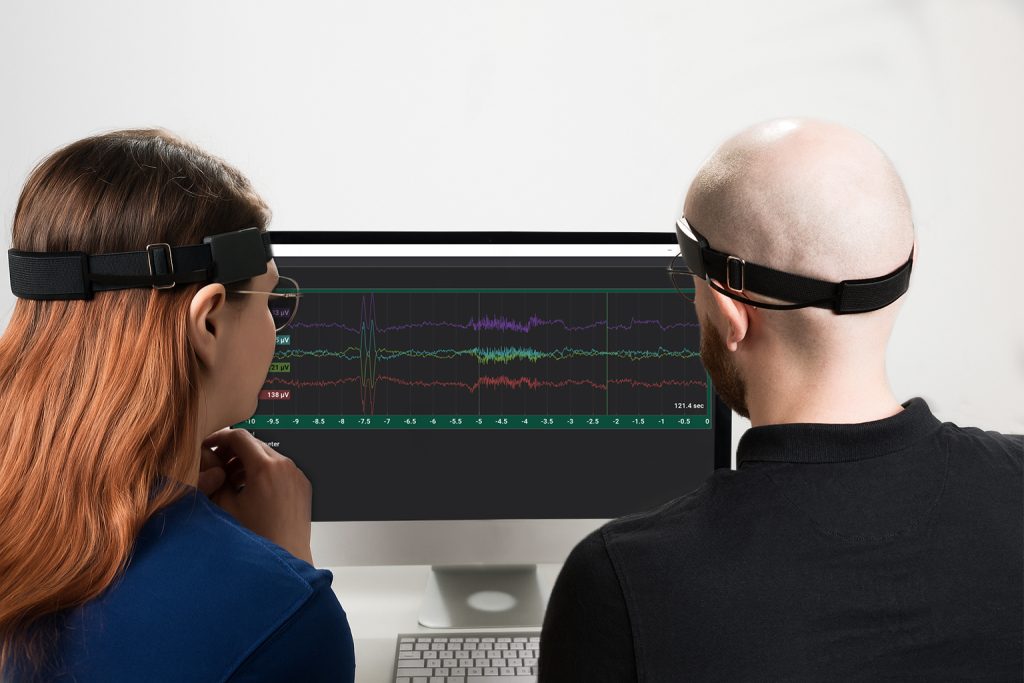
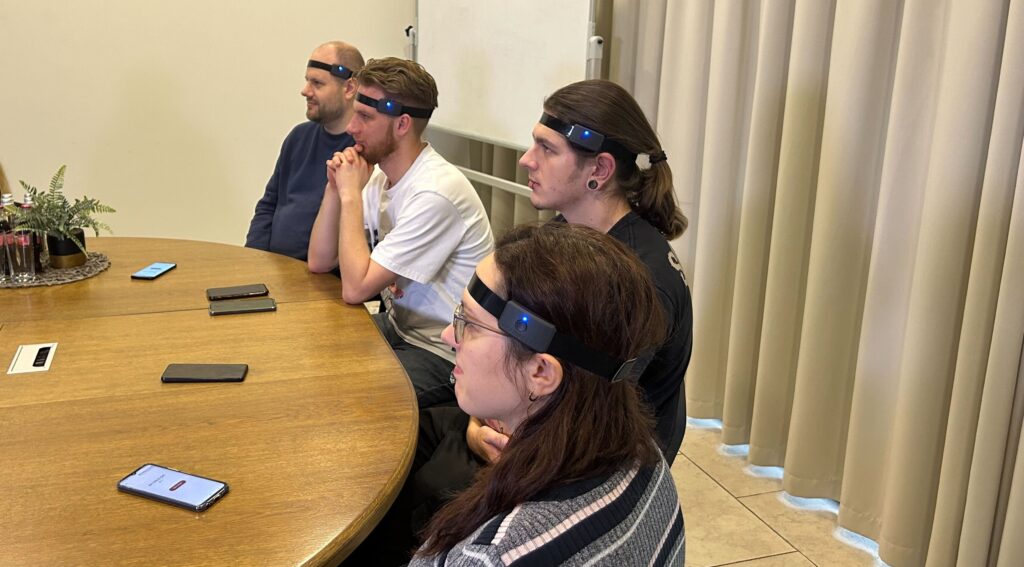
BrainAccess Halo Headband
Designed for ultimate simplicity and comfort. Made from a flexible strap with an adjustable buckle, it fits gently yet securely around the head and sits comfortably on the forehead for extended wear. Its balanced lateral modules ensure even weight distribution, reducing fatigue during longer sessions.
With its 4-channel configuration, HALO is the ideal choice for neuroscience enthusiasts, BCI demonstrations, neurofeedback, art installation, hyperscanning studies, and more wearable EEG applications that require fast setup and maximum comfort.
Hard and Soft Dry Electrodes
BrainAccess offers two types of electrodes designed to meet different comfort and application needs.
Neurotechnology’s gold-plated hard electrodes for robust performance and durability, or Datwyler SoftPulse® electrodes for more comfort during long sessions or specifically for sensitive users. Neurotechnology’s electrodes are included by default in all our BrainAccess Kits. SoftPulse® are available upon request.
Both options are reusable, easy to clean, and optimized for reliable EEG signal acquisition.
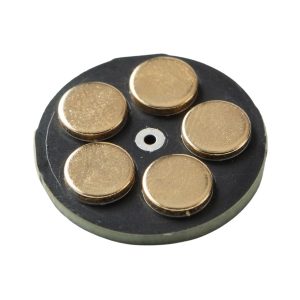
Neurotechnology’s Gold-plated dry electrodes
Our in-house manufactured gold-plated dry electrodes are designed for high precision and durability, ensuring low-noise, stable electrical contact without the use of gels or pastes. The gold plating ensures excellent conductivity and resistance to corrosion, maintaining reliable performance even after repeated use.
Two mechanical variants are available to optimize performance for different scalp regions:
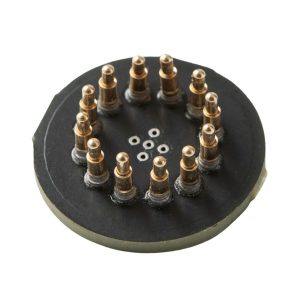
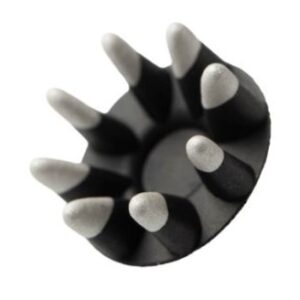
Spring-based electrodes
Feature 12 spring-loaded pins that gently adapt to the scalp through hair, maintaining reliable contact in hair-covered areas while minimizing pressure on the skin.
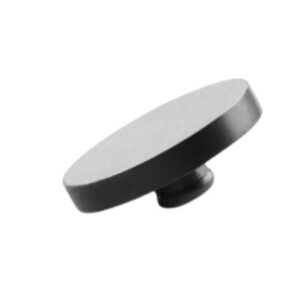
Flat-pad electrodes
Incorporate five circular contact pads (6 mm diameter each) designed for hair-free areas such as the forehead or behind the ears, offering stable contact and enhanced comfort.
Datwyler SoftPulse® electrodes
The Datwyler SoftPulse® electrodes are designed for maximum comfort, using a soft, flexible conductive material that conforms naturally to the scalp surface. This design reduces pressure points and improves comfort during extended wear, making them particularly suitable for consumer-oriented, wellness, or long-term monitoring applications.
These electrodes come in different shapes to adapt to different hair styles.
Flat
Ideal for contact with non-hairy regions like mastoids or forehead.
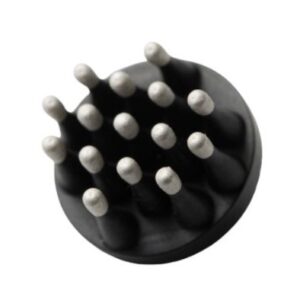
Medium Brush
Ideal for low-medium hair density and for straight hair styles.
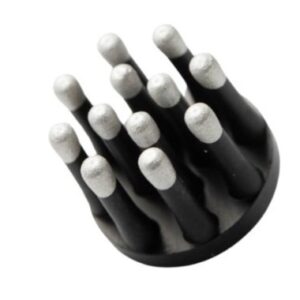
Long Brush
Ideal for hairy regions with high hair density and curly hair style.
Flex
Oriented radial displacement for improved contact with the skin.
Read more about these electrodes on the manifacturer’s website.
Impedance
| Electrodes type | Impedence range |
|---|---|
| Neurotechnology Gold-plated | 50-180 kOhm |
| Datwyler SoftPulse® | 100-200 kOhm |
Note: Impedance range refers to values commonly measured by our engineers using MINI, MIDI, or MAXI devices.
Wireless connectivity Bluetooth 4.2 (BLE)
Each system integrates a Bluetooth® 4.2 (BLE) module, providing a stable and energy-efficient connection to a computer or mobile device.
All BrainAccess devices feature fully wireless operation, allowing users to record, stream, and analyze EEG data with complete freedom of movement.
Bluetooth Low Energy (BLE) technology ensures low-latency, continuous data transmission while maintaining extended battery life. This makes BrainAccess devices ideal for real-time applications such as BCI experiments, neurofeedback, and mobile cognitive studies, where responsiveness and portability are essential.
The Bluetooth adapter is included in every BrainAccess kit and HALO headband, so the system is ready to use right out of the box. Simply power on the device, connect it to your PC or mobile device using our free BrainAccess software, and begin recording within seconds.
Bluetooth range
BrainAccess MINI & HALO
15 meters
BrainAccess MIDI & MAXI
10 meters
Why wireless EEG matters?
Wireless operation eliminates the physical constraints of cables, improving user comfort and reducing motion artifacts caused by cable tension. It allows participants to move naturally during experiments — walking, interacting, or performing cognitive tasks — enabling more ecological and realistic recordings.
For researchers, wireless connectivity simplifies setup, enhances data collection flexibility, and makes EEG more portable, scalable, and adaptable to different use cases — from controlled laboratory studies to field research and wearable neurotechnology applications.
Long-Lasting Battery Life
Several hours of continuous EEG streaming thanks to high-capacity rechargeable batteries and low-power Bluetooth® 4.2 modules.
Each system is optimized for extended operation, ensuring reliable performance throughout long recording sessions or multi-phase experiments.
How long does the battery last?
| Device | 250Hz | 500Hz | 1000Hz |
|---|---|---|---|
| BrainAccess HALO | 6.73 hours | 6.15 hours | 5.26 hours |
| BrainAccess MINI | 13.70 hours | 12.00 hours | n/a |
| BrainAccess MIDI | 12.91 hours | n/a | n/a |
| BrainAccess MAXI | 9.07 hours | n/a | n/a |
Note: Battery life was measured during continuous EEG streaming at available sampling frequencies based on device.
Why does extended battery life matter in modern EEG?
Extended operating time is essential for EEG experiments requiring multiple trial repetitions, long monitoring sessions, or mobile data collection, where stable performance and user comfort are equally important.
With BrainAccess devices, researchers can confidently record long sessions without worrying about mid-experiment interruptions or frequent recharging.
All BrainAccess kits and the HALO headband can be charged using a standard micro USB-C cable (included) and any 1 A or higher USB charger (not included), such as those commonly used for mobile phones. Recharging is simple and efficient, it takes approximately 2-5 hours, depending on the device, to fully charge, allowing for quick turnaround between sessions.
Whether you are conducting a multi-hour hyperscanning study, running VR-based cognitive tasks, or deploying wearable EEG in the field, BrainAccess offers the endurance and flexibility to keep your research going as long as you need.
Lab Streaming Layer (LSL) integration
BrainAccess devices natively integrate with LSL, enabling real-time data synchronization and exchange between multiple devices and software.
BrainAccess users can stream EEG data to or from other applications, synchronize multiple BrainAccess systems, or align EEG with external data sources such as eye trackers, motion sensors, or stimulus presentation tools.
All within the same network.
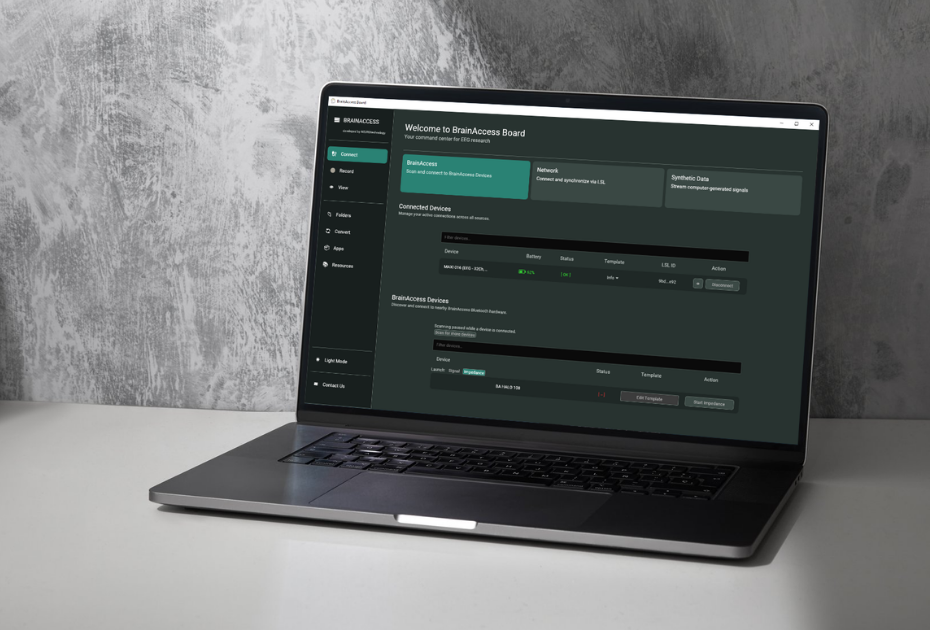
The BrainAccess Board software automatically detects available LSL streams and allows users to select which ones to send, receive, or record. This means EEG signals, behavioral markers, and stimulus events can all be captured with millisecond precision on a shared timeline, without the need for additional hardware triggers or cables. Researchers can easily expand their setups by adding new sensors or computers to the same network, making BrainAccess a flexible, scalable platform for multimodal neuroscience and BCI research.
Synchronization between devices occurs automatically through the shared LSL network. Each device publishes its data as an LSL stream outlet, which can then be discovered and received by the BrainAccess Board or any compatible software as a stream inlet. All streams are timestamped and adjusted to a common clock, ensuring sub-millisecond alignment across all devices without the need for external cables or hardware triggers.
Compatible devices
Mulitple EEG systems
For multi-user or multi-region recordings.
Eye Trackers
For synchronized brain-eye data.
Physiological sensors
For multi-sensory recording (e.g., ECG, GSR, EMG)
Presentation software
(e.g., PsychoPy, Unity, MATLAB Psychtoolbox)
Applications
Multimodal experiments
Combining EEG with eye tracking, motion capture, or physiological sensors (e.g., ECG, GSR).
Hyperscanning studies
Record multiple participants simultaneously or synchronize across devices and sensors.
Closed-loop neurofeedback or BCI applications
Process EEG in real time and use it to control external systems or adapt stimuli dynamically.
Neuroergonomics and human–computer interaction
Align EEG data with behavioral or environmental events in real-world settings.
What is LSL?
The Lab Streaming Layer (LSL) is an open-source middleware framework for real-time streaming, synchronization, and recording of time-series data.
Developed by Christian Kothe and collaborators at the Swartz Center for Computational Neuroscience, University of California, San Diego, it provides a unified interface for collecting data from different sensors and software tools across devices.
LSL handles the complex parts of networking, timing, and data access, ensuring all streams remain synchronized to within sub-millisecond accuracy. It uses a system of Stream Outlets (for sending data) and Stream Inlets (for receiving data), allowing information to flow seamlessly between any compatible devices on the same local network.
This software-based synchronization makes LSL particularly valuable for mobile, wearable, and distributed experimental setups — where traditional hardware triggers are impractical. With BrainAccess, users can immediately benefit from this integration to build synchronized, multimodal, and open-source EEG research environments.
Kothe, C., Shirazi, S. Y., Stenner, T., Medine, D., Boulay, C., Grivich, M. I., … & Makeig, S. (2025). The lab streaming layer for synchronized multimodal recording. Imaging Neuroscience, 3, IMAG-a. https://doi.org/10.1162/IMAG.a.136
Free Software Suite
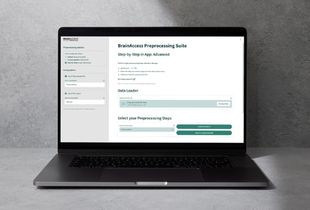
Integrated set of tools designed to support the entire EEG workflow, from data acquisition and visualization to real-time streaming and custom application development. All software components are developed by Neurotechnology and are available free of charge for BrainAccess users.
From desktop to mobile, from graphical tools to APIs, the BrainAccess Software Suite provides a unified environment for EEG research and development.
All components are designed to work seamlessly with BrainAccess devices, ensuring stable performance, flexibility, and full control over your data.
Whether you are running controlled laboratory experiments or exploring brain–computer interaction in real-world settings, BrainAccess gives you the software foundation to make it possible.
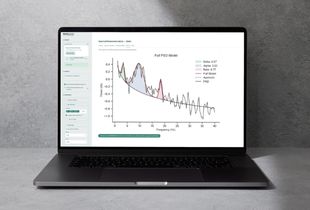
Main desktop application used to connect to BrainAccess devices, record EEG data, and stream it in real time. It offers an intuitive graphical interface that combines simplicity with powerful visualization and monitoring tools.
Features
Real-time EEG signal viewer with an optional power spectrum display
Impedance mode for checking electrode contact quality
Multi-device connection for simultaneous recordings and hyperscanning
Full compatibility with Lab Streaming Layer (LSL) for data synchronization across devices and software
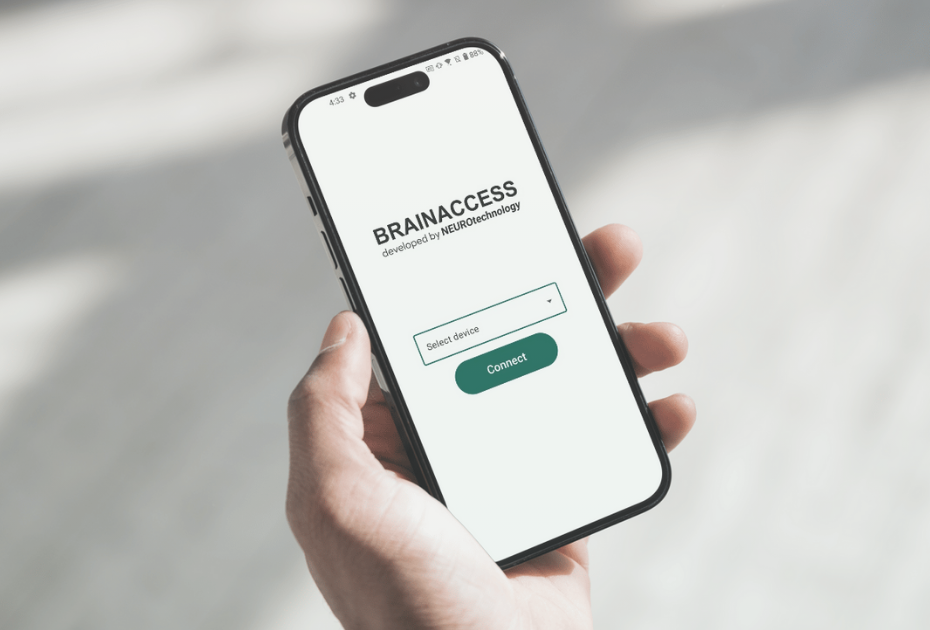
Extends EEG recording to mobile environments, allowing wireless streaming of data from BrainAccess devices over Wi-Fi. Each phone can connect to one device and either store data locally or send it to a PC within the same local network. This makes the app especially useful for naturalistic experiments, mobile brain-body interaction studies, and educational use.
Features
Wireless data streaming for mobile EEG and hyperscanning setups
Local and remote data saving options
Compatible with Android 12 and higher
Available on Google Play, free for all users
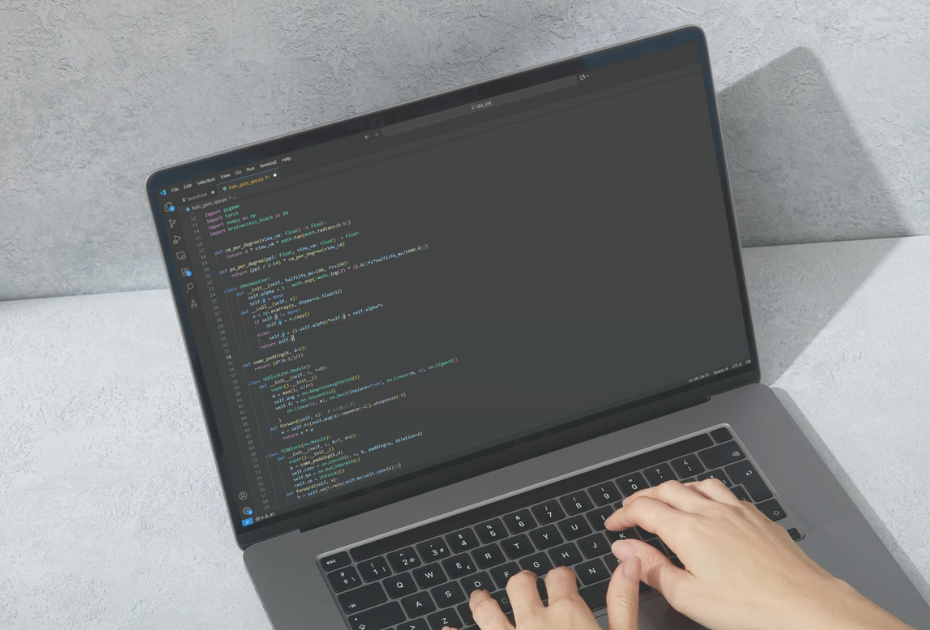
For developers and researchers who need deeper control and integration, the BrainAccess SDK provides programming interfaces for C, C++, and Python.
The SDK enables direct communication with the device, offering full control over acquisition parameters, data streaming, and preprocessing.
The SDK can be used from the command line or directly within scripts, making it easy to build custom research tools, real-time experiments, or interactive BCI applications.
Included libraries
-
brainaccess.core— device control and data access -
brainaccess.connect— preprocessing utilities and basic analysis functions
The newest addition to the suite, the BrainAccess Kotlin SDK, allows developers to create Android applications that interface directly with BrainAccess devices. This SDK provides the same low-level access and control available in the desktop libraries, now optimized for mobile platforms.
This SDK expands the BrainAccess ecosystem to mobile developers, enabling the creation of portable EEG apps for research, wellness, and neuroadaptive interfaces.
Features
Kotlin API for Android EEG application development
Real-time streaming and device control functions
Available to all BrainAccess customers
Log in to access this feature.
SDK in C, Python, and Kotlin for Developers
Comprehensive collection of libraries for controlling BrainAccess EEG devices, streaming data in real time, and preprocessing EEG signals.
The BrainAccess SDKs and APIs give developers direct access to device functions and EEG data, allowing seamless integration into custom software, mobile apps, and research pipelines.
Functionalities
Core Library
The BrainAccess Core Library is an essential interface for communication with our EEG systems. Enables device configuration, status monitoring, and continuous EEG data streaming with support for callback-driven acquisition and multiple devices.
BCI Connect Library
The BrainAccess BCI Connect Library includes a suite of signal preprocessing and brain–computer interface (BCI) utilities, such as detrending, filtering, signal quality and statistics, frequency analysis, and feature extraction.
C and Python API
C for high-performance, low-level access. Designed for embedded or latency-sensitive applications.
Python for a user-friendly environment ideal for research, data analysis, and integration with AI or signal-processing workflows.
Kotlin SDK
The BrainAccess Kotlin SDK extends development capabilities to Android and cross-platform mobile applications.
Intuitive API for connecting, configuring, and streaming EEG data directly from BrainAccess devices on mobile platforms.
Log in to download Kotlin SDK.
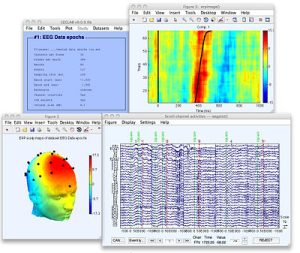
While a dedicated MATLAB API is under development, MATLAB users can already access BrainAccess data via the Lab Streaming Layer (LSL) integration. EEG signals can be streamed from BrainAccess Board to LSL and captured in MATLAB using the official LSL library. Additionally, BrainAccess supports exporting data in .set format, fully compatible with EEGLAB for offline analysis.
Python API
The BrainAccess Python API provides developers and researchers with a tool to access the SDK features and offers direct programmatic control over BrainAccess EEG hardware and access to data streams in real time. Through simple Python commands, users can connect to a device, configure recording parameters, start or stop data acquisition, and process EEG signals without relying on external software interfaces.
The API is built around the two main modules:
-
brainaccess.core— for device communication, configuration, and live data streaming. -
brainaccess.connect— for data handling, filtering, and signal processing.
The BrainAccess Board Python API complements these features by enabling full programmatic control of the BrainAccess Board software directly from a script or terminal. The package allows you to connect to a live database or load previously recorded sessions, create a Marker stream via the Lab Streaming Layer (LSL) to synchronize stimuli with EEG recordings, connect and disconnect devices, test connections, and start or stop recordings.
The BrainAccess Board Python API is designed to seamlessly integrate EEG data into any Python-based analysis pipeline and can as well be easily installed via PyPI.
All functions and usage examples are documented in the official BrainAccess and Brainacces Board Python API documentations, which include installation guides, code snippets, and tutorials for real-time EEG analysis.
By providing open and accessible APIs, BrainAccess enables seamless integration with research pipelines, custom applications, and AI-driven analysis workflows, ensuring full flexibility for developers and neuroscientists alike.
Save files in multiple formats
Seamless data export to the most widely used open-source EEG analysis environments.
At BrainAccess, we believe that EEG technology should be open, transparent, and compatible with the tools that researchers around the world already know and trust.
That’s why all BrainAccess systems support seamless data export to the most widely used open-source EEG analysis environments, giving you full freedom to analyze, visualize, and share your data without constraints. Open-source platforms have become essential tools for both academic and clinical research, offering extensive pipelines for:
Artifact removal
Event-Related Potential (ERP)
Time-Frequency analysis
Functional Connectivity
Independent Component Analysis (ICA)
Source Reconstruction
Their interoperability allows researchers to move seamlessly between different analytical frameworks while maintaining a consistent data structure, enabling collaborative projects, reproducibility, and integration with other neuroimaging modalities such as MEG, fNIRS, or MRI.
Native BrainAccess Format
When you record EEG data with the BrainAccess Board or Mobile App, the signals and metadata are first saved in the native BrainAccess database format: .db .
This structure stores continuous EEG samples together with timestamps, channel names, sampling rate, and event markers, ensuring a complete and lossless record of your session.
Using a database-based format offers several advantages:
-
Reliability. Recordings are automatically saved in real time, minimizing data loss in case of interruptions.
-
Efficiency. Large datasets can be handled easily and accessed quickly by the BrainAccess Board or SDKs.
-
Structure. All relevant information (EEG signals, impedance data, and event markers) is kept in a single file for easy management.
From this native format, data can be converted into standard EEG analysis file types, allowing you to work in your preferred research environment.
Supported Formats
BrainAccess Board allows you to export recorded EEG data in several formats compatible with Python and MATLAB ecosystems.
Universal text format
Data can also be converted to .csv , a universal, human-readable format, ideal for quick inspection, visualization, or integration into custom analysis pipelines.
Whether you’re scripting in Python, R, or any other environment, CSV gives you complete flexibility, transparency, and integration with other data pipelines.
Why does this matter — Our commitment to open science
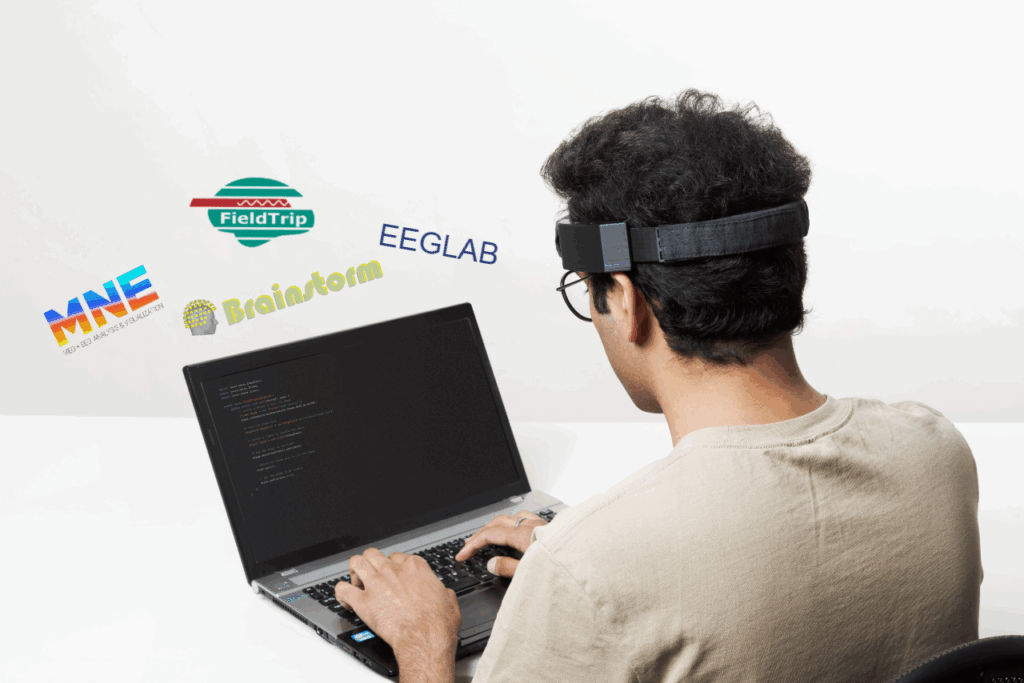
Open-source tools like MNE, EEGLAB, and Brainstorm have shaped how EEG research is done worldwide. They represent decades of collective academic effort and community collaboration, from preprocessing pipelines and visualization methods to reproducible data standards.
By ensuring compatibility with these platforms, BrainAccess empowers researchers to:
-
Reuse existing analysis workflows without changing their toolchain.
-
Combine data from multiple systems or labs in collaborative projects.
-
Share data more easily for open science, publications, or educational purposes.
-
Integrate EEG with other modalities (eye tracking, motion capture, physiological sensors) in multi-modal experiments.
This openness is especially crucial for reproducibility and collaboration, two cornerstones of scientific progress. Researchers can validate results across labs, apply new algorithms to existing datasets, and contribute back to the open-source ecosystem that continues to push neuroscience forward.
Supporting multiple open formats is part of BrainAccess’s broader commitment to openness and accessibility in neuroscience. We recognize that the field thrives when hardware, software, and data can interact freely. By bridging high-quality wearable EEG hardware with established open-source ecosystems, BrainAccess enables faster innovation, from fundamental research to real-time brain-computer interfaces.
Researchers, developers, and students alike benefit from this interoperability:
-
Researchers can run their experiments with confidence, knowing their data will be compatible with the best-known analysis toolkits.
-
Developers can integrate BrainAccess devices into new pipelines or custom applications without proprietary restrictions.
-
Students and educators gain access to professional-grade EEG hardware that works with the same tools used in academic and clinical research worldwide.
BrainAccess reinforces its mission: to make EEG technology accessible, compatible, and open, helping the scientific community explore the brain with fewer barriers and more possibilities.
File conversion is fast and straightforward.
Download and install BrainAccess Board software on your computer.
Connect your device and start recording EEG data. Once the session ends, your recordings are automatically stored in your chosen folder.
From the Board Main Page, click on Applications:
From the available Applications, launch File Converter:
Select the directory and the files you want to convert.
Export to .fif, .set, or .csv
Done! No complex preprocessing or compatibility fixes, just clean, ready-to-use EEG data that fits directly into your preferred workflow.
Hyperscanning Capabilities
Effortlessly record brain activity from two or more people at the same time.
Hyperscanning has become a powerful approach in cognitive and social neuroscience for exploring how brains interact in naturalistic settings. By observing neural activity across participants simultaneously, researchers can uncover patterns of inter-brain synchrony that are not visible when studying each person individually.
Applications
Joint attention and communication
Investigating how people align their attention during conversation or teamwork
Emotional and empathy research
Studying brain-to-brain coupling in emotional exchanges
Coordinated movement and performance
Analyzing synchronization during music playing, sports, or cooperative tasks
Learning and decision-making
Exploring neural dynamics in collaborative or competitive contexts
In traditional EEG setups, recording multiple participants simultaneously often requires complex hardware synchronization, expensive amplifiers, or cumbersome cabling. BrainAccess simplifies this process with an integrated hardware-software solution that supports wireless, real-time multi-user recording.
Key features
Wireless, portable devices for flexible experimental design
Native multi-device support in the BrainAccess Board via Bluetooth
LSL-based synchronization for accurate timing across participants
Free SDKs for building custom hyperscanning applications
How to perform hyperscanning with BrainAccess
BrainAccess users can perform hyperscanning seemlessly thanks to our desktop and mobile apps.
The BrainAccess Board desktop application supports multi-device connection and synchronization via Lab Streaming Layer (LSL).
You can connect several BrainAccess devices (for example, two HALO headbands or two MIDI kits) to the same computer or local network.
Each device streams its EEG data in real time, and LSL ensures precise timestamp synchronization across all connected systems.
Typical setup:
-
Connect two or more devices via Bluetooth to the same computer
-
Enable LSL streaming in the BrainAccess Board
-
Record all streams simultaneously or access them in external software such as MATLAB, Python, or Unity
This configuration is ideal for controlled laboratory experiments and real-time BCI applications requiring millisecond-level synchronization.
For wireless and mobile hyperscanning, the BrainAccess Mobile App allows multiple phones to record and stream data over the same Wi-Fi network.
Each phone connects to one EEG device and can either save data locally or send it to a central PC for synchronized recording.
This approach is particularly suitable for naturalistic experiments, for example, capturing two people in free interaction, walking, or performing joint tasks outside of a lab environment.
The flexibility of the BrainAccess Software Suite allows combining desktop and mobile setups.
For example, you can run one device through BrainAccess Board and another through the Mobile App, both synchronized via LSL on the same local network.
This hybrid configuration supports versatile experimental designs, bridging controlled and real-world environments.
Shop

BrainAccess MINI Kit
8-channel EEG system
Cap and Electrodes included
900 € Excl. VAT
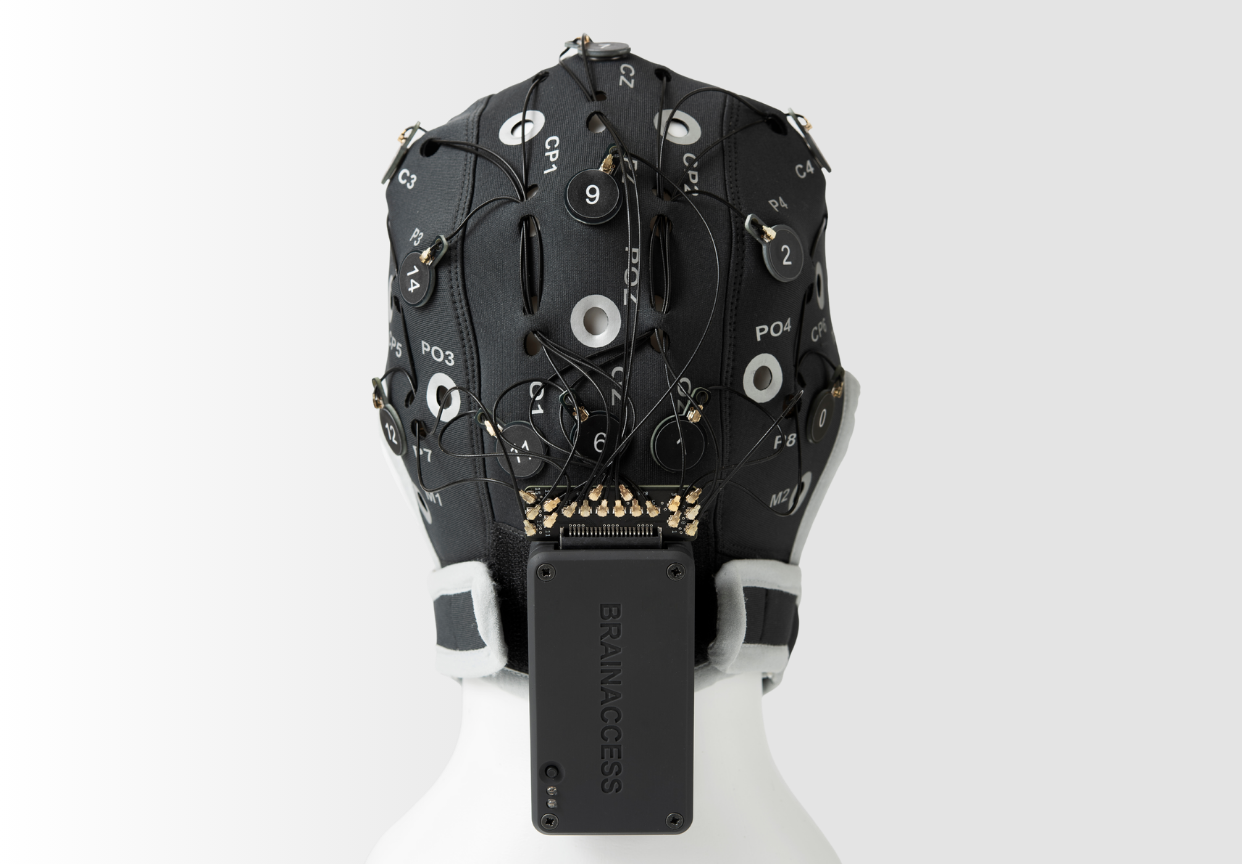
BrainAccess MIDI Kit
16-channel EEG system
Cap and Electrodes included
1,600 € Excl. VAT
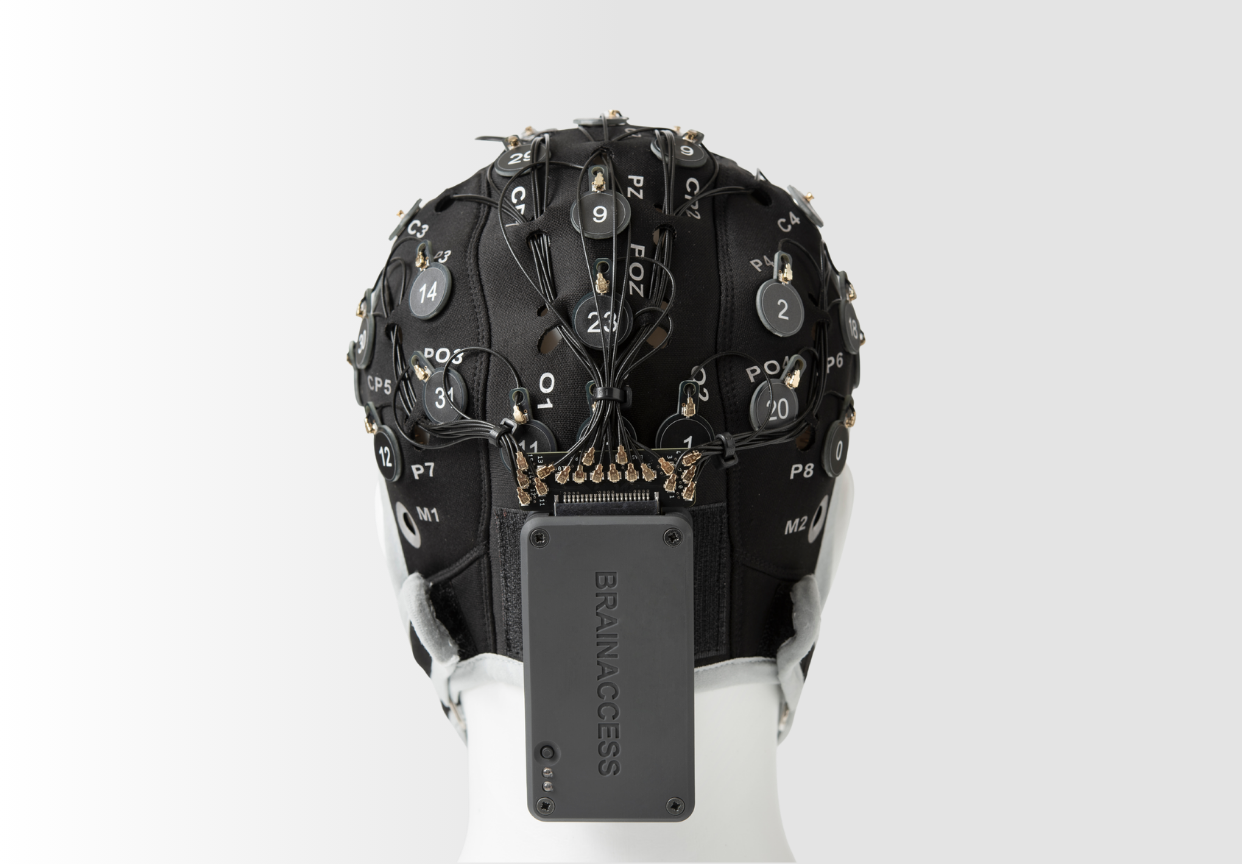
BrainAccess MAXI Kit
32-channel EEG system
Cap and Electrodes included
3,000 € Excl. VAT

BrainAccess HALO
4-channel EEG Headband
Fully integrated system
400 € Excl. VAT