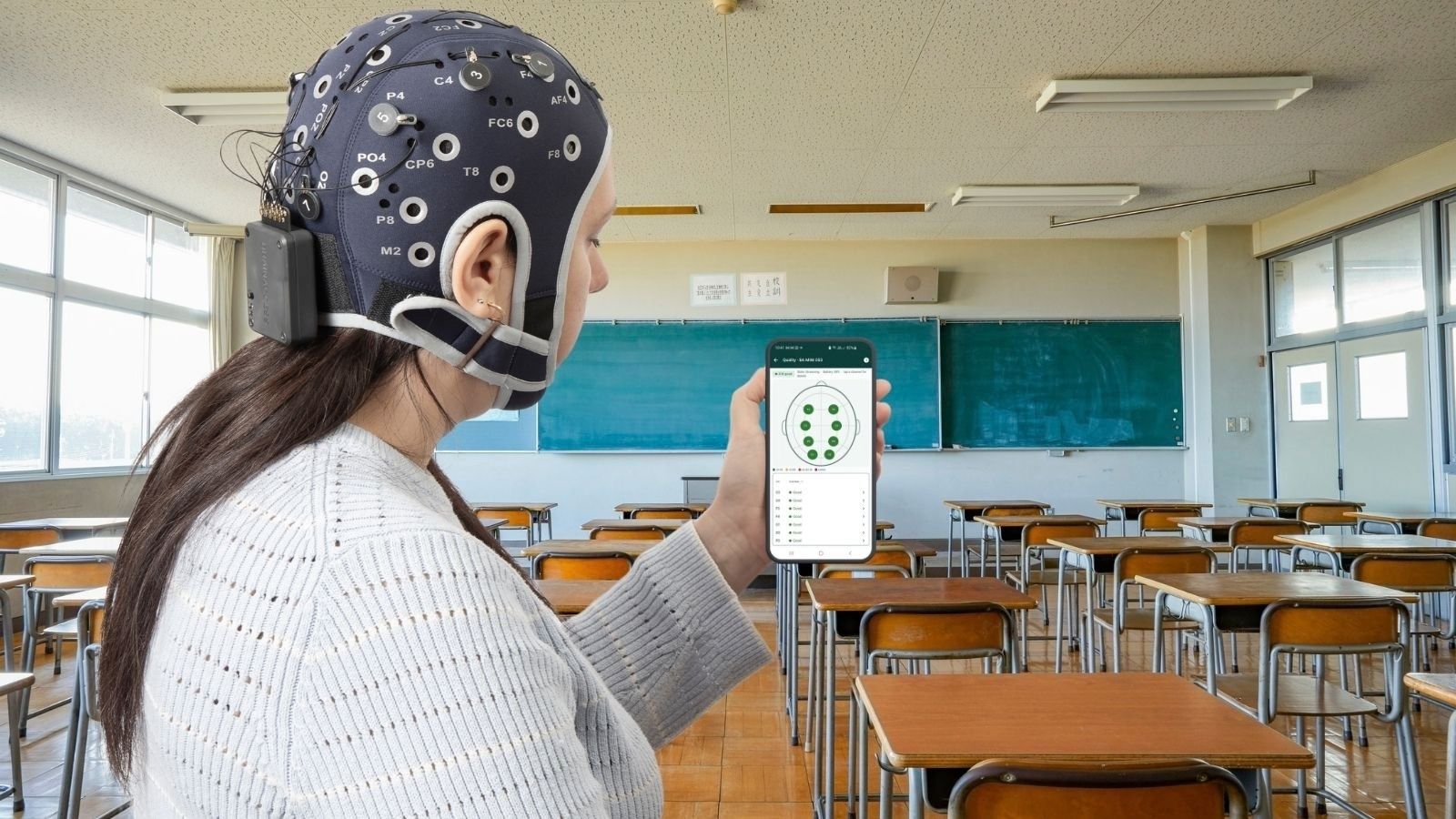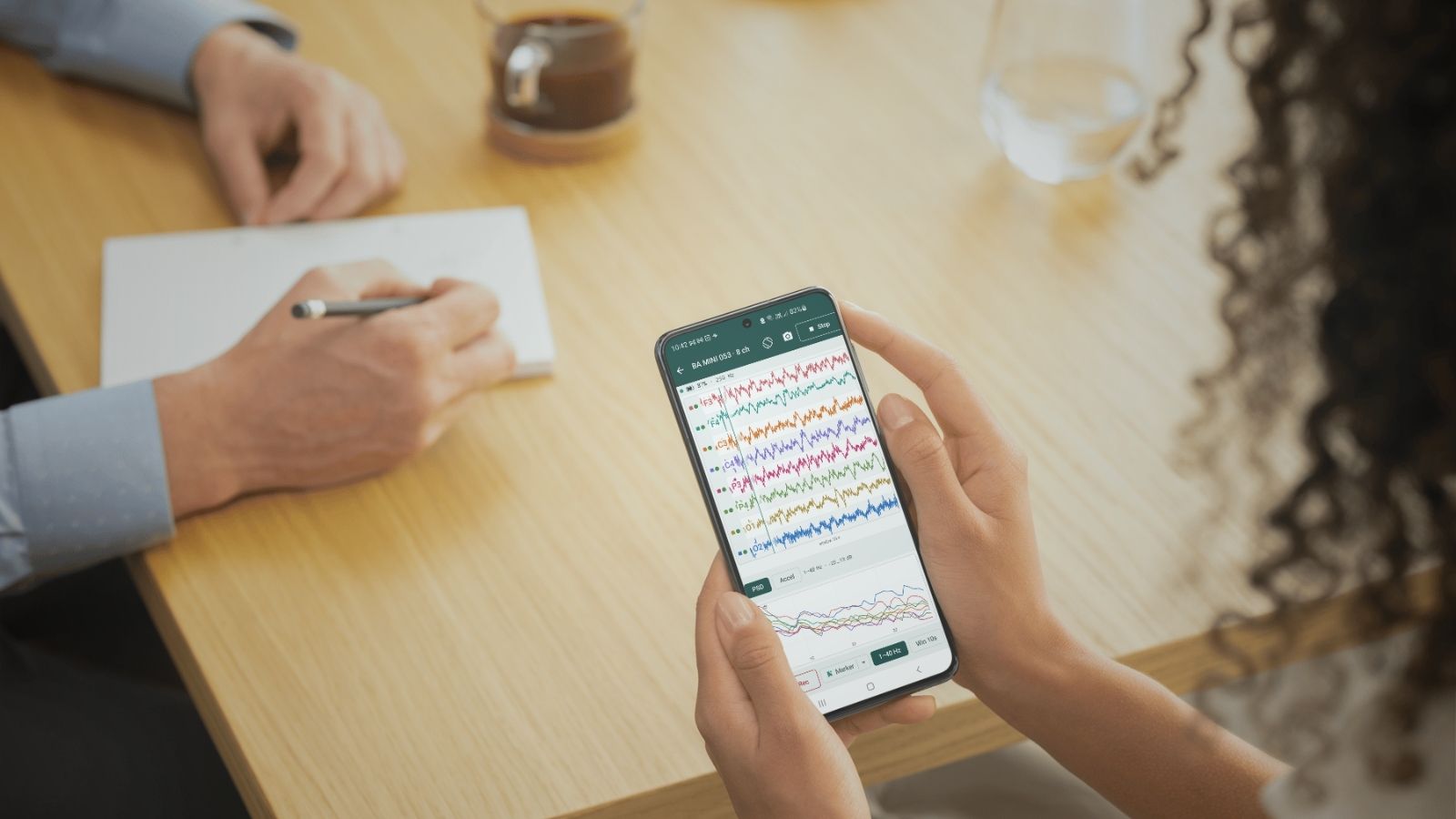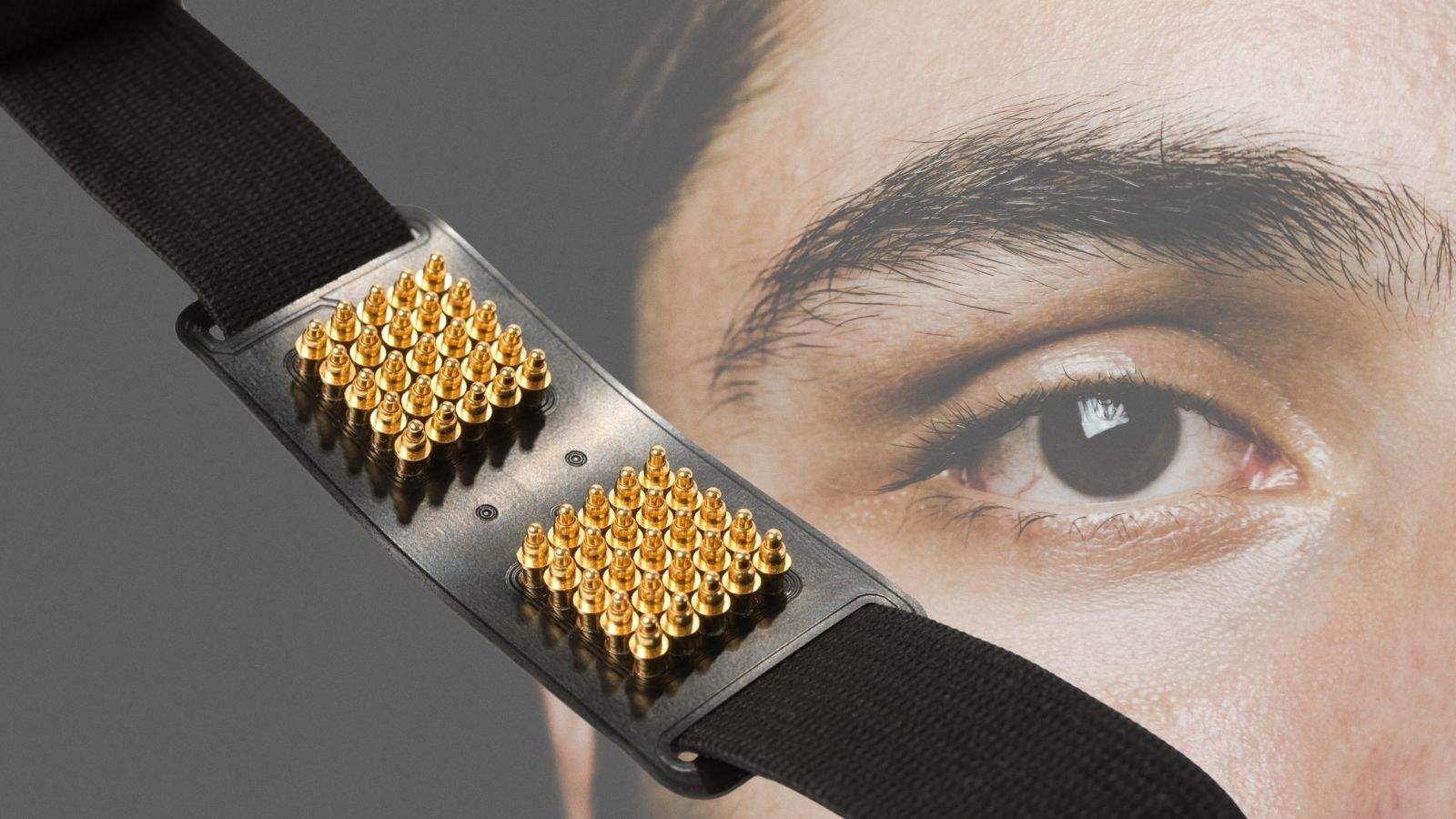
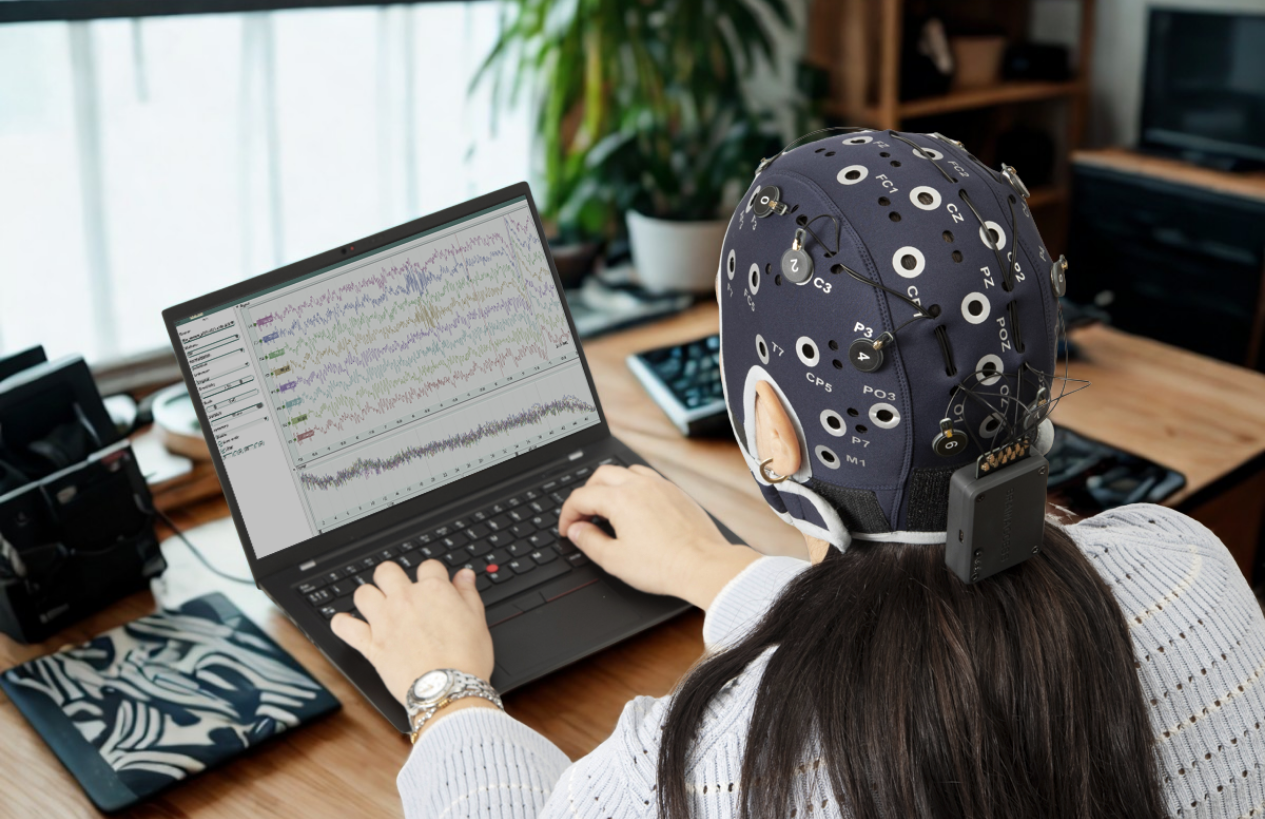

Neurofeedback is a method that trains individuals to consciously regulate their brain activity through real-time feedback from EEG signals. Traditionally used in clinical research and therapeutic settings, it is now gaining broader interest for a variety of applications. From treating mental health conditions to enhancing cognitive performance, improving focus, and supporting mindfulness practices, neurofeedback is becoming a versatile tool for improving overall brain health.
Thanks to recent advances in wearable EEG technology, these applications are becoming increasingly portable, scalable, and accessible, supporting researchers, developers, clinicians, and end-users across multiple domains.
How Neurofeedback Works
In a typical neurofeedback session, brain signals are recorded using EEG and translated into visual or auditory feedback. The user is guided to increase or suppress specific brainwave patterns (such as alpha or theta) associated with desired mental states, like calmness, alertness, or sustained attention.
Over time, the brain learns to adopt these patterns more effectively, reinforcing functional networks and promoting both behavioral and neural changes. This process engages mechanisms of reinforcement learning and neuroplasticity, which can benefit both healthy individuals and those experiencing cognitive or emotional difficulties.
Below, we’ve highlighted some of the emerging areas where EEG-based neurofeedback has shown measurable benefits, from elite performance and cognitive enhancement to clinical intervention and everyday mindfulness.
1. Neurofeedback for Athletic Performance
A systematic review examined the use of neurofeedback in sports training across 10 studies, involving nearly 500 professional athletes in disciplines like judo, soccer, volleyball, and boxing. Results showed that neurofeedback significantly improved:
- Reaction times
- Motor coordination and behavioral efficiency
- Stress resilience (e.g., regulation of heart rate, galvanic skin response, and cortisol)
- Focused attention and decision-making
By training brainwave patterns associated with peak states, athletes could enter flow states more reliably and maintain cognitive control under high-pressure conditions. These results illustrate neurofeedback’s real value in applied human performance.
2. Cognitive Enhancement and Brain Plasticity
In both clinical and recreational settings, neurofeedback has also shown potential to enhance cognition and support neuroplasticity. EEG-based training in healthy individuals was associated to:
- Improvements in executive function, working memory, and attention
- Structural and functional changes in brain networks targeted by training
- Strengthened striato-frontal circuits, associated with cognitive control, reinforcement learning, and goal-directed behavior.
- Increased mental adaptability
These findings are particularly compelling in fields such as education, high-demand cognitive work, and brain-health optimization.
3. Neurofeedback as a Therapeutic Tool for Depression
Neurofeedback is also emerging as a complementary tool in mental health care. A systematic review of 12 studies on EEG-based neurofeedback for depression found that participants experienced:
- Significant improvements in mood and symptom reduction
- Better cognitive performance, including motivation and attention
- Neurological changes in regions related to emotional regulation
Given its non-invasive nature and low risk of side effects, neurofeedback presents a viable option for patients who remain symptomatic despite conventional therapy, or those seeking to complement their treatment with a more active, brain-directed approach.
4. Enhancing Meditation and Mindfulness
Neurofeedback is also being explored as an adjunct to meditation and mindfulness practice. In a crossover trial, participants meditated both with and without EEG-based auditory feedback using a consumer-grade EEG headband. Results indicated that:
- State mindfulness increased when feedback was present
- Mind-wandering episodes decreased significantly
- Subjective experiences described the feedback as both helpful (guiding, grounding) and only occasionally distracting
The study suggests that neurofeedback may help sustain attentional focus during meditation, making mindfulness practice more accessible and engaging, especially when delivered through mobile devices. This opens the door to EEG-enhanced wellness tools designed for everyday users.
Importantly, mindfulness itself is strongly associated with reduced symptoms of anxiety, OCD, and depression, along with greater emotional regulation, cognitive flexibility, and overall well-being. Making mindfulness training more effective and accessible through EEG-guided feedback could therefore have wide-reaching personal and clinical benefits.
How Wearable EEG Makes It All Possible
Until recently, these benefits were only accessible through clinical systems, lab setups, and technician-guided sessions. As wearable EEG becomes more integrated into apps and digital wellness platforms, neurofeedback could support both everyday users and individuals with specific mental health goals.
Wearable EEG technology like our BrainAccess platform is transforming neurofeedback into a tool that is:
- Wireless and real-time, enabling flexible training environments
- User friendly thanks to the intuitive mobile app and automatic preprocessing tools (coming soon!)
- Integratable with LSL, making it developer- and research-friendly
- Portable and scalable, for use in homes, schools, sports facilities, and clinics
- Compatible with open-source tools, for easy customization and control
BrainAccess offers a complete EEG ecosystem designed for real-time streaming, event synchronization, and multi-user training, empowering professionals and researchers to implement sophisticated neurofeedback protocols without high infrastructure costs.
The Future of Brain Training
As neurofeedback becomes more flexible and accessible, it becomes easier to develop and implement new therapeutic tools, conduct research, and support clinical interventions. At the same time, it’s evolving into a general-purpose brain training method, one that supports learning, wellness, emotional resilience, and high performance across a wide range of real-world settings.
From athletes and students to clinicians and app developers, more people are discovering how neurofeedback can provide real-time access to mental states and the power to shape them.
At BrainAccess, we’re committed to supporting this transformation with EEG technology that is reliable, accessible, and ready for the real world.
Reference
Rydzik, Ł., Wąsacz, W., Ambroży, T., Javdaneh, N., Brydak, K., & Kopańska, M. (2023). The use of neurofeedback in sports training: systematic review. Brain Sciences, 13(4), 660. doi: 10.3390/brainsci13040660
Loriette, C., Ziane, C., & Hamed, S. B. (2021). Neurofeedback for cognitive enhancement and intervention and brain plasticity. Revue Neurologique, 177(9), 1133-1144. doi: 10.1016/j.neurol.2021.08.004
Patil, A. U., Lin, C., Lee, S. H., Huang, H. W., Wu, S. C., Madathil, D., & Huang, C. M. (2023). Review of EEG-based neurofeedback as a therapeutic intervention to treat depression. Psychiatry Research: Neuroimaging, 329, 111591. doi: 10.1016/j.pscychresns.2023.111591
Hunkin, H., King, D. L., & Zajac, I. T. (2021). EEG neurofeedback during focused attention meditation: Effects on state mindfulness and meditation experiences. Mindfulness, 12, 841-851. https://doi.org/10.1007/s12671-020-01541-0
Pseftogianni, F., Panagioti, M., Birtwell, K., & Angelakis, I. (2023). Mindfulness interventions for obsessive–compulsive and related disorders: A systematic review and meta-analysis of randomized controlled trials. Clinical Psychology: Science and Practice, 30(3), 233. https://doi.org/10.1037/cps0000132