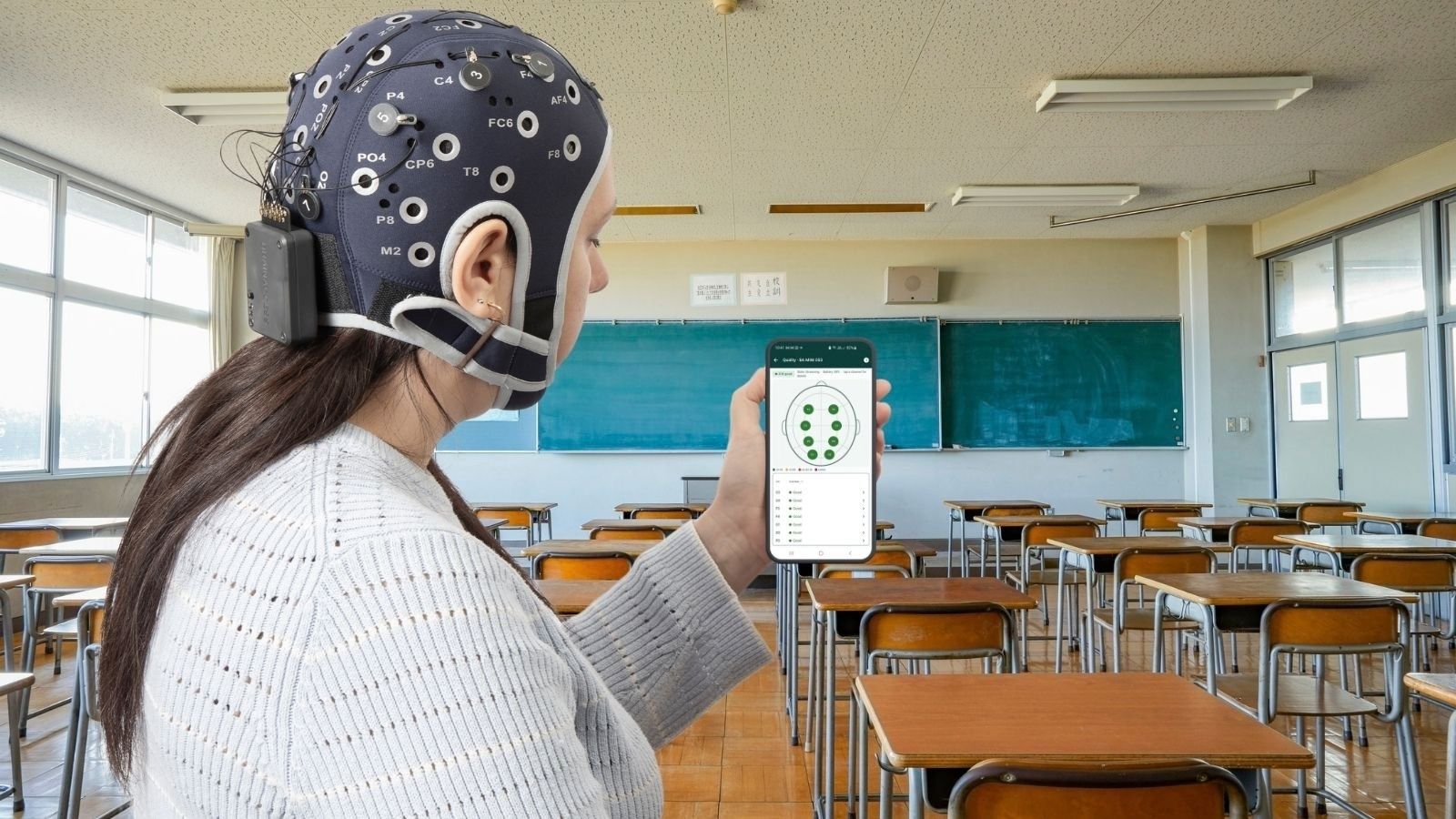

If you are thinking about conducting EEG research, you may have come across the term International 10–20 System, often used when referring to electrode positions on an EEG cap. But what does it actually mean? In this article we provide a short overview and discuss why it still so important in EEG research today.
Electroencephalography (EEG), measures electrical activity from the brain using electrodes placed on the scalp. These electrodes detect tiny voltage fluctuations generated by populations of neurons. However, because every head is different in size and shape, researchers and clinicians need a standardized way to decide where each electrode should be placed.
This is where the International 10–20 System comes in.
What is the 10–20 system?
The 10–20 system is a standardized method for placing EEG electrodes on the scalp. It uses anatomical landmarks, such as the nasion, inion, and points near the ears, to guide electrode placement.
The name “10–20” comes from the distances used between electrode positions. Electrodes are placed at intervals corresponding to 10% and 20% of measured distances across the skull.
This means that the system adapts to each person’s head size while keeping electrode locations consistent and comparable across participants, laboratories, and studies.
In other words, the 10–20 system gives EEG researchers a shared coordinate system.
What do the electrode labels mean?
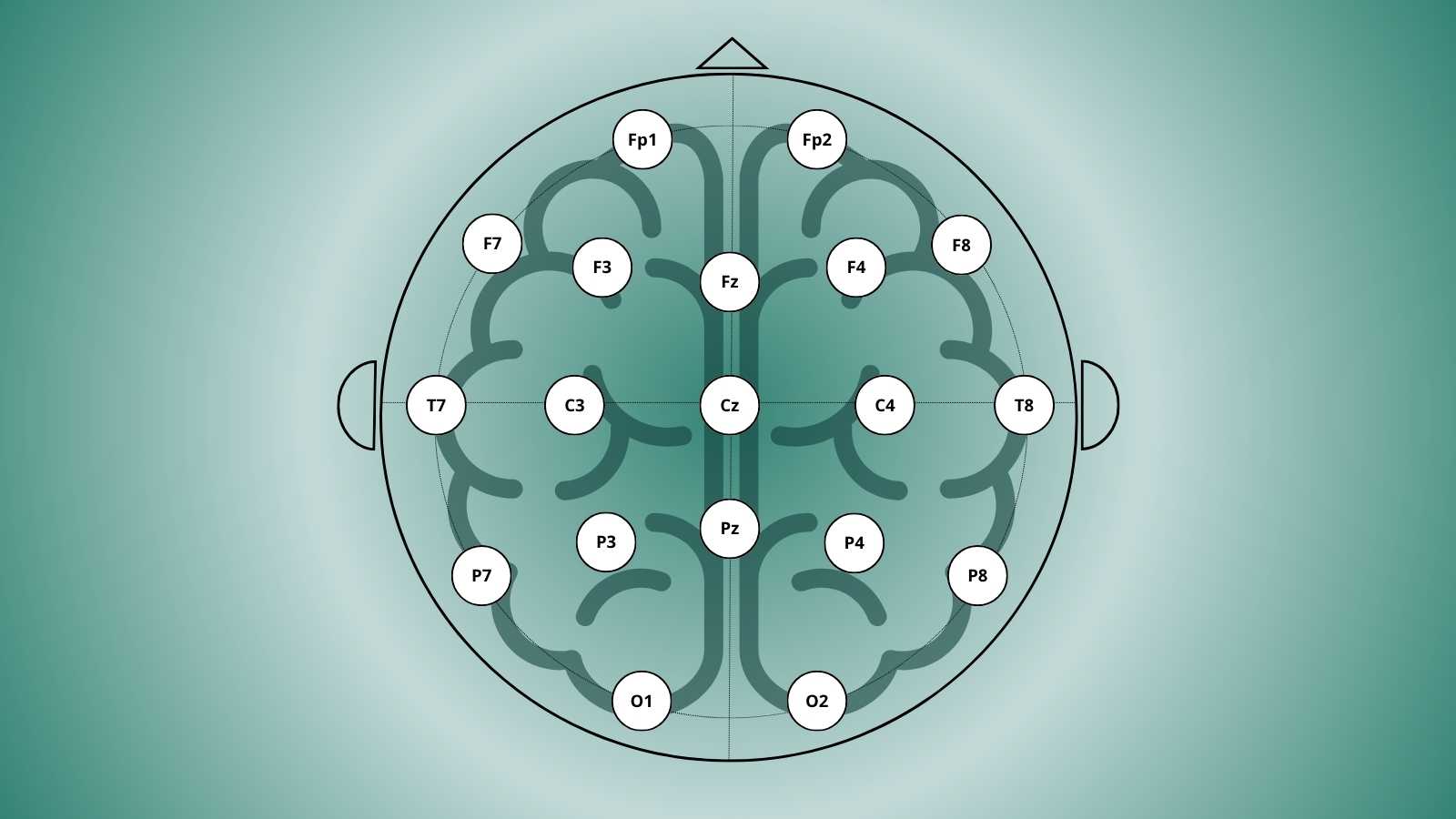
Each electrode position has a label that indicates its approximate location on the scalp.
For example:
| Label | Position on scalp | Channel names in the original 10–20 system |
|---|---|---|
| Fp | Frontopolar | Fp1, Fp2 |
| F | Frontal | F3, F4, F7, F8 |
| C | Central | C3, C4 |
| P | Parietal | P3, P4 |
| O | Occipital | O1, O2 |
| T | Temporal | T3, T4, T5, T6 |
| z | Midline | Fz, Cz, Pz |
The numbers also have meaning. Odd numbers are typically placed on the left side of the head, while even numbers are placed on the right side. Electrodes marked with “z” are located along the midline.
For example, F3 is a frontal electrode on the left side, F4 is a frontal electrode on the right side, and Fz is a frontal electrode on the midline.
This naming system makes it easier to describe, compare, and reproduce EEG recordings.
Who developed the 10–20 system?
The International 10–20 System is widely credited to Herbert H. Jasper, a pioneering neuroscientist and neurophysiologist.
Jasper led international committee work that helped standardize EEG electrode placement. His 1958 publication helped establish the 10–20 system as a common language for EEG recordings in both clinical and research settings.
This standardization was important because, without it, EEG results would be much harder to compare across patients, participants, laboratories, and publications.
Beyond the 10–20 System
Different Electrode Configurations
The 10–20 system was initially designed to include around 21 electrodes. However, when choosing an EEG system today, you will rarely see that exact number. Modern EEG systems often come in different electrode configurations, such as 8, 16, 32, 64, or 128 electrodes.
These numbers are influenced by both practical and technical factors. Many EEG systems are built around amplifier designs and digital recording systems that support channel counts such as 8, 16, 32, 64, and 128. These channels may be selected from the original 10–20 system or expanded beyond it, allowing electrodes to be distributed relatively symmetrically across the scalp.
The number of channels you choose depends on your research question, the level of spatial detail needed, the available equipment, and practical considerations such as setup time, participant comfort, and data complexity.
While the 10–20 system is suitable for low-density EEG, modern high-density solutions often require more detailed placement schemes. This is where the 10–10 and 10–5 systems come in. These extensions define additional electrode positions between the original 10–20 locations, allowing researchers to increase spatial coverage and record more detailed scalp activity when needed.
Choosing the Number of Electrodes
Once the electrode placement system is defined, the next question is how many electrodes are actually needed.
Modern EEG systems can include different numbers of channels, such as 8, 16, 32, 64, 128, or more. These numbers do not represent completely different systems, but rather different levels of spatial sampling based on standardized electrode positions.
In other words, an 8-channel EEG system may use a small subset of positions from the 10–20 system, while a 64- or 128-channel system may rely on extended layouts such as the 10–10 or 10–5 systems.
LOW DENSITY EEG: 8/16 ELECTRODES
Low-density EEG systems typically use a reduced set of electrodes selected from standard scalp positions.
These configurations are often used when the goal is to capture broad patterns of brain activity rather than detailed spatial information. For example, they may be suitable for wearable EEG, neurofeedback, brain-computer interface applications, educational systems, screening protocols, or studies where fast setup is important.
The main advantage is practicality: fewer electrodes mean shorter preparation time, simpler equipment, and often greater comfort for the participant.
The main limitation is spatial resolution. With fewer channels, there is less information about how activity is distributed across the scalp, and it becomes more difficult to estimate where the recorded signals may be coming from.
MEDIUM DENSITY EEG: 32 ELECTRODES
A 32-channel EEG system is often considered a practical compromise between scalp coverage and usability.
It provides broader coverage than 8- or 16-channel systems while still keeping preparation time manageable. In many research settings, 32 electrodes are sufficient for studying general cognitive processes, attention, workload, sensory responses, or event-related potentials.
At this level, the electrode layout is still usually based on standard positions, but it may include additional sites to improve coverage across frontal, central, temporal, parietal, and occipital areas.
For this reason, 32-channel systems are commonly used in EEG research when researchers need more spatial information than low-density systems can provide, without the complexity of high-density recordings.
HIGH DENSITY EEG: 64/128/256 ELECTRODES
Higher-density EEG systems, such as 64, 128, or even 256 electrodes, provide denser scalp coverage and allow researchers to sample brain activity with more spatial detail.
They are commonly used in cognitive neuroscience, ERP research, brain-computer interface studies, and source localization, where the goal is to better understand how activity is distributed across the scalp or estimate which brain areas may contribute to the recorded signals.
However, more electrodes do not automatically mean better data: higher-density systems require more preparation time, more careful electrode placement, larger datasets, more complex preprocessing, and greater attention to artifacts and signal quality. For this reason, they should be chosen when the research question truly requires that level of spatial detail.
Note: At these densities, researchers often move beyond the basic 10–20 layout and use extensions such as the 10–10 or 10–5 systems, which define additional electrode positions for more precise scalp coverage. The 10–20 system provides the foundation, while the 10–10 and 10–5 systems allow researchers to increase spatial resolution when needed.
A simple way to think about it is this:
Fewer electrodes usually mean faster setup, simpler recordings, and easier use in applied or wearable contexts.
More electrodes usually mean better spatial coverage and more detailed information, but also longer preparation time, more complex analysis, and greater demands on data quality.
The best EEG configuration is not always the one with the highest number of electrodes. It is the one that matches the research question.
For example, if the goal is to monitor broad changes in attention or relaxation, a low-density setup may be enough. If the goal is to study detailed event-related brain responses or improve source localization, a 64- or 128-channel system may be more appropriate.
BrainAccess Offer
At BrainAccess, we offer low- and medium-density EEG coverage based on dry electrode technology. Because our systems use dry electrodes, they are designed for practical, accessible, and faster EEG setup rather than high-density recordings.
LOW DENSITY
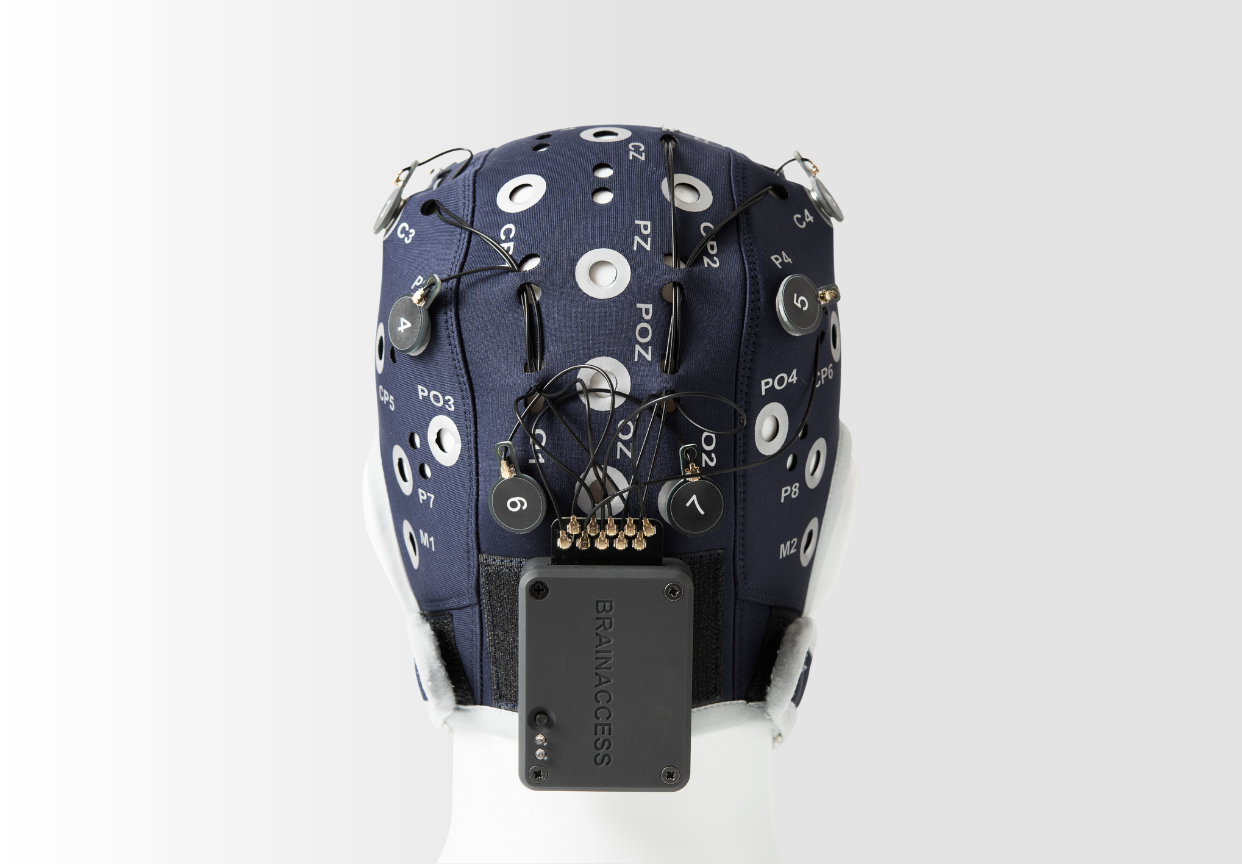
BrainAccess MINI Kit
8-channel EEG system
Cap and Electrodes included
900 € Excl. VAT
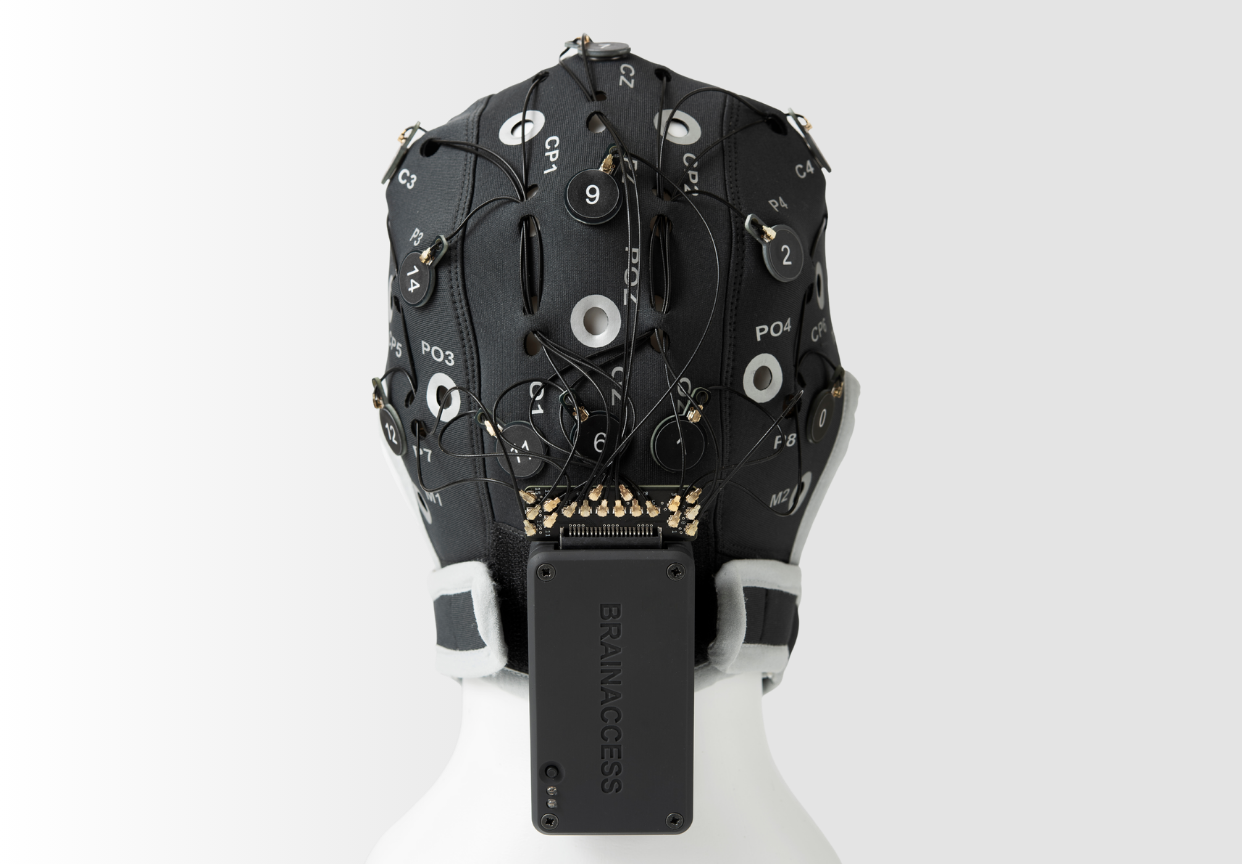
BrainAccess MIDI Kit
16-channel EEG system
Cap and Electrodes included
1,600 € Excl. VAT
MEDIUM DENSITY
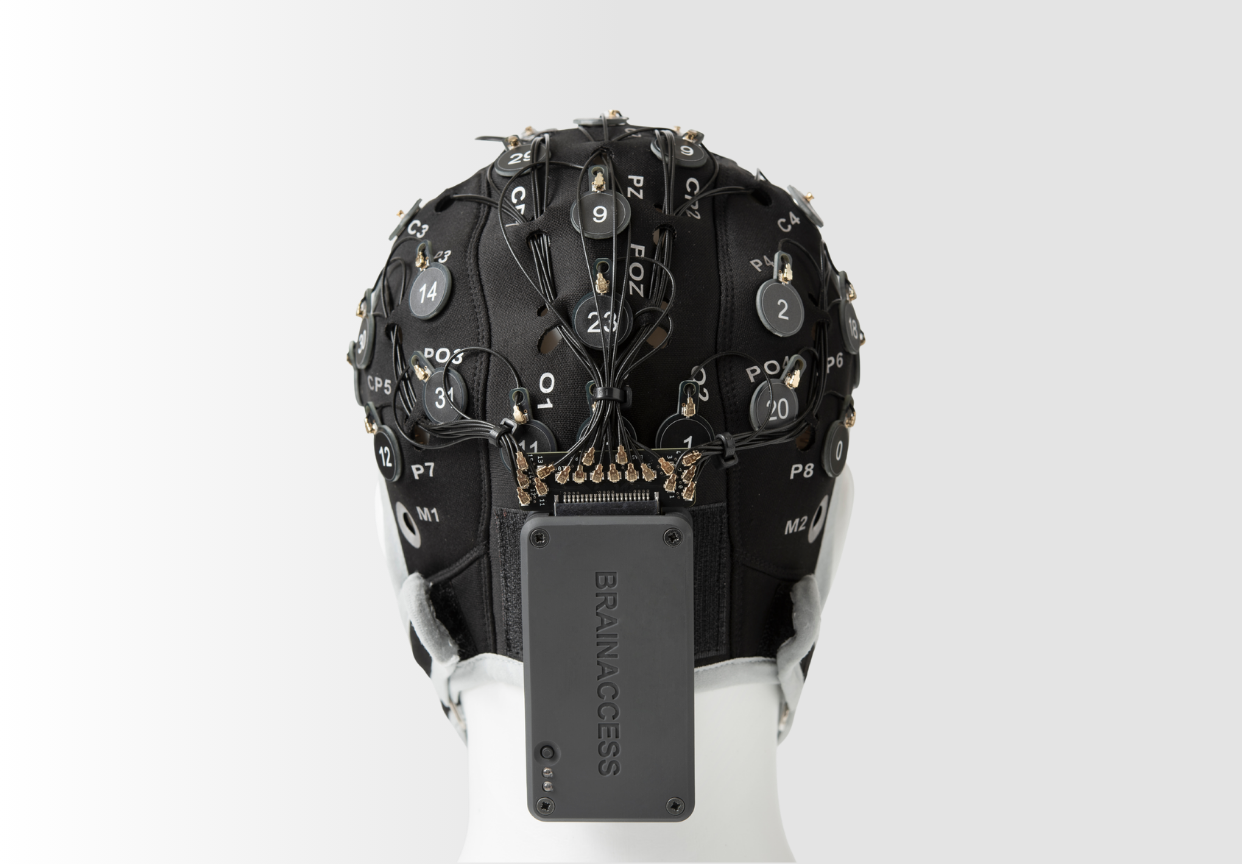
BrainAccess MAXI Kit
32-channel EEG system
Cap and Electrodes included
3,000 € Excl. VAT
Our electrode locations follow the International 10–20 System, which remains one of the foundations of EEG because it makes recordings more standardized, reproducible, and interpretable.
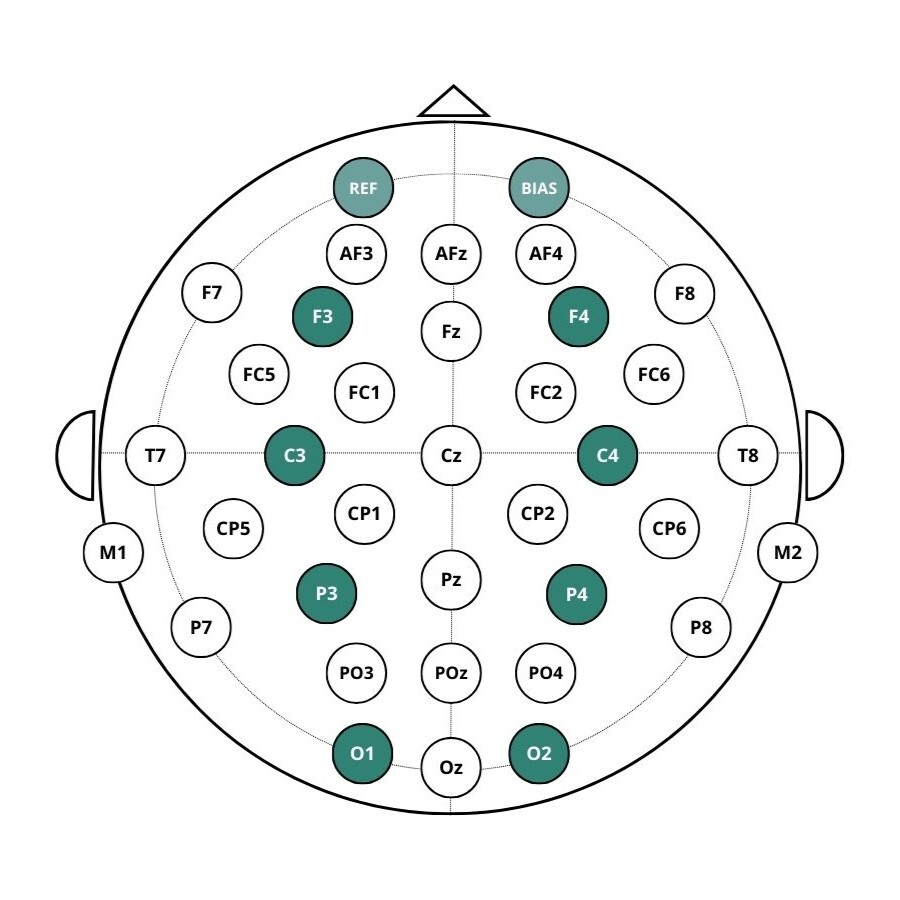
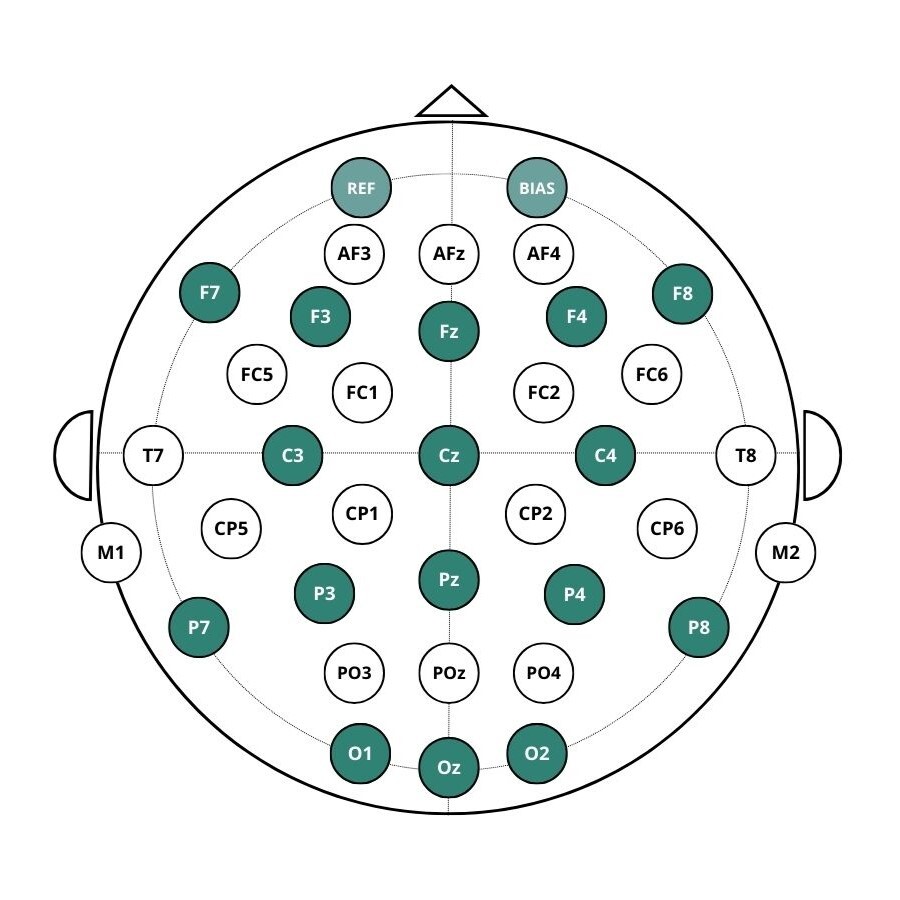
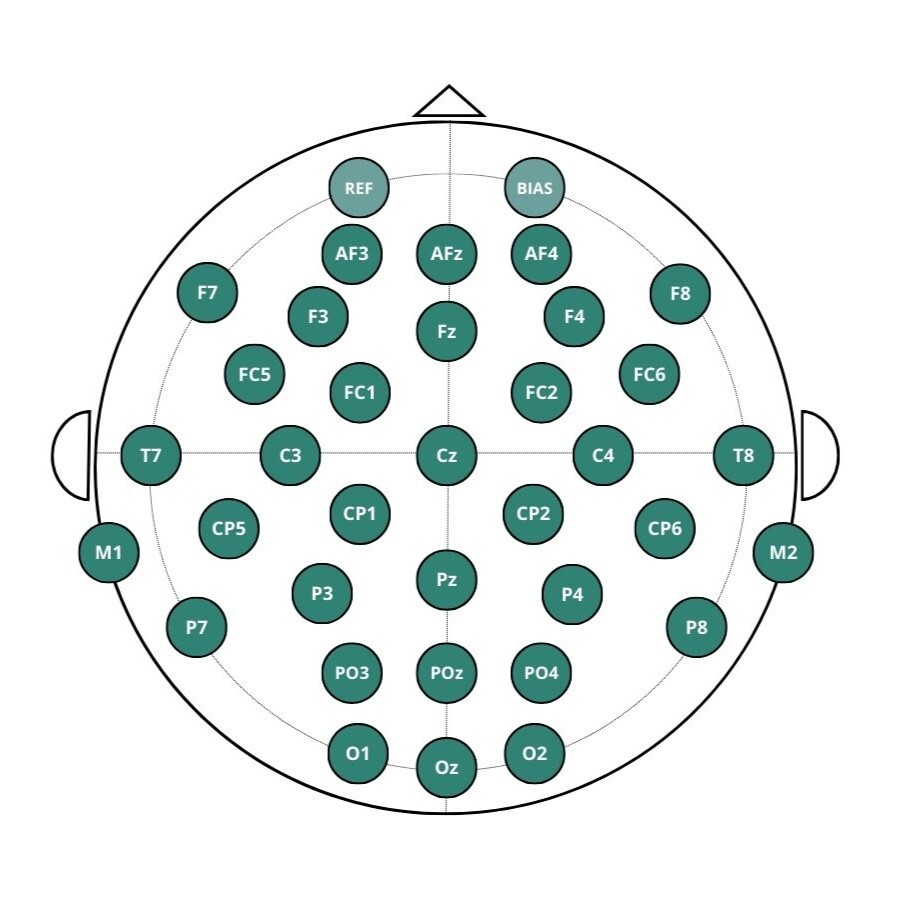
Electrodes locations for MINI, MIDI, and MAXI respectively.
This is especially important in applied EEG settings. EEG is not only about placing electrodes on the scalp and recording signals; it is about recording those signals in a way that researchers, developers, and clinicians can understand, compare, and trust.
For this reason, the 10–20 system continues to be used in clinical neurophysiology, neuroscience research, sleep studies, brain-computer interface development, neurofeedback, and many other EEG applications.
The 10–20 system may look like a simple map of electrode positions, but it plays a fundamental role in turning EEG into a reliable scientific and practical tool.
Reference
Arjoonsingh A, Jamal BC, Ganti L. History and Evolution of the Electroencephalogram. Cureus. 2024 Aug 7;16(8):e66385. doi: 10.7759/cureus.66385. PMID: 39246985; PMCID: PMC11379424.
HH, J. (1958). The ten-twenty electrode system of the international federation. Electroenceph clin Neurophysiol, 10, 367-380.
Acharya, J. N., Hani, A. J., Cheek, J., Thirumala, P., & Tsuchida, T. N. (2016). American clinical neurophysiology society guideline 2: guidelines for standard electrode position nomenclature. The Neurodiagnostic Journal, 56(4), 245-252.
Jurcak, V., Tsuzuki, D., & Dan, I. (2007). 10/20, 10/10, and 10/5 systems revisited: their validity as relative head-surface-based positioning systems. Neuroimage, 34(4), 1600-1611.
Homan, R. W. (1988). The 10-20 Electrode System and Cerebral Location. American Journal of EEG Technology, 28(4), 269–279. https://doi.org/10.1080/00029238.1988.11080272